
Most advertising guides skip the step that matters most. They hand you a menu of ten channels, tell you to “try Facebook”, and send you off to burn a budget you cannot afford to lose. If you run a service business in Ireland, a plumbing firm in Wicklow, a solicitor in Cork, a cleaning company in Galway, that advice will cost you money before it ever earns you a lead.
Here is the truth nobody in this search result tells you: most Irish service businesses waste their first advertising budget because they run ads before the infrastructure exists to turn a click into an enquiry. This guide fixes that. It is not another channel list. It is a sequenced, funnel-first playbook for how to advertise a service business, built the way we actually run campaigns for Irish clients: foundation first, paid search as the accelerant.
Why Advertising a Service Business Is Different (And Harder)
When you advertise a physical product, the buyer can see it, compare specs, read a hundred reviews and click “buy”. A service is different. You are asking someone to pay before they can inspect what they are buying, often for something urgent, expensive or personal. That changes everything about how you advertise business services.
The intangibility problem: selling something people can’t touch
Nobody can hold a “boiler repair” in their hand before they book it. Your prospect is buying a promise, competence, reliability, a tidy finish, a call-back that actually happens. Because there is no product to photograph, your advertising has to make the intangible feel concrete: outcomes, guarantees, before-and-after proof, and a clear unique value proposition that separates you from the firm two towns over.
The trust gap: why service buyers need more convincing
Service buyers carry more risk than product buyers, so they need more reassurance before they act. A dodgy tenner on a phone case is annoying. A dodgy €4,000 extension is a nightmare. That trust gap is why reviews, social proof, response speed and a professional landing page matter more in service advertising than any clever headline. Get the trust signals right and every euro of ad spend works harder.
You are not advertising a service. You are advertising the reasons a stranger should trust you with their money, their home or their legal problem before you have proven a thing.
Step 1 - Build Your Conversion Foundation Before You Spend a Euro
This is the step every competitor skips and the one that decides whether your budget works. Advertising sends traffic. It does not convert it. If the place you send that traffic leaks, you are pouring water into a bucket with holes.
Build the conversion foundation
Website, landing pages, Google Business Profile and tracking in place before any ad goes live. Roughly 1 to 2 weeks of setup.
Your website and landing pages
Send ad traffic to a purpose-built landing page, not your homepage. The page needs one job: turn a visitor into a call or a form fill. That means a clear headline naming the service and the area, trust signals up top (reviews, guarantees, years in business), a phone number that works on mobile, and one obvious call to action. Small structural mistakes quietly kill conversion rates, so it is worth reviewing the landing page mistakes local service businesses make and the service page structure that actually drives enquiries before you drive a single paid click.
Google Business Profile
For local service businesses, your Google Business Profile is often the highest-return free asset you own. It puts you in the map pack, carries your reviews, and lets people call you straight from search. Claim it, fill every field, and keep it active. Google’s own Google Business Profile help documentation walks through verification, and our guide to Google Business Profile content for service businesses covers what to post once you are live.
Conversion tracking (calls, forms, offline enquiries)
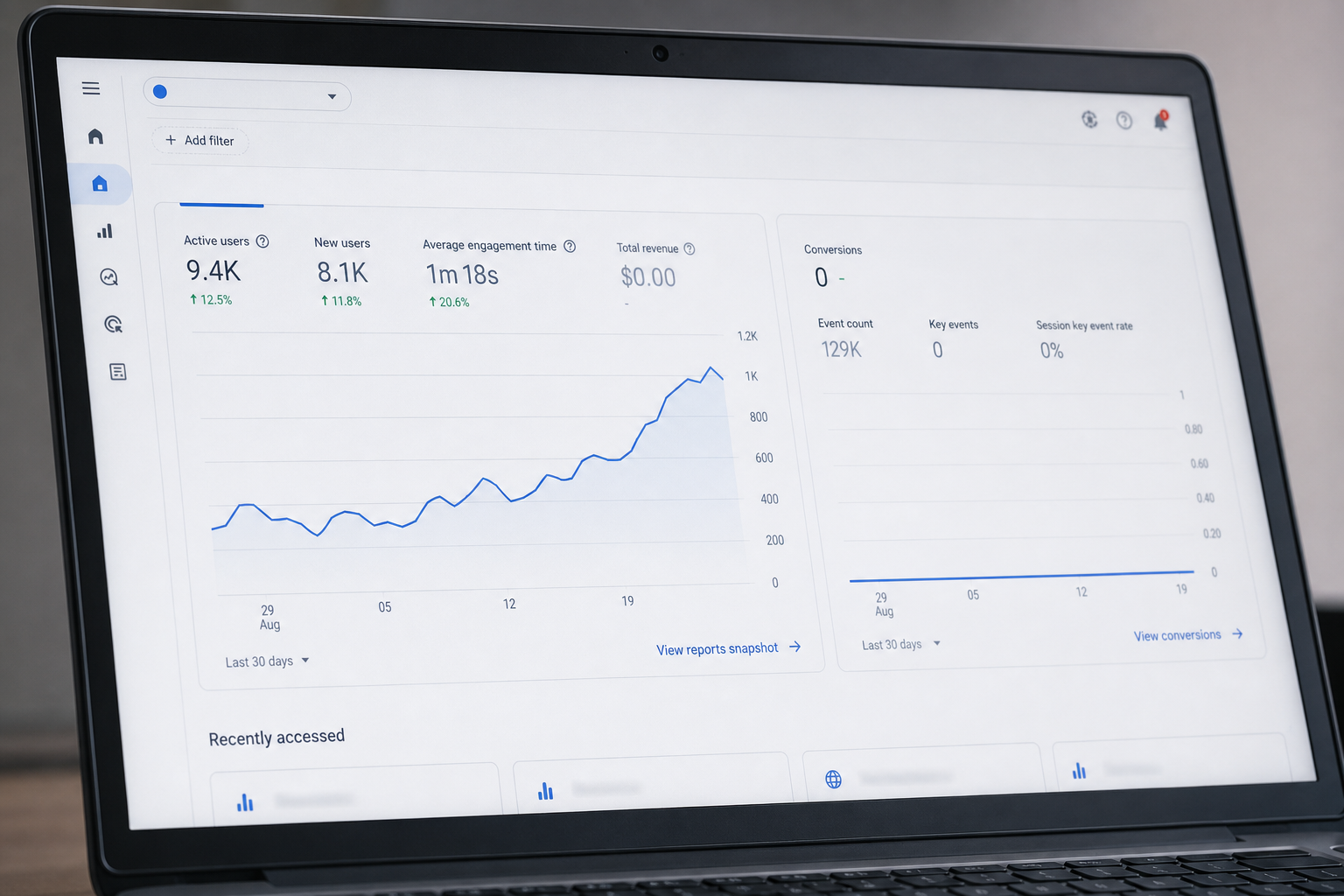
You cannot improve what you cannot measure, and for service businesses the single biggest tracking mistake is ignoring the phone. In our managed accounts, phone calls consistently match or beat web forms as the lead channel. On one home-services account we ran, 27 calls landed against 25 form fills in the same month. If you only count forms, you will conclude your ads are failing when they are actually working.
Step 2 - Define Your Target Audience and Buyer Journey
Define audience and journey
Map who your ideal client is and where they sit in the buyer journey, so your budget hits the right people at the right moment. About 2 to 3 days.
Mapping awareness, consideration, and decision stages
Your target audience is not one person doing one thing. They move through stages. At the awareness stage they barely know they have a problem. At consideration they are comparing options and reading reviews. At the decision stage they are ready to book and search intent is red hot (“emergency electrician Bray”). Your advertising for services should match the stage: content and social to create awareness, reviews and retargeting to nurture consideration, and Google Ads to catch decision-stage demand.
How to identify your ideal client profile
Look at your best existing customers, not your dream ones. What service did they buy, where do they live, what triggered the call, and what did they nearly object to before saying yes? Your own enquiry data is gold here. On one painting account, exterior work outnumbered interior enquiries by roughly 1.8 to 1, which told us exactly how to weight the ad copy and budget. You likely have the same intelligence sitting in your inbox.
The fastest way to define your ideal client is to reverse-engineer your last twenty happy customers. Their service, their location and their reason for calling are your targeting brief, no guesswork required.
Step 3 - Choose Your Advertising Channels (Free and Paid)
Choose your channels
Start with free and low-cost tactics, then layer in the paid channel that matches your service and margins. Ongoing.
Free and low-cost tactics: organic social, content marketing, directories, referrals
Not everything needs a budget. Word of mouth and referrals still close more service work in Ireland than any ad platform, so make asking for referrals systematic. Organic social builds familiarity, content marketing answers the questions your prospects Google, and local directories and citations feed your local SEO. Getting your local citations built consistently across Ireland and earning local links to your service pages lifts your organic visibility at close to zero media cost.
Google Ads (PPC) - the highest-ROI paid channel for service businesses
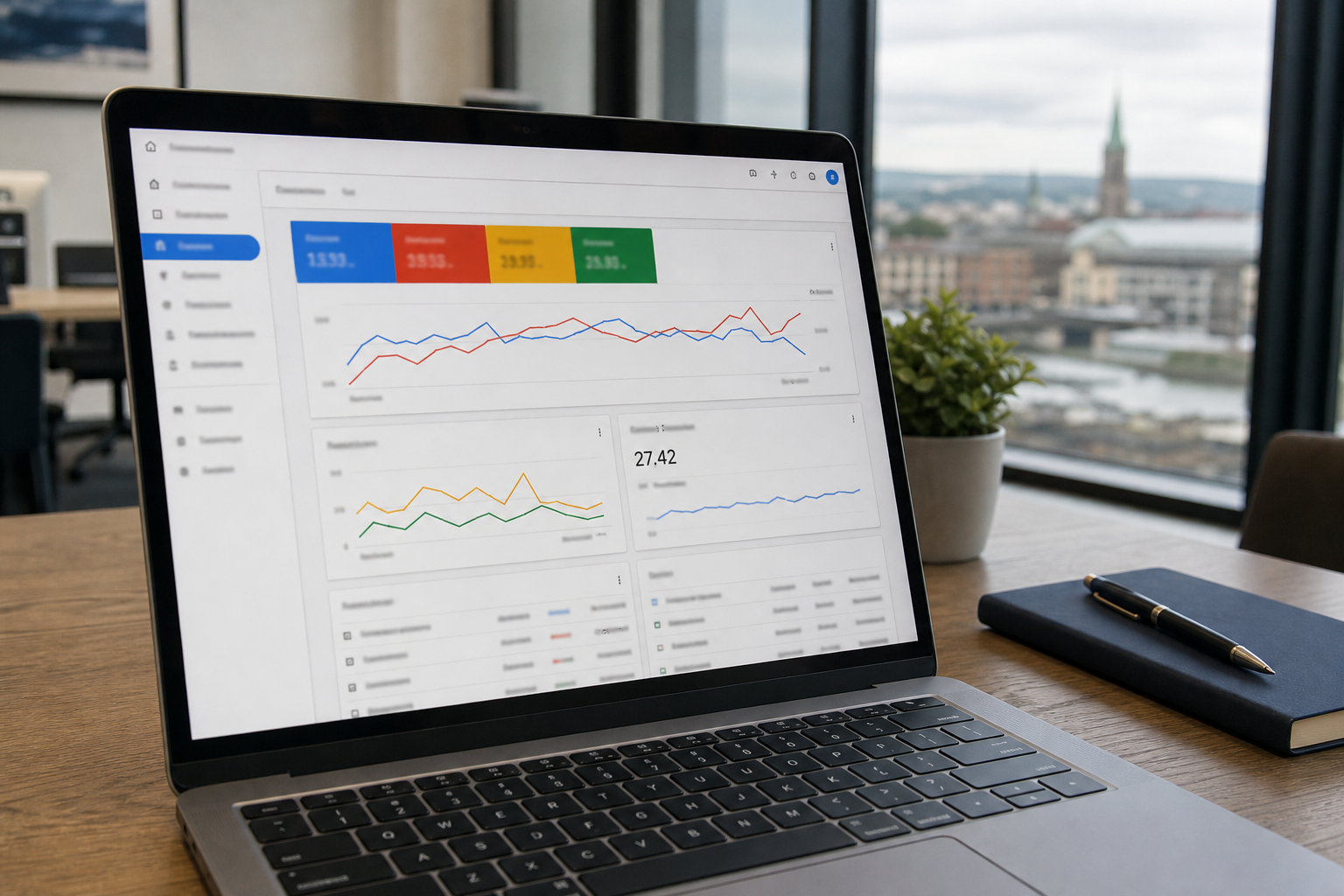
Let me be blunt, because most guides hedge here and it helps nobody: paid search is the fastest path to qualified leads for a service business that has its conversion foundation in place. When someone types “boiler repair Dublin”, they are not browsing, they are buying. Google Ads puts you in front of that person at the exact moment of intent. For most service businesses, PPC for service businesses is the single best advertising for service business owners who need enquiries this month, not next quarter.
The results compound when you manage the account properly. Over the first three months of a new painting-contractor account we ran, tracked leads roughly tripled and cost per lead more than halved as the campaign moved out of broad learning into tightly targeted, high-intent keywords. That is the shape of a healthy PPC for service businesses account: expensive and noisy at first, efficient and predictable once it is sculpted.
Before you decide search is the whole answer, it is worth understanding when Local Service Ads versus standard Google Ads should come first for an Irish business. If running the account yourself sounds like a second job, our fully managed advertising service for Irish businesses handles the build, tracking and weekly optimisation for you. This is exactly the kind of ongoing work, negative keywords, bid tuning, geography sculpting, that separates a profitable account from a leaky one, and it is the core of good PPC advertising for Irish businesses.
Social media ads: Facebook, Instagram, LinkedIn - which fits your service?
Social media advertising works differently from search. Nobody on Facebook is actively hunting for a plumber, so social ads create demand and awareness rather than catching it. The platform you pick should follow your buyer. Facebook Ads and Instagram suit visual, consumer-facing services (cleaners, salons, home improvement) where before-and-after imagery sells. LinkedIn Ads suit B2B and professional services (consultants, accountants, agencies) where the decision-maker is at work. For video-led awareness, our take on TikTok and Reels for Irish service businesses in 2026 covers what actually earns attention.
Facebook & Instagram: consumer & visual services
LinkedIn Ads: B2B & professional services
Google Ads: high-intent, decision-stage demand
WhatsApp Business as a promotional and nurture channel
Irish customers love to message. WhatsApp Business lets prospects reach you on the channel they already use, and it doubles as a nurture tool for quotes and follow-ups. We see this in the data: on one retail campaign, 17 of 28 first-month leads came through click-to-call or WhatsApp rather than a web form. Make messaging easy and you capture buyers who would never fill in a contact form.
Email marketing for retention and repeat business
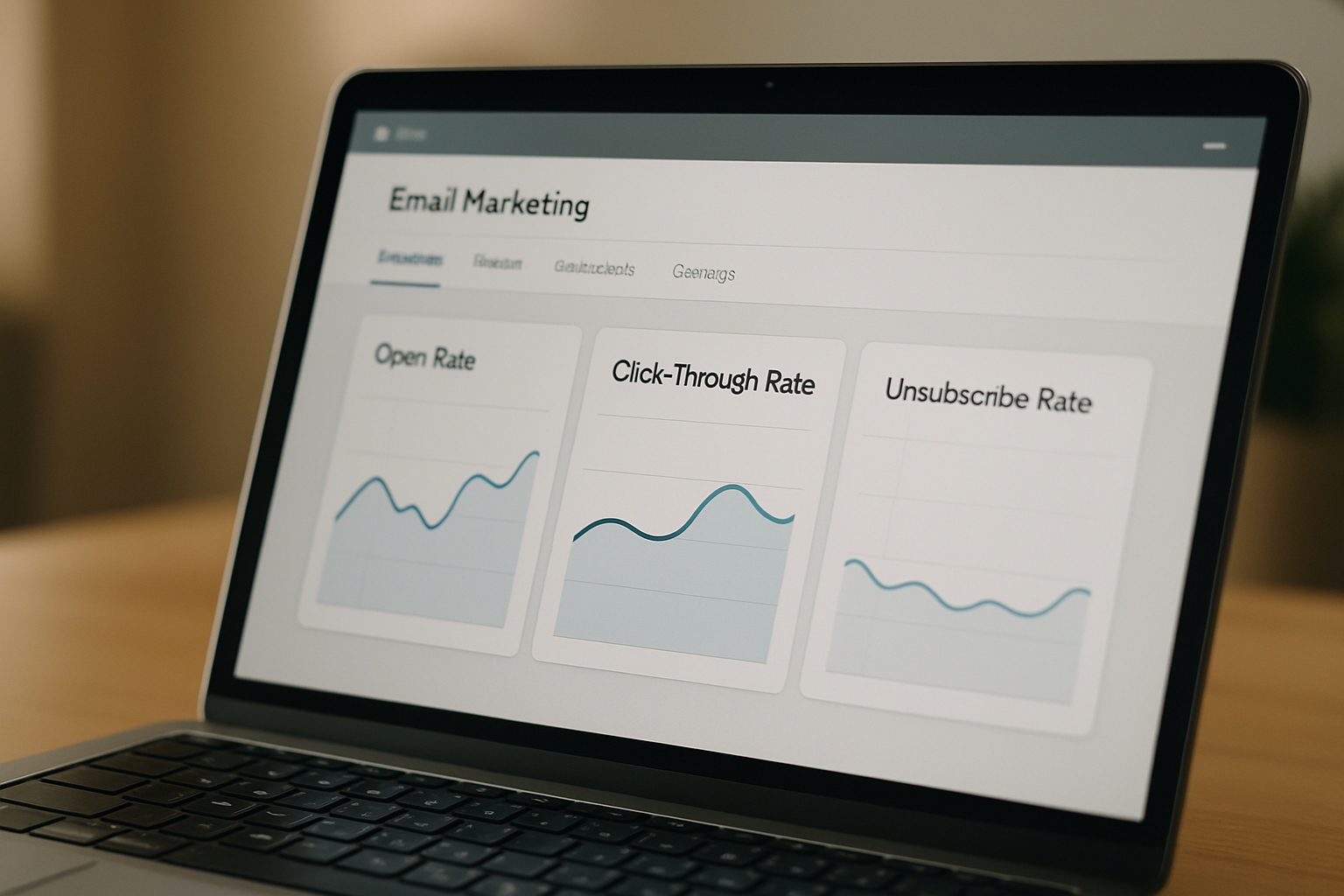
Advertising a service business is not only about new leads. Winning a customer costs far more than keeping one, and email marketing is how you turn a one-off job into repeat work and referrals. Simple automated flows, a welcome sequence, a review request, a seasonal reminder, quietly compound revenue. Our guide to email marketing automation for Irish SMEs lays out the flows that pay for themselves, and a simple CRM for trades and local services keeps the follow-up organised.
Channel comparison for service businesses
| Channel | Cost | Speed to results | Best service type | Trust-building | Recommended for |
|---|---|---|---|---|---|
| Google Ads | Medium to high | Days | Urgent / high-intent local services | Medium | Anyone who needs leads now |
| Facebook / Instagram Ads | Low to medium | Weeks | Visual, consumer-facing services | Medium | Demand creation, seasonal offers |
| LinkedIn Ads | High | Weeks to months | B2B & professional services | High | Consultants, agencies, high-value B2B |
| Organic social | Free (time) | Months | All, especially visual | High | Long-term brand and trust |
| Email marketing | Very low | Ongoing | Repeat-purchase services | High | Retention and referrals |
| Google Business Profile | Free | Weeks | All local services | Very high | Every local business, non-negotiable |
Not sure which channel fits your business?
We build the foundation, pick the channel and manage the spend, so you get enquiries instead of admin.
Step 4 - Write Ad Copy That Converts for a Service Business
Write copy that converts
Lead with outcomes, prove it with reviews, and kill objections before the click. Ongoing testing.
Lead with outcomes, not features
Nobody books a plumber because they have a van and 20 years’ experience. They book because the leak stops today. Write ad copy for advertising for services that leads with the outcome the customer wants: “leak fixed today”, “spotless home in two hours”, “planning permission sorted”. Features are for the small print. Outcomes get the click.
Use social proof and reviews in your creative
Because service buyers carry so much risk, proof does more work than persuasion. Put your star rating, review count and a real customer line into the ad itself. “Rated 4.9 from 180 reviews” beats any adjective you could write about yourself. This is the intangibility problem solved in one line.
Addressing objections before the click
Every service has a standard objection: price, timing, trust, disruption. Answer it in the ad. “No callout fee”, “fixed-price quote”, “fully insured local team”, “same-week appointments”. Killing the objection before the click means the people who do click are already warmer, which lifts your conversion rate and lowers your cost per lead.
The best-performing service ads are not clever. They name the outcome, prove it with a review, and remove the one reason the reader was about to hesitate.
Step 5 - Retargeting and Remarketing for Longer Sales Cycles
Retarget the ones who didn’t convert
Most service buyers compare before committing. Remarketing keeps you in front of them through the consideration stage. Ongoing.
High-value services rarely sell on the first visit. Someone pricing an extension or choosing a solicitor will visit three or four sites, sit on it for a week, and come back. Retargeting and remarketing keep your brand in front of those people while they deliberate, on Google’s display network, on Facebook and Instagram, wherever they browse next. For a service with a longer buyer journey, remarketing is often the difference between being remembered and being forgotten. It also rescues the traffic your other ads already paid for, which makes it one of the most cost-efficient things you can run.
If your average job is worth over a few hundred euro, assume the buyer will not convert on visit one. Retargeting is not optional for those services, it is how you win the ones who left to “have a think”.
Step 6 - Set a Budget and Know When to Graduate from Free to Paid
Set a budget and graduate to paid
Start where your margins allow, prove the return, then scale. Free tactics build the base; paid accelerates it.
How much should an Irish service business spend on advertising?
There is no single right number, but there is a sensible starting logic for business services advertising: spend what lets you buy enough leads to learn, and no more, until the account is proven. In our managed service accounts, monthly media budgets have realistically run in the low hundreds to low thousands of euro depending on sector and season, and that is enough to generate a steady flow of tracked enquiries. For a full breakdown, see how much a small business should spend on Google Ads in Ireland and our wider Irish small business marketing budget guide.
Ad Spend Estimator for Irish Service Businesses
Set your monthly marketing budget and pick your sector to see an illustrative Google Ads daily budget, estimated clicks and estimated enquiries.
Illustrative estimates only, based on industry-average CPCs and an assumed 8% conversion rate. Real results vary by keyword, geography, landing page and season, and are never guaranteed. Use this as a planning range, not a forecast.
Signals that you are ready to invest in paid channels
Free tactics build the base; paid advertising in Ireland accelerates it. You are ready to graduate to paid when three things are true: your landing page converts (people who arrive actually enquire), your tracking captures both calls and forms, and you can afford to spend for 90 days before judging results. In our managed accounts, the first qualified leads typically arrive within the first couple of weeks of launch on a modest daily budget, but the account only settles into its efficient cost per lead after a few months of optimisation.
Are you ready to run paid ads? Checklist
- Landing page ready: a dedicated page with headline, trust signals, mobile-friendly phone number and one clear call to action.
- Tracking live: conversion tracking on forms AND call tracking on the phone number.
- Google Business Profile claimed: verified, complete and collecting reviews.
- Budget for 90 days: enough spend to get out of the learning phase before you judge it.
- Fast response process: someone answers the phone and replies to enquiries within minutes, not hours.
Measuring What Matters: Advertising ROI for Service Businesses
Clicks and impressions are vanity. For a service business, return on investment comes down to two numbers: cost per lead and the value of the work those leads close into. Track those and you can make cold, confident decisions about where every euro goes.
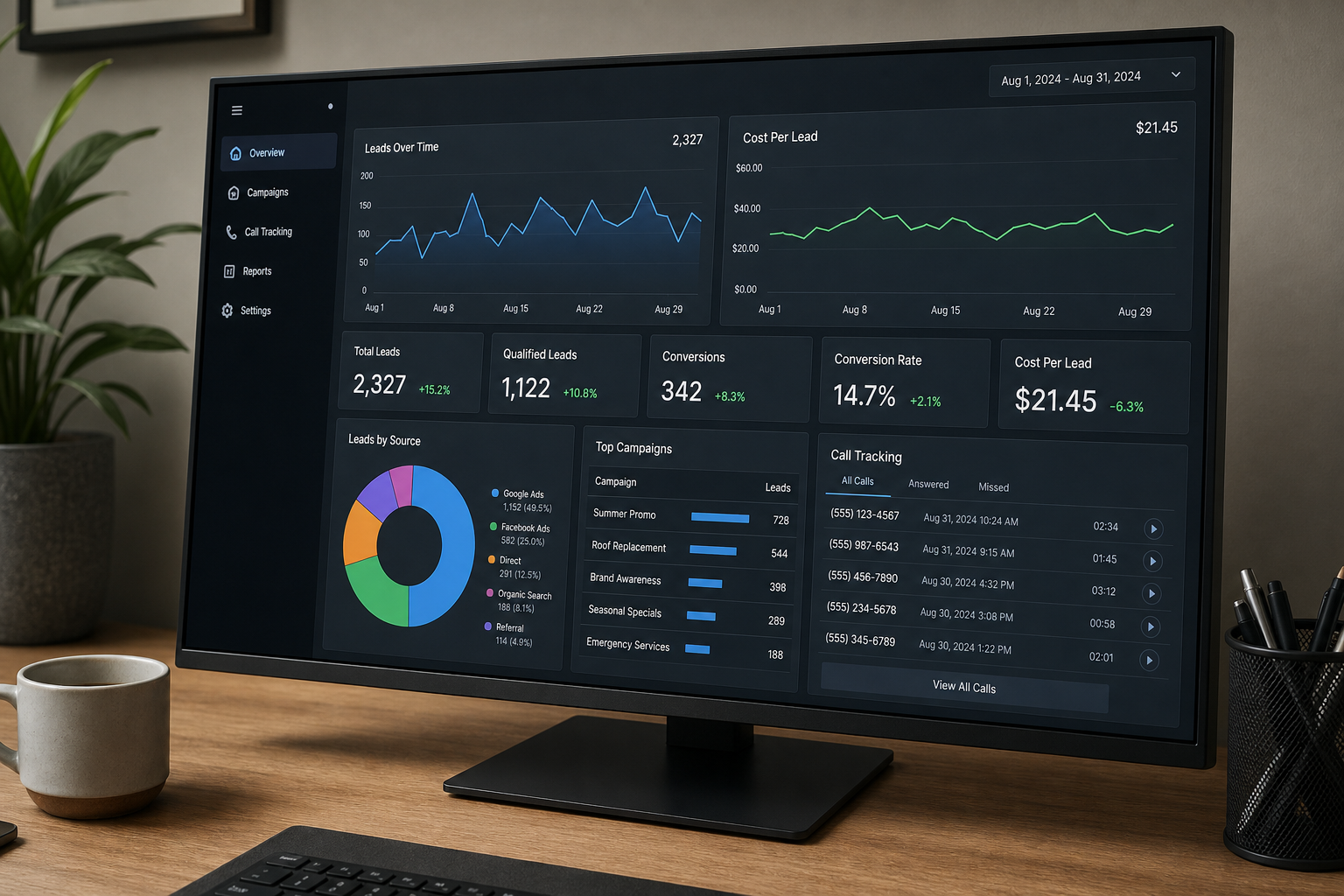
Two warnings from the field. First, do not judge on a single month. One painting account we manage swung from a 3.4% conversion-rate month to a 13.9% month within the same campaign, seasonality and auction pressure move the numbers. Second, your dashboard almost certainly undercounts. On one painting number we pulled the full call log and found the real cost per genuine contact was less than half the dashboard’s tracked figure, because customers who dial manually are never recorded. Measure the phone or you will underrate your best channel.
The 5 P’s of Service Marketing (And How They Shape Your Advertising)
The classic marketing mix stretched from four to seven P’s, but for advertising a service business, five carry the weight. They shape what you say and where you say it.
Product (the service)
What you actually deliver and the outcome it creates. Advertise the outcome, not the mechanics.
Price
Transparency reduces the trust gap. “Fixed-price” and “no callout fee” belong in your ads.
Place
Where you serve. For local services this is your geography, named towns and counties, in copy and targeting.
Promotion
Your channels and messaging, the advertising itself, matched to each stage of the buyer journey.
People
For services, the people are the product. Reviews, faces and credentials sell trust before the sale.
What Is the 3-3-3 Rule for Marketing?
The 3-3-3 rule is a simple content-planning shortcut, especially handy for organic social and email. Read a few different versions and they broadly land on the same idea: split your promotion across three types of content, aim to capture attention in the first three seconds, and plan around three core goals or three posting themes so you are not scrambling for ideas every week.
The practical takeaway for a service business: do not make every post a sales pitch. Mix content that educates, content that builds trust (reviews, behind-the-scenes, results) and content that sells. Hook fast, because attention on social is measured in seconds, and keep a consistent set of themes so your advertising stays coherent rather than random.
FAQ
What is the best way to promote a service business?
The best way is sequenced, not scattered. First build a conversion foundation: a landing page that converts, a claimed Google Business Profile, and tracking on both calls and forms. Then run Google Ads to catch high-intent, decision-stage searches, because paid search is the fastest route to qualified leads for a service business. Support it with reviews, retargeting for longer sales cycles, and email for repeat work. Free tactics like referrals and local SEO build the base; paid search is the accelerant once the foundation is in place.
What is the 3-3-3 rule for marketing?
The 3-3-3 rule is a content-planning shortcut. Across the common versions it means splitting your promotion into three content types (educate, build trust, sell), grabbing attention within the first three seconds, and planning around three core themes or goals so you always know what to post. For a service business it is a reminder not to make every post a sales pitch and to hook fast, since social attention lasts seconds. Treat it as a prompt for variety, not a rigid law.
What are the 5 P’s of service marketing?
The 5 P’s are Product, Price, Place, Promotion and People. Product is the service and the outcome it delivers. Price is what you charge, and transparency here reduces the trust gap. Place is where you operate, which for local services means your geography. Promotion is your advertising and messaging. People matter most in services, because the team delivering the work is effectively the product, which is why reviews, faces and credentials do so much of the selling.
How can I advertise services with a small budget?
Start with the free assets that punch above their weight: a fully optimised Google Business Profile, systematic review-gathering, referrals and local SEO. When you add paid, start small and tight, target only high-intent, decision-stage keywords in your service area, send traffic to a dedicated landing page, and track calls as well as forms. Even a modest monthly budget can generate a steady flow of enquiries if it is focused. The mistake is spreading a tiny budget across too many channels at once.
How do I track whether my advertising is working?
Track two things: cost per lead and the value of the work those leads close into. Set up conversion tracking on your forms and call tracking on your phone number, because for service businesses the phone often outperforms forms and standard dashboards undercount calls badly. On one account we saw 15 tracked conversions sitting next to 19 separately logged inbound calls in the same month. Judge performance over 90 days, not a single month, since conversion rates swing with season and competition.
Should I use Google Ads or social media ads for my service business?
Use Google Ads first if you need leads now, because search catches people at the moment they are actively looking to buy your service. Use social media advertising to create demand and awareness, and to retarget people who visited but did not convert. The right social platform depends on your buyer: Facebook and Instagram for visual, consumer-facing services, LinkedIn for B2B and professional services. For most Irish service businesses, Google Ads delivers the fastest, highest-intent enquiries, with social playing a supporting role.
Ready to Advertise Your Service Business in Ireland?
You now have the sequence: build the foundation, define your audience, choose your channels, write copy that converts, retarget the ones who hesitate, and set a budget you can defend. Do it in that order and your advertising works. Do it out of order, ads first, foundation later, and you will do what most Irish service businesses do: waste the first budget and blame the channel.
If you would rather skip the trial and error, we run this exact playbook for Irish service businesses every day, from the tracking setup to the weekly optimisation that turns a leaky account into a predictable lead machine.
Let us handle the advertising while you handle the work
Foundation, channel strategy, Google Ads Ireland setup and hands-on management, done for you. Not sure if your budget is right? Talk to us.