
Most Irish SME owners get email automation wrong in one of two ways. They either do nothing, because the whole thing feels like a job for a developer and a big budget. Or they try to build everything at once, burn out halfway through, and leave five half-finished flows switched off in the back of their account.
Both roads lead to the same place: no automated revenue. The question that actually matters is not “should I do email automation ireland businesses can trust?” It is “what do I build first, and why that one?” This guide answers exactly that. Four flows, in a fixed build order, with the triggers, the GDPR setup and the numbers that prove each one is working. No assumed budget, no developer, plain English.
What Is Email Automation and Why Does It Matter for Irish SMEs?
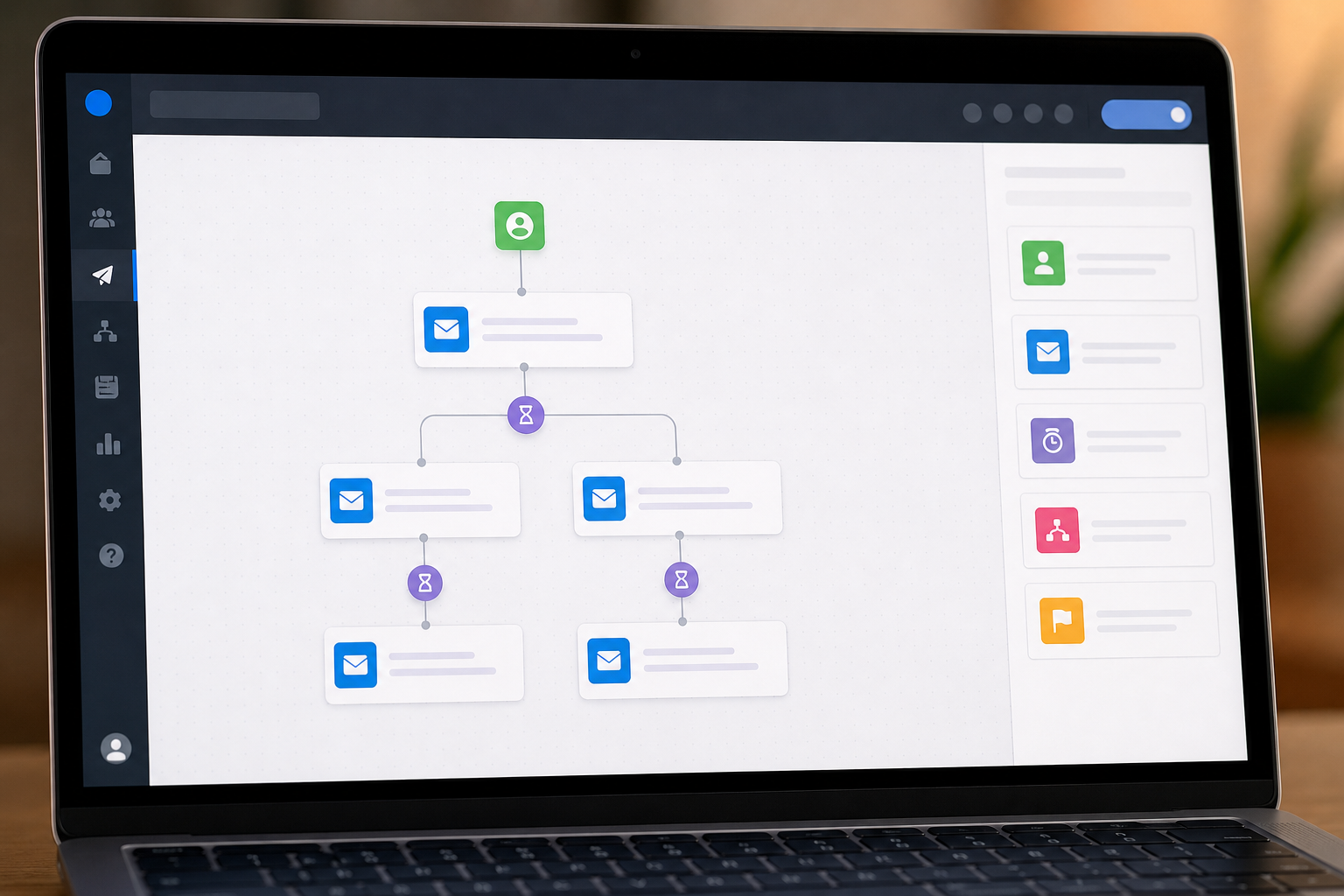
Email automation is a set of emails that send themselves when something happens. You build the sequence once. After that, the right message goes to the right person at the right moment, without you touching a keyboard.
Picture a Galway café that takes bookings through a form. Someone books a table for Friday. That booking is a trigger. The trigger fires an action: a confirmation email at once, then a “see you Friday” reminder on Thursday evening, then a “thanks for coming, leave us a review” email on Saturday morning. Three touches, zero manual work. That is email marketing automation in one sentence.
This is the key difference between automation and a regular newsletter. A newsletter is a broadcast: you write it today, you send it to everyone today. An automated flow is behaviour-based: it reacts to what each individual contact does, and it keeps running for every new person who triggers it. Grand for a newsletter to announce a sale. Useless for welcoming a new subscriber at 2am on a Sunday. That is what automation is for.
A newsletter is one message to many people at one time. Automation is a tailored sequence to one person, triggered by their behaviour, running on autopilot for everyone who qualifies. You need both, but automation is where the quiet, compounding revenue lives.
Why it matters for a small Irish business specifically: you are time-poor. Automation is leverage, not magic. It does the follow-up you keep meaning to do and never get around to on a busy Tuesday. The industry data backs this up, automated messages punch far above their volume.
If you want the strategy done for you rather than DIY, our email marketing services for Irish businesses cover the full build, from list setup to live flows. But you can get a long way on your own first, and the rest of this guide shows you how.
The Four Automation Flows Every Irish Business Should Build (In This Order)
Here is the whole playbook on one page. Four flows. Build them in this exact order. Do not skip ahead, and do not try to build all four in a weekend. One live, working flow beats four unfinished ones every single time.
1. Welcome Series, Build It First
The welcome email is the hardest-working message you will ever send. Someone has just handed you their address and their attention. They are warmer right now than they will ever be again. Welcome emails routinely open at well over 60%, far above any broadcast you will send.
Trigger: a new subscriber joins your list. Action: three emails over the first week. Email one, an instant welcome and whatever you promised at opt-in. Email two, a day or two later, your story and why people choose you. Email three, a soft offer or a clear next step. Outcome: a first sale or enquiry, and a contact who now trusts you.
2. Abandoned Cart or Abandoned Enquiry, Build It Second
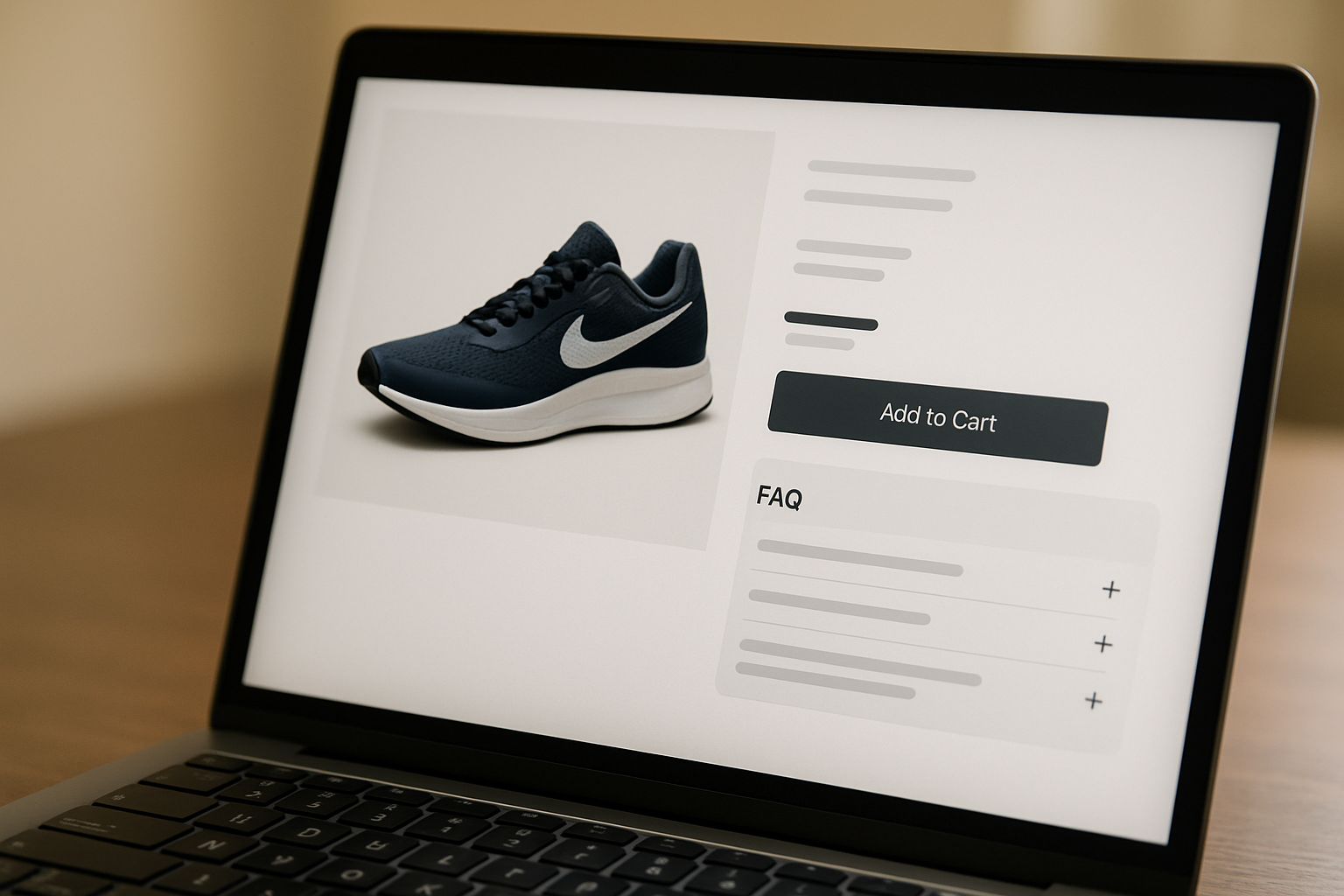
For an online shop this is the classic abandoned cart flow: someone adds a product, gets distracted, leaves. For a service business it is the abandoned enquiry: someone starts your contact form or clicks “get a quote” and never finishes. Same idea, different trigger.
Trigger: a visitor starts checkout or an enquiry and does not complete it. Action: a reminder an hour later, then a gentle follow-up the next day, sometimes with a small incentive. Outcome: a recovered sale that would otherwise have walked. Abandoned cart emails are among the highest-converting messages in all of email, which is why this is flow number two.
3. Post-Purchase or Post-Service Follow-Up, Build It Third
Getting the first sale is expensive. Getting the second is nearly free, and this flow is how you get it. Trigger: a completed purchase or a finished job. Action: a thank-you, a review request a few days later once they have had time to enjoy it, and a relevant cross-sell or rebooking prompt. Outcome: repeat business, more reviews, higher lifetime value.
One of our retail clients cut their manual follow-up time to near zero after we set up a three-email post-purchase sequence. The emails that used to sit on a to-do list now send themselves, and the review requests actually get sent instead of forgotten.
4. Re-Engagement Flow, Build It When Your List Hits 500+
Every list goes stale. People drift, stop opening, forget they signed up. A re-engagement flow (sometimes called a win-back or drip campaign) targets the quiet ones. Trigger: no opens or clicks in 90 days. Action: a “we miss you” email, maybe an offer, then a final “are you still interested?” Outcome: some wake up and buy; the rest you remove, which protects your deliverability. We hold this flow back until roughly 500 subscribers, because below that you simply do not have enough inactive contacts for it to earn its keep.
Start here if you sell online
Welcome series, then abandoned cart. These two alone recover the bulk of the automated revenue most small shops ever see.
Start here if you sell a service
Welcome series, then abandoned-enquiry follow-up. Chasing half-finished enquiries is where service businesses leave the most money on the table.
Which Email Automation Platform Should Irish SMEs Use?
Honest truth first: the platform matters less than getting the sequencing right. A perfectly chosen tool with no flows beats nothing, but a “good enough” tool with four live flows beats a perfect tool sitting empty. Pick one from the shortlist below, start, and move on.
All four of these are solid for Irish businesses. The real GDPR question is not the brand, it is where your contact data is stored and processed, and whether you have a data processing agreement in place, which all of these provide.
| Platform | Best for | Free / entry price | GDPR & data hosting note |
|---|---|---|---|
| Mailchimp | First-timers who want the gentlest learning curve | Free up to a small list; paid tiers from a modest monthly fee | US-based; relies on standard contractual clauses. Offers a DPA. Fine for most SMEs. |
| ActiveCampaign | Service businesses wanting powerful automation and a light CRM | No free plan; entry tier is low-cost monthly | US-based with a DPA and EU data-handling options. Strong automation builder. |
| Klaviyo | Ecommerce shops on Shopify or WooCommerce | Free up to a small contact count; scales with list size | US-based; DPA provided. Deep store integration for abandoned cart and post-purchase. |
| HubSpot | Growing B2B firms that want email tied to a full CRM | Generous free CRM; marketing automation is a paid upgrade | Offers EU data hosting and a DPA. Heavier than most SMEs need at the start. |
GDPR and Automated Emails in Ireland: What You Must Get Right
This is where most guides go quiet and where Irish businesses get nervous. It is not that complicated, but you do have to get it right, because automated trigger emails are still marketing emails in the eyes of the law.
Two rulebooks apply here. GDPR governs how you collect and hold personal data. The ePrivacy Regulations (SI 336/2011) govern electronic direct marketing specifically, and they are enforced by the Data Protection Commission. For the detail straight from the regulator, read Ireland’s Data Protection Commission guidelines on electronic and direct marketing.
Consent for automated triggers, not just broadcasts
The rule people forget: your welcome series and your abandoned-cart emails need the same consent as a newsletter blast. A trigger firing automatically does not exempt it. If someone did not opt in to marketing, you cannot drop them into a marketing flow, no matter how the flow started.
B2C versus B2B, and the 12-month exception
For consumers (B2C), the safe default is clear opt-in consent before any marketing email. There is one important carve-out: the existing-customer exception. If someone bought from you, you may email them about your own similar products or services for up to 12 months, as long as you gave them an easy opt-out at the point of sale and in every message. For business contacts (B2B), the rules are lighter but you still must identify yourself and offer an unsubscribe in every email.
Every automated email, trigger-based or not, needs a lawful basis to send and a working unsubscribe link. Consent at opt-in plus the 12-month existing-customer exception covers almost every SME scenario. When in doubt, get the opt-in.
What a GDPR-safe double opt-in welcome flow looks like
Compliant double opt-in, step by step
- Honest sign-up form: an unticked box, plain language on what they will receive, and a link to your privacy policy. This is also where good interactive lead capture, like a quiz or a value-first offer, earns genuine, willing opt-ins rather than scraped addresses.
- Confirmation email: an automatic “please confirm your subscription” email with a single confirm button. Nothing marketing-y yet.
- They click confirm: only now is consent recorded, with a timestamp. This is your proof if you are ever asked.
- Welcome series starts: the confirmed subscriber enters your flow, and every email carries a clear unsubscribe.
Building your Irish business email list this way is slower than buying one, but a bought list is both illegal to market to and useless. A clean, consented Irish business email list is the single asset your automation runs on. Protect it.
How to Measure Whether Your Email Automation Is Making Money
Switching flows on is the easy bit. Knowing they work is what separates effective email campaign strategies from hopeful ones. Here are the numbers to watch and realistic targets for a small Irish list. A quick note on open rate first: Apple’s Mail Privacy Protection now inflates reported opens, so treat open rate as a direction, not gospel, and lean on click and revenue metrics for the real story.
Benchmark targets for a small Irish SME list
The six metrics worth tracking: open rate, click-through rate, unsubscribe rate, bounce rate, conversion rate, and revenue per email. That last one is the honest scoreboard. Divide the revenue a flow generated by the number of emails it sent. If a flow makes you money per email and loses you almost no subscribers, leave it running and move to the next flow.
Two things quietly decide whether any of this lands in the inbox at all: deliverability and list hygiene. Authenticate your sending domain (SPF, DKIM and DMARC records), keep your list clean by letting the re-engagement flow remove dead contacts, and never email people who never opted in. A clean list of 300 engaged people beats a messy list of 3,000. Then use A/B testing on subject lines and send times to compound your open rate and ROI over time. For the published numbers, Mailchimp’s benchmarks on average email open rates for SMEs are a useful yardstick, just remember to adjust for MPP inflation.
Email Automation for Service Businesses (Not Just Ecommerce)
A fair question we hear constantly: “This all sounds like it’s for online shops. I run a service business.” It works just as well, you just swap “cart” for “enquiry” and “product” for “appointment”. Here are three Irish service-business flows we build regularly.
Accountant: enquiry nurture
Solicitor: document follow-up
Salon: rebooking sequence
A Dublin accountant gets a contact-form enquiry (the trigger), and a five-day nurture sequence does the chasing: a prompt reply, a short “here’s what working with us looks like”, a client result, and a booking link. A solicitor’s intake flow follows up automatically when a client hasn’t returned a requested document. A salon’s post-appointment flow sends a thank-you and, a few weeks later, a “time for your next visit?” nudge with a booking link.
A professional services client we work with in Dublin saw a clear lift in enquiries progressing to a booked consultation after we added a single five-day nurture sequence. The follow-up that used to depend on someone remembering now happens every time, automatically.
The same logic underpins good marketing for every trade and service we work with, from Irish hair salons looking to get buzzing to plumbers chasing more calls. Automation just makes the follow-up reliable.
Which flow should you build first? Take 20 seconds
Which Automation Flow Should You Build First?
1. What kind of business are you?
2. How big is your email list right now?
3. What do you most want right now?
Ready to Build Your First Flow?
You now have the whole playbook: the four flows, the build order, the GDPR setup and the numbers that prove it is working. If you want to run with it yourself, start with your welcome series this week and add the rest as you go.
If you would rather have it built properly and compliantly from day one, that is our job. As an email marketing agency Ireland businesses actually trust, we handle the strategy, the flows, the consent setup and the reporting, so email marketing for Irish businesses stops being a to-do and starts being revenue. It sits alongside the rest of our work in digital marketing for Irish SMEs.
Let’s build your first flow
Greystones-based team, Irish SME clients across retail, hospitality and professional services. We’ll set up compliant, revenue-driving automation that runs while you run the business.
FAQ: Email Automation Ireland
What is email automation and how does it work for small Irish businesses?
Email automation is a sequence of emails that sends itself when a contact does something specific, like subscribing or buying. You build it once, then it runs for everyone who triggers it. For a small Irish business it means your follow-up, welcomes and review requests happen automatically, even when you are busy or closed.
Which email automation platform is best for Irish SMEs on a tight budget?
Mailchimp and Klaviyo both have free tiers that let you build your first welcome series at no cost, which makes them the easiest low-budget starting points. ActiveCampaign is excellent value for service businesses once you are ready to pay a small monthly fee. Start free, prove one flow earns, then upgrade when the revenue justifies it.
Do automated emails need to comply with GDPR in Ireland?
Yes. Automated trigger emails are still marketing emails under GDPR and the ePrivacy Regulations (SI 336/2011). You need a lawful basis to send, usually consent at opt-in or the 12-month existing-customer exception, and every email must carry a working unsubscribe link. The Data Protection Commission publishes clear guidance on electronic direct marketing.
What is the best first automation flow to set up if you are starting from scratch?
The welcome series, every time. New subscribers are at their most engaged, welcome emails open at over 60%, and the flow does the first-sale work for you. Build a single welcome email first, switch it on, then add a second and third email over the following week.
How many subscribers do you need before email automation is worth it?
Automation is worth it from your very first subscriber for the welcome series, because it works per person, not per batch. The re-engagement flow is the exception: hold it back until your list passes roughly 500, since below that you do not have enough inactive contacts to make it worthwhile.
How do I measure whether my email automation is actually making money?
Track revenue per email, the honest scoreboard, by dividing a flow’s revenue by the emails it sent. Watch click-through rate (aim for 3%+) and keep unsubscribes under 0.5%. Treat open rate as a rough guide only, since Apple Mail Privacy Protection now inflates it. A flow that earns money and loses almost no subscribers is working.
Can email automation work for service businesses, not just ecommerce?
Absolutely. Swap “cart” for “enquiry” and “product” for “appointment”. Accountants use enquiry-nurture sequences, solicitors automate document follow-ups, and salons run rebooking flows. Service businesses often gain the most, because reliable automated follow-up is exactly what busy owners forget to do manually.
What is the difference between email automation and a regular newsletter?
A newsletter is one message broadcast to your whole list at a set time. Automation is a behaviour-triggered sequence tailored to each individual that runs continuously for everyone who qualifies. A newsletter is great for a one-off announcement; automation is how you follow up, welcome and win back without lifting a finger. Most businesses use both.