
So, you’re running Google Ads in Ireland, you’re seeing plenty of clicks, but the phone isn’t ringing and the orders aren’t coming in. It’s a frustrating situation, right? You’re spending money, getting attention, but not the actual results you need. It feels like shouting into the void sometimes. This article is going to look at why this might be happening and what you can do about it. We’ll break down the common reasons why your google ads clicks but no conversions are happening, and offer some straightforward advice.
Key Takeaways
- Make sure your ads are actually promising what you deliver. If your ad says ‘Free Consultation’ but the landing page makes people pay, they’ll leave.
- Check if your ads are reaching the right people. Targeting too broadly means you get clicks from folks who’ll never buy. Too narrow, and you miss out on potential customers.
- Your landing page needs to be a perfect match for your ad. If someone clicks an ad for ‘red shoes’, they need to land on a page showing red shoes, not just any shoes.
- A slow or hard-to-use website, especially on a phone, will make people click away before they even consider buying.
- Are you actually tracking what happens after the click? Without proper tracking, you won’t know if your ads are working or where the problems are.
Understanding the Clicks vs. Conversions Disconnect
It’s a common headache for businesses in Ireland: your Google Ads are getting plenty of clicks, but the phone isn’t ringing, and the enquiry forms are staying empty. This disconnect between getting people to click and getting them to actually do what you want them to do – convert – is a real head-scratcher. You’re spending money, seeing activity, but the desired outcome, the lead, just isn’t materialising. This isn’t just about vanity metrics; it’s about your budget working hard for you and actually bringing in business.
So, why does this happen? It’s rarely one single thing. Often, it’s a combination of factors that, when viewed together, paint a clearer picture of why your Google Ads aren’t converting. We need to look beyond just the click-through rate (CTR) and start digging into what happens after someone clicks your ad. That journey from click to conversion is where the magic, or the failure, happens.
Here are a few common reasons for this frustrating situation:
- Misaligned Expectations: The ad promises one thing, but the landing page delivers something slightly different, or perhaps less compelling. Users click expecting a specific offer or solution, and if they don’t find it immediately, they’ll leave.
- Friction in the User Journey: Even if the ad and landing page are aligned, the process of converting might be too complicated. Long forms, confusing navigation, or a clunky checkout process can deter potential leads.
- Tracking Issues: Sometimes, the problem isn’t with the user at all, but with how you’re measuring success. Inaccurate tracking can make it seem like you’re not getting conversions when, in reality, they might be happening but aren’t being recorded correctly. This is especially true with new privacy regulations like Consent Mode v2.
The illusion of progress can be dangerous. Seeing a high number of clicks might feel good, but if those clicks don’t translate into tangible business results, it’s a sign that something fundamental needs to be re-evaluated. It’s about optimising Google Ads for leads, not just for clicks.
Understanding these underlying issues is the first step towards improving your Google Ads conversion rate. It requires a critical look at every stage of the customer’s interaction with your ads and website, from the initial search query to the final conversion action. We need to get to the bottom of why Google Ads are showing clicks but no leads.
Is Your Targeting Too Broad or Too Narrow?
Right, so you’re getting clicks, which is a start, but they’re not turning into actual customers here in Ireland. One of the biggest culprits can be how you’re targeting your ads. It’s a bit like shouting into a crowded room hoping someone specific hears you – you might get attention, but probably not from the right people.
Audience Demographics and Interests
Think about who you’re actually trying to reach. Are you aiming for everyone with a pulse, or do you have a clear picture of your ideal customer? If you’re selling high-end bespoke furniture, showing ads to teenagers looking for cheap student digs probably isn’t going to work, no matter how many clicks you get. You need to get specific. Google Ads lets you target based on age, gender, income, interests, and even behaviours. If your ads are too general, you’ll attract a lot of curious onlookers but very few serious buyers.
It’s about finding that sweet spot. Too broad, and your budget gets wasted on people who will never buy. Too narrow, and you might miss out on perfectly good customers. You’ve got to experiment a bit to see what works best for your specific product or service in the Irish market.
Geographic Targeting in Ireland
This one’s a biggie, especially for businesses with a physical presence or a service area. If you run a plumbing business in Cork, there’s absolutely no point in paying for clicks from people in Donegal. It’s just throwing money away. You need to be precise with your location targeting.
- Define your service area: Are you city-wide, county-wide, or a specific radius around your business? Be realistic about how far you can serve customers efficiently.
- Consider local nuances: Ireland has distinct regions. What works in Dublin might not be the best approach for Galway. Tailor your geo-targeting to reflect where your actual customers are likely to be.
- Time of day matters too: Are you a business that only operates during certain hours? Showing ads late at night when your phone isn’t being answered might just lead to frustrated clicks and no conversions. Adjust your ad scheduling to match your business hours or peak customer activity times.
Getting your targeting right means your ads are seen by people who are actually likely to be interested in what you offer, in the places you can serve them. It’s about being smart with your budget and making sure every click has a better chance of leading to a sale.
For instance, a local bakery might set their geographic targeting to a 10km radius around their shop and only run ads between 7 am and 5 pm. This way, they’re reaching people who are nearby and likely looking for fresh bread or pastries during their opening hours, rather than someone miles away who can’t visit.
Ad Copy and Messaging Mismatch
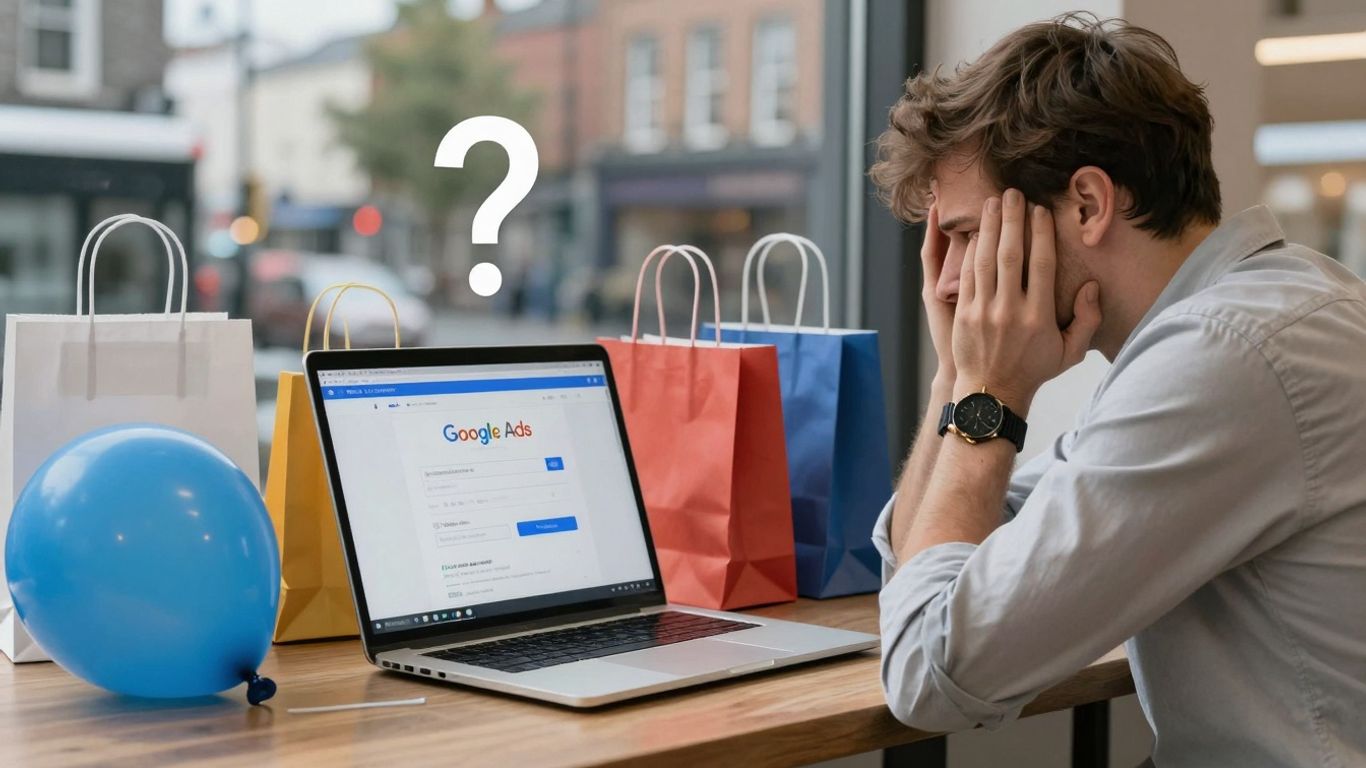
Sometimes, you’re getting plenty of clicks on your Google Ads, but they’re just not turning into actual customers. This is a classic case of your ad copy and messaging not quite hitting the mark, or perhaps not aligning with what people expect when they land on your site. It’s a common pitfall when troubleshooting Google Ads campaigns, especially when you’re trying to reach audiences in Ireland.
Are Your Ads Promising What You Deliver?
This is where things can go wrong very quickly. You’ve written an ad that sounds great, it’s catchy, and it’s getting clicks. But does it accurately reflect what you actually offer? If your ad promises a ‘free consultation’ but the landing page requires a credit card upfront, people are going to leave. It’s like advertising a five-star meal and then serving up a microwave dinner. This disconnect is a major reason why Google Ads might be driving traffic but no sales.
- Match the Offer: Ensure the product, service, or offer mentioned in your ad is immediately visible and clear on the landing page.
- Tone Consistency: If your ad uses a friendly, informal tone, the landing page should follow suit. A sudden shift to overly corporate language can be jarring.
- Address Specific Needs: If your ad targets a specific problem (e.g., ‘Struggling with damp in your Dublin home?’), the landing page should directly address that problem and offer a solution.
A mismatch between what the ad says and what the landing page does is a quick way to lose potential customers. They clicked because they thought you had the answer, and if you don’t present it clearly and immediately, they’ll just go back to the search results.
Call to Actions (CTAs) That Don't Convert
Your Call to Action (CTA) is the final nudge, telling people what to do next. If your CTAs are weak, confusing, or don’t match the user’s intent, you’ll see those clicks evaporate without conversions. For example, using an aggressive CTA like "Buy Now!" might not work as well for a UK audience who often prefer a more measured approach. Testing softer CTAs like "Find Out More" or "Get a Quote" can sometimes yield better results, especially for low conversion Google Ads Ireland campaigns.
Here are a few things to consider for your CTAs:
- Clarity: Is it obvious what will happen when they click? "Submit" is vague; "Request Your Free Quote" is much clearer.
- Relevance: Does the CTA align with the user’s stage in the buying journey? Someone researching might prefer "Compare Options," while someone ready to buy needs "Add to Cart."
- Urgency (Used Wisely): While not always appropriate, a gentle sense of urgency can work. "Limited Time Offer" is better than "Buy Now or Never."
It’s worth looking at how your ads are structured. Using techniques like ‘Ad Layering’, where you create multiple ad variations for different stages of the buyer’s journey, can help ensure your CTA is always relevant. This is a key part of rebuilding your campaigns like a strategist, not just a marketer, and can make a big difference when you’re facing issues with google ads driving traffic no sales. Remember, the goal is to guide the user smoothly towards a conversion, not just to get them to click.
Landing Page Experience: The Conversion Killer

So, you’re getting clicks, which is great! But if those clicks aren’t turning into actual leads or sales, your landing page might be the culprit. It’s the final hurdle, and if it’s not set up right, all your ad spend could be going to waste. A poorly designed or irrelevant landing page is a surefire way to lose potential customers before they even consider doing business with you. This is a common reason why your Google Ads are getting clicks but no leads in Ireland.
Relevance Between Ad and Landing Page
Think of your ad and landing page as a team. They need to be on the same page, literally. If your ad promises a specific discount on a product, the landing page needs to show that exact product with that discount front and centre. If there’s a mismatch, visitors get confused or feel misled, and they’ll likely hit the back button faster than you can say "conversion rate optimisation".
- Match the Offer: Does the landing page clearly present what was advertised?
- Consistent Messaging: Is the tone and language of the ad reflected on the page?
- Visual Alignment: Do the images or graphics in the ad relate to what’s shown on the page?
Visitors expect a direct continuation from the ad they clicked. Any deviation, however small, can break trust and lead to them leaving the page.
User Experience (UX) and Mobile Friendliness
How easy is it for someone to use your landing page? If it’s clunky, confusing, or just plain annoying, people won’t stick around. This is especially true for mobile users. So many people browse and shop on their phones these days. If your landing page looks like a desktop site squashed onto a small screen, or if forms are a nightmare to fill out on a phone, you’re losing a massive chunk of potential business. A good user experience means making it simple and straightforward for visitors to find what they need and take the desired action. This is a key part of optimising landing pages.
Slow Loading Times
Nobody has time to wait for a webpage to load these days. If your landing page takes more than a few seconds to appear, visitors will get impatient and leave. This is particularly true in competitive markets where potential customers have plenty of other options just a click away. Slow loading times can be caused by large images, unoptimised code, or poor hosting. It’s worth checking your page speed regularly and making improvements where needed. A faster page means a better chance of keeping visitors engaged and moving them towards becoming a lead.
Tracking and Measurement Issues
It’s easy to get caught up in the excitement of seeing clicks roll in, but if those clicks aren’t turning into actual business, we need to look at how we’re measuring success. Sometimes, the numbers just don’t tell the whole story, and that’s where tracking and measurement problems can really mess things up.
One of the biggest culprits is how we define a ‘conversion’. Are we just counting form fills, or are we looking at the whole journey? Many customers interact with your business multiple times before they actually buy something. If your tracking only counts the very last step, you might be giving Google Ads too little credit for the initial clicks that started the whole process. This can make your campaigns look less effective than they really are.
Here are a few things to check:
- What counts as a conversion? Think about ‘soft’ conversions (like signing up for a newsletter) versus ‘hard’ conversions (like a confirmed sale or a qualified enquiry). You need to track both, but don’t let soft ones fool you into thinking you’re doing better than you are.
- Multi-touch attribution: Most systems use ‘last-click’ attribution, meaning the last ad someone clicked gets all the credit. But what about the ads they saw earlier? Using more advanced attribution models can show you how different touchpoints contribute to a sale.
- GDPR and Consent Mode v2: Since March 2024, UK businesses have had to be extra careful about user consent. If users don’t opt in, Google has to ‘model’ conversions based on partial data. This can hide a lot of actual conversions, making your reported numbers look much lower than reality. Make sure your consent banner is clear and properly set up.
Relying on incomplete data is like trying to bake a cake with half the ingredients – it’s just not going to turn out right. You need accurate tracking to understand what’s truly working and where your money is best spent. Without it, you’re essentially flying blind.
It’s also worth looking at how different devices are performing. You might be getting loads of clicks on mobile, but if the landing page or checkout process is a nightmare on a phone, those clicks will never turn into customers. Check your mobile experience thoroughly. Getting your tracking set up correctly is key to understanding your Google Ads performance and making sure you’re not wasting money on clicks that go nowhere.
Sometimes, keeping track of how well your ads are doing can be tricky. It’s easy to get lost in all the numbers and not know what’s really working. We understand these challenges and can help you make sense of it all.
Want to see how we can improve your ad performance? Visit our website today for a free consultation!
Frequently Asked Questions
Can I really get good results with a small budget like €500 per month on Google Ads?
Yes, you absolutely can! While you won’t be able to compete with huge companies spending loads of money, a smart and well-planned campaign can definitely bring in phone calls, new customers, or even online sales. This is especially true if you’re focusing on a specific area or a niche market. It’s all about being clever with the money you have.
How long does it usually take to see results from Google Ads?
You’ll probably start seeing clicks and people visiting your website within a day or two. However, if you’re looking for actual results like phone calls, enquiries, or bookings, it might take a couple of weeks. The first month is often a time for learning, trying different things, and fine-tuning to figure out what works best for your business.
Should I try to run the Google Ads campaign myself, or is it better to hire someone?
If you have the time and enjoy learning how things work, you can certainly give it a go yourself. But, if you want to get results faster and avoid a lot of trial and error, working with an expert can help make sure your money is spent in the best possible way.
What types of businesses can benefit from using Google Ads?
Google Ads works really well for lots of different businesses. This includes local services like plumbers and dentists, shops, clinics, and even businesses that sell to other businesses. Basically, if people are searching online for what you offer, Google Ads can help you appear right when they’re looking.
Is Google Ads better than ads on Facebook or Instagram?
They are different tools for different purposes. Google Ads is excellent for reaching people who are actively searching for something specific, like ’emergency dentist Cork’. On the other hand, Facebook and Instagram are better for getting noticed while people are just scrolling through their feeds. For smaller budgets and quicker leads, Google Ads often gives you more value for your money.
How does artificial intelligence (AI) help with Google Ads?
Nowadays, we use AI tools to keep a constant eye on your campaigns. They can spot problems early on, send you alerts if something isn’t working right, and even suggest smart ways to make things better. This could be pausing a keyword that’s wasting money or moving your budget to the ads that are performing best. It’s like having a helpful assistant working behind the scenes.