
Most consumer brands sit on an asset they have never put a price on. If you have an email list of engaged subscribers who chose to hear from you, you are not just running a marketing channel. You are running a small media property, and media properties have a measurable value per thousand subscribers reached, the same way a magazine or a podcast sponsor slot does. The brands winning at email list monetisation in 2025 have worked this out. Most have not.
This guide is written for Irish and European direct to consumer (DTC), CPG and lifestyle brands who want a real playbook, not another list of generic tips. We will show you how to calculate your list’s CPM value in the next two minutes, map which monetisation model fits your list size, price a sponsored email slot properly, and stay inside GDPR while you do it. Let’s get into the part nobody else publishes.

Why Your Email List Is a Media Asset, Not Just a Marketing Channel
Here is the mental shift that changes everything. A marketing channel is something you spend money on to reach customers. A media asset is something other businesses will pay you to reach. Your email list is both, and treating it only as the first means you leave the second one on the table.
The economics are hard to argue with. On average, email drives an ROI of $36 for every dollar spent, higher than any other channel. For consumer brands specifically the number runs higher still: in the retail, ecommerce, and consumer goods sectors, the ROI stands at $45 for every $1 spent. That return is exactly why an advertiser will pay to borrow your inbox relationship, and why email list monetisation deserves a line in your revenue plan rather than a footnote.
Sponsored email slots are underused and underpriced by most consumer brands. The audience trust you have already built is the inventory. You just have never sold it.
This is the “owned media arbitrage” most brands miss. You spent money acquiring subscribers to sell your own products. Once that audience exists, the marginal cost of also showing them a relevant partner brand, an aligned affiliate offer or a paid tier is close to zero. That is the gap between treating your email list as a cost centre and treating your email list as a media asset.
How to Calculate the CPM Value of Your List
CPM means cost per mille, the price an advertiser pays to reach one thousand people. To price your list as a media asset you need three numbers: how many subscribers actually open a given send, the going CPM rate for email in your category, and your send frequency. The formula is simple:
(Subscribers reached x Open rate) ÷ 1,000 x CPM rate = value per sponsored send slot
A worked example: a list of 15,000 subscribers with a 35% open rate reaches roughly 5,250 inboxes per send. At a category CPM of €25, that single sponsored slot is worth about €131. Run it weekly and you are looking at €500 plus a month from inventory you already own. One Irish food and beverage brand we work with ran this calculation and found their email list CPM came out higher than the Facebook CPM they were paying at the time, which reframed the whole conversation about where their owned audience sat in the media mix.
Email List CPM and Revenue Calculator
Enter your numbers to estimate your monthly owned-email revenue and the value you could pitch to a sponsor. Nothing is stored or sent anywhere.
Before you sell a single sponsored slot, calculate your reach-per-send and your category CPM. That one number turns “we have an email list” into “we have media inventory worth roughly €X per send”, which is the language brand partners and your own finance team understand.
The Monetisation Readiness Ladder: Which Model Fits Your List Size?
Not every monetisation model suits every list. The single biggest mistake we see consumer brands make is trying to sell sponsored slots or launch a paid tier before they have the engaged audience or the trust to support it. Email list maturity matters. The Monetisation Readiness Ladder below maps the right move to each stage of list size, so you extract value without burning the relationship you built.
Stage 1, 0 to 1,000 Subscribers: Build Trust Before You Extract Value
Build trust before you extract value
At this size your job is not monetisation, it is momentum. Focus on email list growth through lead magnets and a sharp welcome flow, and let the only “monetisation” be your own product upsells and cross-sells. Selling a partner’s product to 600 people who barely know you is the fastest way to a spam complaint. Get your open rate healthy and your list growing first. Next action: ship a five-email welcome sequence and one strong lead magnet.
Stage 2, 1,000 to 10,000 Subscribers: Owned Revenue Models Take Shape
Owned revenue models take shape
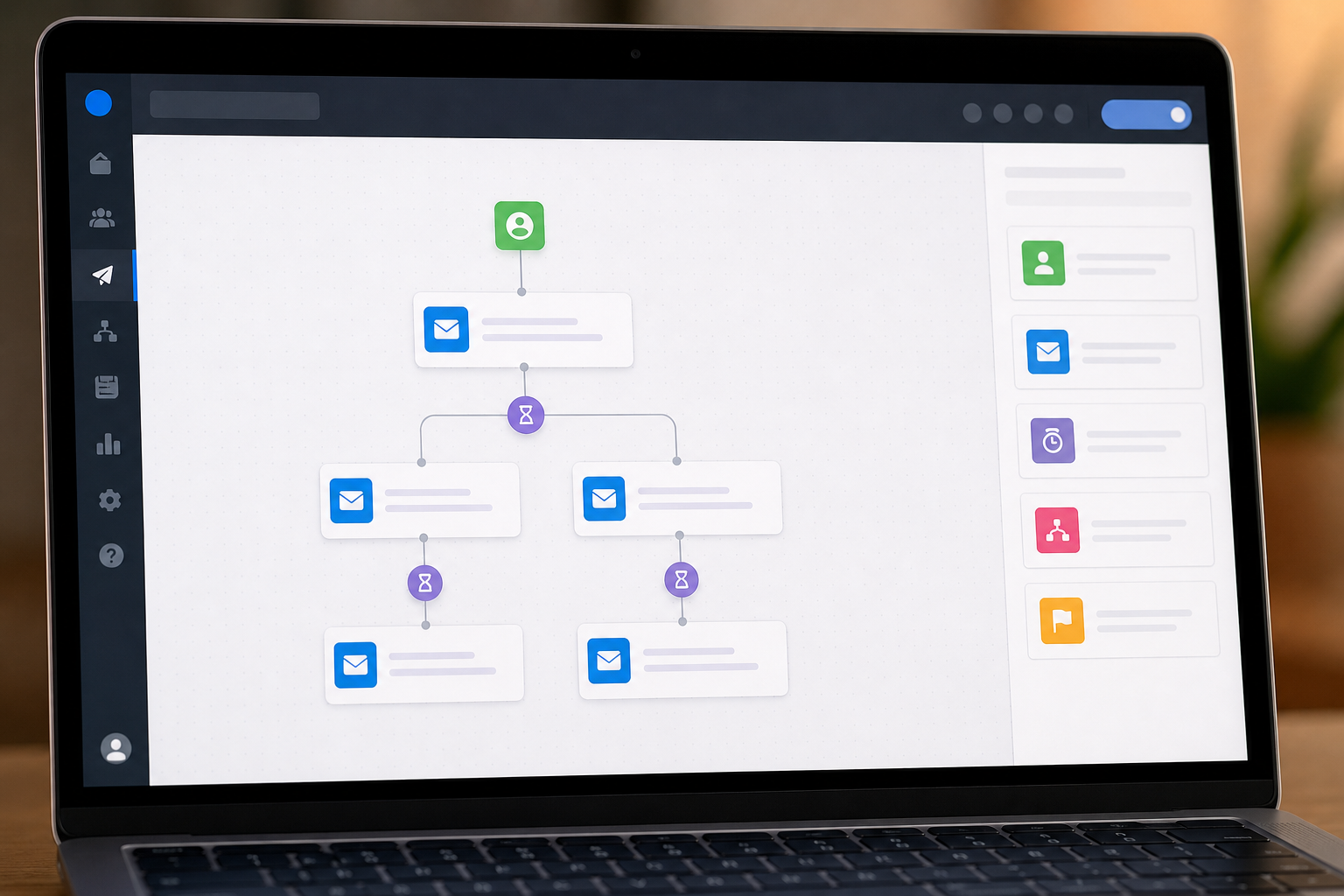
Now you have enough engaged subscribers that lifecycle automation, category-aligned affiliate links, a modest paid tier and co-marketing swaps all start to pay. This is where revenue per email (RPE), the average revenue each email generates, becomes your north star. Next action: segment by purchase frequency and turn on post-purchase and replenishment flows. Our guide to lifecycle email automation for DTC brands walks through the exact flows.
Stage 3, 10,000+ Subscribers: Sponsored Content and Brand Partnership Inventory
Sponsored content and brand partnership inventory
Above 10,000 engaged subscribers you have genuine media inventory. Now you can price and sell sponsored email slots to complementary brands, structure ongoing partnership deals, and treat your list CPM as a number on a media kit. Next action: build a one-page media kit with your reach, open rate, audience profile and CPM, and pitch two aligned non-competing brands.
The Six Core Monetisation Models for Consumer Brands
There are dozens of tactics floating around, but for consumer brands they collapse into six core models. Below is a comparison table so you can see at a glance which fits your list size, how the revenue works, and what the GDPR risk and launch effort look like.
| Model | List size minimum | Revenue type | GDPR risk | Effort to launch | Best ESP support |
|---|---|---|---|---|---|
| Sponsored email slots | 10,000+ | Flat fee / CPM | Medium | High | Klaviyo, Dotdigital |
| Affiliate promotions | 2,000+ | Commission | Low | Medium | Klaviyo, Mailchimp |
| Paid newsletter tiers | 3,000+ | Subscription | Low | Medium | Beehiiv, Substack, Klaviyo |
| Product upsells / cross-sells | Any size | Direct sales | Low | Low | Klaviyo, Dotdigital |
| Co-marketing list swaps | 5,000+ | Audience growth | High | Medium | Any ESP + consent |
| Gated content / digital products | 1,000+ | Direct sales | Low | Medium | Klaviyo, Mailchimp |
1. Sponsored Email Slots and Brand Partnership Deals
You sell a defined placement, a banner, a dedicated section, or a full standalone send, to a non-competing brand that wants your audience. This is the purest expression of your email list as a media asset. The trick is keeping the sponsor genuinely relevant to your subscribers. A sustainable skincare brand featuring an aligned wellness app reads as a recommendation. The same brand featuring a random crypto offer reads as a betrayal.
2. Affiliate Promotions Aligned to Your Category
You earn commission when subscribers buy a partner product through your link. Lower effort than full sponsorship and lower GDPR risk because you are emailing your own consented list. The discipline is category fit: only promote things your audience would plausibly buy anyway. Affiliate works well from a few thousand engaged subscribers upward.
3. Paid Newsletter Tiers and Exclusive Access
Some of your subscribers will pay for more. A premium tier, early product access, members-only drops or insider content turns your most engaged segment into recurring revenue. For consumer brands this doubles as a loyalty engine. It needs enough volume that even a small conversion rate produces meaningful subscribers, which is why we put the floor around 3,000.
4. Product Upsells and Cross-Sells via Lifecycle Automation
The most reliable monetisation model and the one available at any list size. Triggered post-purchase, replenishment and cross-sell flows run quietly in the background and compound. The data backs the priority: email flows massively outperform campaigns on revenue efficiency, generating nearly 41% of total email revenue from just 5.3% of sends, with average revenue per recipient nearly 18 times higher than campaigns. A lifestyle DTC client we managed saw RPE climb from about €0.11 to €0.19 over 90 days after segmenting their list by purchase frequency alone, before we touched a single subject line.
5. Co-Marketing List Swaps with Complementary Consumer Brands
Two non-competing brands each promote the other to their list, usually around a shared giveaway or bundle, and both grow. It is powerful for email list growth but carries the highest GDPR risk of the six models, because subscribers must explicitly consent to hear from the partner brand. You cannot simply hand over your list. We have advised co-marketing campaigns where a single joint giveaway added several thousand consented subscribers to each partner’s list, but only because the opt-in was clean and the partner brand was named at the point of consent.
6. Gated Content and Digital Product Revenue
Recipes, guides, templates, mini-courses or tools sit behind an email gate or a small price. For consumer brands this builds list and revenue at once, and the digital margin is high. It pairs naturally with the lead-magnet work you are already doing at Stage 1.

Segmentation and Personalisation as Prerequisites, Not Afterthoughts
You cannot monetise an undifferentiated blast list. Every model above depends on sending the right message to the right segment, and the data is blunt about the payoff. AI product recommendations lift email click rates to 3.75% on average, and 8.79% for top performers, while driving materially higher revenue per recipient. Personalisation is not a nice-to-have on top of monetisation. It is the mechanism that makes monetisation profitable instead of annoying.
Practical segmentation that drives revenue for consumer brands:
- Purchase frequency: one-time buyers, repeat buyers and lapsed customers each need a different offer and a different cadence.
- Engagement recency: the general rule is that you should send to your most engaged subscribers most often, and send to your less engaged subscribers less often.
- Category interest: zero-party data, the preferences a subscriber actively tells you, lets you only show sponsored or affiliate offers to the people who want them.
- Spend tier: your high-LTV subscribers are the ones most likely to convert on a paid tier or premium drop.
List Health and Deliverability: What Kills Monetisation Quietly
You can have the best monetisation strategy in Ireland and still earn nothing if your emails land in spam. Deliverability is the silent killer because it fails invisibly. Open rates drift down, revenue softens, and nobody points to the cause.
Authentication is now non-negotiable. Google and Yahoo enforced sender requirements for bulk senders starting February 2024, and Microsoft followed with DMARC enforcement from May 2025, so as of 2026 non-compliant bulk email is rejected outright, not just sent to spam, by all three major providers. If you have not set up SPF, DKIM and DMARC, fix that before anything else in this article.
List Health Checklist for Monetisation
- Authenticate fully: SPF, DKIM and DMARC live and aligned on your sending domain.
- Suppress hard bounces immediately: a bounce rate above 2% signals list problems to inbox providers.
- Run a sunset flow: re-engage dormant subscribers, then quietly remove the ones who never respond.
- Segment by engagement: stop blasting your full list with every send.
- Watch spam complaints: an unsubscribe is infinitely better than a complaint, so make opting out easy.
Pricing Sponsored Email Slots: A Practical Framework for Consumer Brands
This is where consumer brands leave the most money on the table, so let’s be concrete. There are two ways to price a sponsored slot, and you should quote whichever is higher.
1. CPM-based pricing
Reach per send (subscribers x open rate) ÷ 1,000, multiplied by a CPM of €20 to €40 for an engaged consumer list. This is the floor: what your inventory is objectively worth.
2. Value-based pricing
What is one converted customer worth to the sponsor? If their average order value is €60 and your slot can plausibly drive 30 orders, that slot is worth far more than its CPM floor. Price toward the value you create.
Translate US benchmarks before you quote them. American newsletter sponsorships often quote CPMs of $30 to $50, but EU list sizes and category norms differ, so start in the €20 to €40 band for an engaged consumer audience and adjust on proven conversion. Always cap the number of sponsored sends so you protect open rates, which protects the inventory you are selling.
Quote the higher of your CPM floor and your value-based price. Underpricing sponsored email slots is the single most common error consumer brands make, and it trains partners to expect cheap inventory forever.
GDPR and Irish Market Compliance: What Every EU Brand Must Know in 2025
Everything above is filtered through one reality that US-centric guides ignore: you are operating under GDPR and the ePrivacy rules. For brands in Ireland this matters doubly, because the Data Protection Commission is the lead EU supervisory authority for many of the largest tech platforms. Get consent right and monetisation is straightforward. Get it wrong and the model collapses.
The core principles for GDPR email marketing when you intend to monetise:
- Consent must be specific. If you plan to send sponsored or partner content, your sign-up should make that clear. Consent to receive your newsletter is not automatically consent to receive third-party offers.
- Co-marketing needs named-partner consent. Before a list swap, the subscriber must agree to hear from the named partner brand. You cannot transfer a list under legitimate interests.
- Keep proof. Record when and how consent was given. The ICO guidance on electronic mail marketing under PECR is a useful reference point for the ePrivacy layer that sits on top of GDPR.
- Make withdrawal as easy as giving. One-click unsubscribe, honoured immediately.
None of this blocks monetisation. It simply means lifecycle emails in Ireland and the wider EU are built on a clean consent foundation. If you want a deeper walkthrough of the compliance layer, see our take on email marketing strategy for consumer brands.
How Apple MPP Changes Your Monetisation Metrics
Apple’s Mail Privacy Protection broke the open rate as a reliable metric. Approximately 64% of B2C email subscribers now use an MPP-capable version of Apple Mail according to 2025 testing data, which means a majority of your list potentially registers false opens. For monetisation this has two consequences. First, when you pitch a sponsor on reach, be honest that open rate is inflated and lean on click rate as your real engagement proxy. Second, for your own reporting, shift to revenue-based metrics. Bot-driven phantom engagement has made open rates unreliable, pushing high-performing teams toward revenue per email, list churn, and lifetime value as the metrics that matter.
Emerging 2025 Tactics: AI, Zero-Party Data, and SMS Bridges
AI personalisation at scale
Zero-party data collection
Email to SMS bridges
AI is no longer just content generation. The teams pulling ahead apply it to segmentation, subject-line testing and send-time optimisation, and advanced AI adopters are 75% more likely to achieve ROIs above 45 to 1. For monetisation that means sharper targeting of which segment sees which sponsored or affiliate offer.
Zero-party data is the compliant engine for a post-cookie world. When a subscriber tells you their preferences directly through a quiz or preference centre, you can target sponsored and affiliate offers precisely without touching third-party data. Zero-party data is how you make personalisation both effective and GDPR-clean.
SMS bridges extend the same consented audience into a second high-intent channel, which raises the total value of the relationship you can monetise. Treat SMS as a complement to email, never a replacement, and gather separate consent for it.
Key Metrics to Track: RPE, CTOR, and LTV per Subscriber
If you monetise an email list you should obsess over three numbers, not the vanity open rate. Below is what good looks like for a consumer brand in 2025 and what to do if you fall short.
| Metric | Consumer brand benchmark 2025 | What it tells you | Action if below |
|---|---|---|---|
| Revenue per email (RPE) | Above €0.12; top flows €0.25+ | How much each send earns | Segment harder, prioritise flows over blasts |
| Click rate (campaigns) | 2.5% to 4.5% | Real engagement, MPP-proof | Tighten relevance and audience targeting |
| Flow vs campaign revenue split | 50% to 60% from flows | Whether automation is built out | Build welcome, cart and post-purchase flows |
| List growth rate (net) | 8% to 15% monthly | Whether your asset is appreciating | Stronger lead magnets and sign-up forms |
| Bounce rate | Under 2% | Deliverability health | Suppress bounces, clean the list |
Note that top 10% email flows achieve revenue per recipient as high as $7.79 and click rates over 10%, demonstrating that sophisticated segmentation, content relevance and orchestration define best-in-class performance. The gap between average and best-in-class is almost entirely segmentation discipline, which is the cheapest lever you have.
Tools That Support Consumer Brand Email Monetisation
Your email service provider (ESP) determines how far you can push every model above. For consumer and DTC brands the practical shortlist:
Klaviyo
The default for DTC and ecommerce. Deep segmentation, strong flow automation and benchmark data baked in. Best fit for brands serious about RPE and lifecycle monetisation.
Dotdigital
Strong in the European and Irish market, enterprise-grade segmentation and good GDPR tooling. A solid choice for larger consumer brands.
Mailchimp
Accessible for smaller lists and Stage 1 brands. Capable on affiliate and gated-content models, lighter on advanced flow revenue attribution.
Whichever you choose, the platform is the enabler, not the strategy. Klaviyo email marketing in expert hands will out-earn a more expensive tool run without segmentation discipline every time. If you want hands-on help, our team at the email marketing agency in Greystones builds these systems for Irish and European consumer brands.
What is your email list actually worth?
We help Irish and European consumer brands turn engaged email lists into a measurable, GDPR-compliant revenue stream, from lifecycle flows to sponsored inventory.
FAQ: Monetising Your Email List as a Consumer Brand
How do I start monetising my email list without alienating subscribers?
Start with models that serve the subscriber, not just you. Product upsells and category-aligned affiliate offers feel like recommendations when they fit. Only introduce sponsored content once you have an engaged list, keep partners genuinely relevant, cap how often you send monetised emails, and lead with value most of the time. Trust is the asset, so never spend it faster than you build it.
What is a realistic revenue per email (RPE) benchmark for 2025?
For consumer and ecommerce brands, aim for revenue per recipient above roughly €0.12 across your program, with strong automated flows reaching €0.25 or higher. Abandoned-cart and post-purchase flows run far above average, while broadcast campaigns sit lower. A lifestyle DTC client we managed moved from around €0.11 to €0.19 in 90 days on segmentation alone.
How many subscribers do I need before I can sell sponsored email slots?
As a rule of thumb, around 10,000 engaged subscribers gives you enough reach per send to make a sponsored slot worthwhile for a partner brand. Below that, affiliate promotions and your own product upsells are a better fit. What matters more than raw list size is open and click engagement, because that is the reach a sponsor is actually paying for.
What is the difference between affiliate and sponsored deals, and which suits a consumer brand?
Affiliate monetisation pays you a commission when subscribers buy through your link, so your income scales with conversions and risk is low. Sponsored content is a flat fee or CPM the partner pays for placement, regardless of sales. Affiliate suits smaller lists and category-aligned products. Sponsored deals suit larger lists with real reach to sell. Many consumer brands run both.
How does GDPR affect email list monetisation in Ireland and the EU?
GDPR and ePrivacy rules require specific, informed consent. Newsletter consent does not automatically cover third-party or sponsored content, so make your intentions clear at sign-up. Co-marketing list swaps need the subscriber to consent to the named partner brand. Keep records of consent and make unsubscribing instant. Compliance does not block monetisation, it just means you build on a clean consent foundation.
How do I calculate the CPM value of my email list to pitch advertisers?
Multiply your subscriber count by your open rate to get reach per send, divide by 1,000, then multiply by your category CPM rate (€20 to €40 for an engaged consumer list). A 15,000-subscriber list at 35% open rate and a €25 CPM is worth about €131 per sponsored send. Use the calculator near the top of this guide to run your own numbers.
What email marketing tools are best for monetising a list in 2025?
For DTC and consumer brands, Klaviyo is the default thanks to deep segmentation and flow automation. Dotdigital is strong for larger European brands with robust GDPR tooling. Mailchimp suits smaller, earlier-stage lists. The tool matters less than the segmentation and lifecycle discipline you apply, so choose for your stage and commit to using its automation properly.
How often can I send monetised emails before open rates and trust drop?
There is no universal number, but a useful rule is that purely promotional or sponsored content should be the minority of your sends, not the majority. Send to your most engaged segments more often and your least engaged less often, watch unsubscribe and spam-complaint rates as your early-warning system, and cap sponsored slots so they never crowd out the value content subscribers signed up for.