
Here is the objection we hear from Irish business owners almost every week: “E-E-A-T is only for big brands and medical websites, so it has nothing to do with my painting business in Galway.” That belief is wrong, and it is quietly costing local firms rankings they should be winning. E-E-A-T optimisation is the framework that actually favours small, real, hands-on businesses, if you know how to translate what you already have into the signals Google looks for.
Google added the extra “E” for Experience precisely to reward demonstrated, real-world knowledge rather than academic titles. A Galway plumber with 200 verified Google reviews and a genuine before-and-after case study page demonstrably out-signals a polished, faceless corporate page on local search quality. This is the practical, Irish version of E-E-A-T that no global SEO tool vendor has bothered to write, written by a team that runs these audits for SMEs across Leinster every month.
What Does E-E-A-T Actually Mean?
E-E-A-T stands for Experience, Expertise, Authoritativeness and Trustworthiness. It comes straight from Google’s Search Quality Rater Guidelines, the manual Google gives the thousands of human raters it employs to assess whether search results are genuinely helpful.
One thing to be clear about up front: the raters do not change your rankings directly. Their scores tell Google’s engineers whether an algorithm update is producing good results. So E-E-A-T is a description of what “good” looks like, and Google then builds its core algorithm updates to chase that target. Get the signals right and you align yourself with the direction every update is heading.
Trust sits at the centre. Google’s own documentation positions it as the most important member of the family, because a page can be expert and authoritative and still be untrustworthy. The other three pillars all feed into it.
Experience
Have you actually done the thing you are writing about? A roofer describing how a particular Irish weather system causes flat-roof failures has experience. An AI-spun article that has never seen a roof does not. First-hand content is the cleanest way to show it: photos of your own jobs, specific details only a practitioner would know, honest notes on what went wrong.
Expertise
Do you have the skill and knowledge to get it right? Expertise is about depth and accuracy. For a YMYL topic that might mean formal qualifications. For a tiling guide it means you clearly know your materials, your tolerances and the common mistakes. Expertise and experience overlap, but expertise is about knowing and experience is about doing.
Authoritativeness
Are you a recognised go-to source? Authority is earned outside your own website, through other people referencing you: backlinks, brand mentions, citations in local press, being the name people recommend. It is the hardest pillar to fake and the one small businesses most often under-invest in.
Trustworthiness
Can people rely on you and your site? Trust covers accurate information, transparent ownership, secure connections, real contact details, honest reviews and a clear privacy policy. A site can score well on the other three and still fail here, which is why Google treats it as the anchor.
E-E-A-T is not a ranking dial you turn up. It is the quality standard Google’s human raters use to judge whether algorithm changes are working, which means every core update is, in effect, hunting for it.
E-A-T vs E-E-A-T: What Changed and Why It Matters
For years the concept was just E-A-T: Expertise, Authoritativeness, Trustworthiness. The framework changed when Google added Experience to the front of it, and that single letter reshaped the game in favour of practical, real-world businesses.
| Aspect | E-A-T (pre-2022) | E-E-A-T (current) |
|---|---|---|
| Pillars | Expertise, Authoritativeness, Trust | Experience, Expertise, Authoritativeness, Trust |
| Who it favoured | Credentialed experts, established brands | Anyone who has genuinely done the thing |
| Best proof | Qualifications, citations, links | First-hand accounts, case studies, reviews, plus the above |
| SME advantage | Limited | Significant, if local proof is documented |
When Google Added “Experience” (December 2022)
Google added the Experience pillar in December 2022. You can read Google’s official announcement of the update to its rater guidelines. The reasoning was simple: a great deal of useful content comes from people with direct, lived experience that no degree confers. A genuine product review by someone who used the product beats a polished page written by someone who never touched it.
Why the Extra E Levels the Playing Field for Smaller Businesses
This is the part most guides skip. The original E-A-T tilted toward credentials and big-brand link profiles. Experience does the opposite. The plumber, the cafe owner, the local solicitor all have something a content farm cannot manufacture: they have actually done the work, in your town, for real customers.
The addition of Experience was the moment Google stopped rewarding only who looks authoritative and started rewarding who has genuinely been there. That is the best news an Irish SME has had from Google in years.
Is E-E-A-T a Ranking Factor? (The Nuance Most Guides Miss)
No, and yes. There is no single “E-E-A-T score” in Google’s algorithm that you can optimise the way you optimise a title tag. Google has been explicit that E-E-A-T is a concept, not a direct ranking factor.
But that distinction matters less than it sounds. Google builds systems designed to identify signals that line up with high E-E-A-T, and the human raters who score search quality are told to assess it directly. So while no dial says “E-E-A-T,” the things E-E-A-T describes, helpful first-hand content, real authorship, genuine reviews, trustworthy site signals, absolutely influence how you perform, especially after a core algorithm update.
YMYL: Why Some Niches Are Held to a Higher Standard
YMYL stands for “Your Money or Your Life.” These are topics that, if the information is wrong, could genuinely harm a person’s health, financial stability, safety or wellbeing. Think medical advice, legal guidance, financial products, tax, or anything affecting major life decisions.
Google holds YMYL pages to a much higher E-E-A-T standard because the stakes are higher. A flippant blog post about a tax deadline or a medication dosage can do real damage in a way a recipe blog cannot.
YMYL examples
Financial advice, medical and health content, legal services, insurance, safety information, news on current events, anything affecting money or wellbeing.
Non-YMYL examples
Hobby blogs, recipes, local restaurant reviews, decor inspiration, most general-interest content where an error is low-stakes.
Where do most Irish SMEs sit? Often in a grey zone. A solicitor or accountant is firmly YMYL and must show real credentials. A painter or florist is not, which means demonstrated experience and genuine reviews carry more of the load than formal qualifications. Know which category you are in, because it changes which signals you prioritise.
How to Build E-E-A-T as an Irish SME or Local Service Business
Here is where the Irish reality diverges from generic advice. You do not need a wall of certifications. You need to document the proof you are already generating every day and put it where Google and your customers can see it. This is also the heart of strong local SEO Ireland practice.
Local Proof Over Academic Credentials
For non-YMYL trades and services, local proof beats theory. Job photos, named local projects, “we have served Wicklow for 14 years,” named team members, real testimonials with first names and towns. These are experience signals a competitor in another country cannot replicate and an AI cannot invent.
Google Reviews and Google Business Profile as E-E-A-T Signals
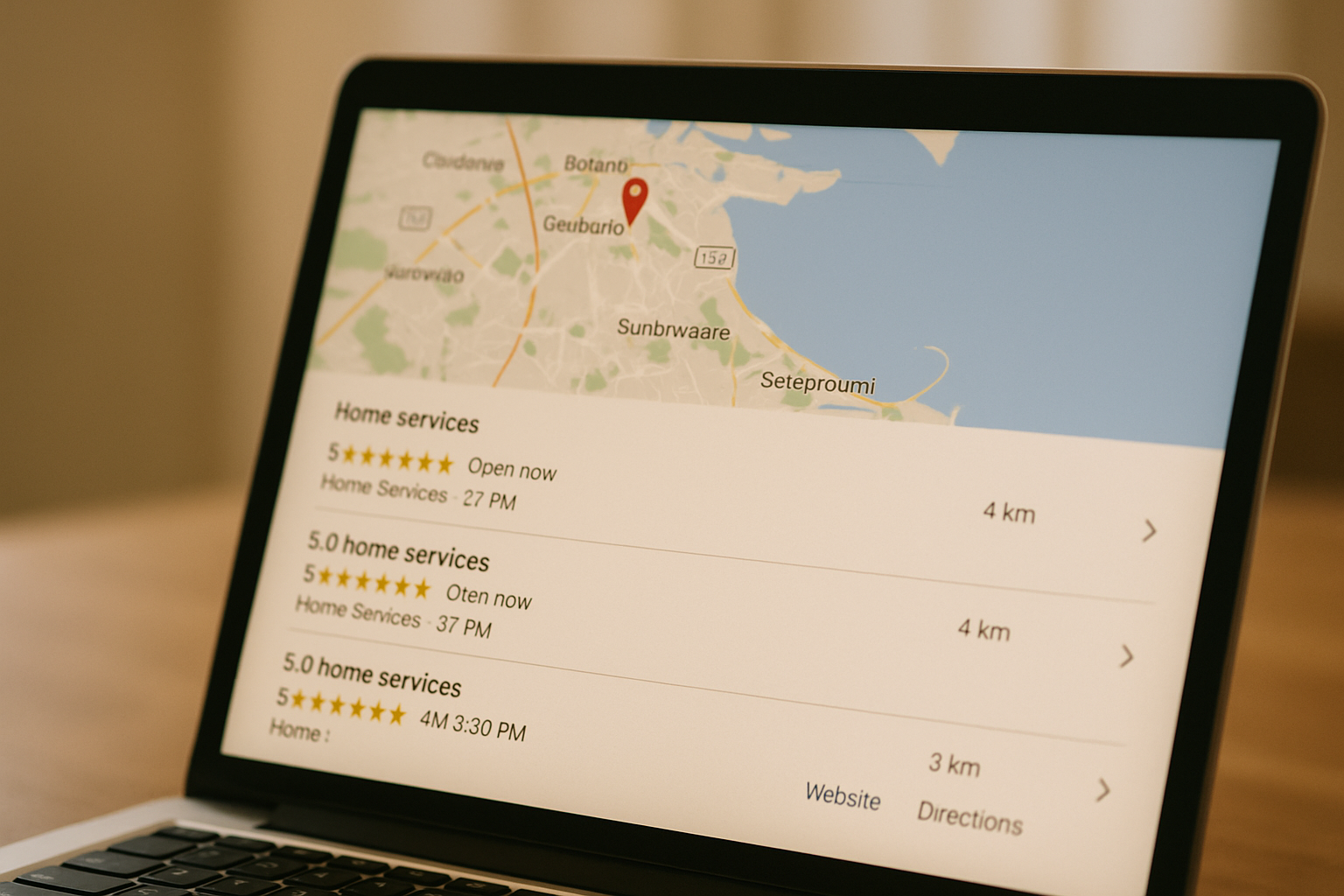
Your Google Business Profile is one of the strongest, most under-used trust assets you own. Reviews are a measurable trust signal, and a steady stream of genuine, recent, responded-to reviews tells both customers and Google that real people keep choosing you.
Across our work with local service clients, the firms that combine a well-kept Google Business Profile with a structured review programme see compounding gains in local pack visibility, and those calls, not just form fills, are the leads that actually book jobs. If you want the full local playbook, our SEO services in Ireland page covers how this fits a wider strategy.
Local Press Mentions, Community Partnerships, and Citations
Authority does not require a feature in a national newspaper. Local press, a sponsored under-12s team, a chamber of commerce membership, a quote in a regional supplement, a mention on a community Facebook group: these are all citations that build your authoritativeness in your actual market. Being quoted by or alongside recognised voices, even famous SEO leaders or respected industry figures, signals to Google that credible people take you seriously.
GDPR Compliance as a Trust Signal (a Distinctly Irish and EU Lever)
This is the lever no global SEO guide mentions, and it is a genuine Irish and EU advantage. A clear, compliant cookie consent banner, a real privacy policy, transparent data handling and a visible contact route all reinforce trustworthiness. Under GDPR you are legally obliged to do much of this anyway, so you may as well treat it as the trust signal it is. A site that mishandles consent or hides its data practices reads as untrustworthy to a careful rater.
Stop guessing where your trust gaps are
We run structured E-E-A-T and local SEO audits for Irish businesses every month. If you would rather not piece it together alone, work with an SEO team that knows the local market.
On-Page E-E-A-T Signals You Can Implement This Week
E-E-A-T is not only off-page link building. A huge amount of it lives on your own site, in signals fully within your control. Here are the ones worth doing first.
Author Bios That Actually Demonstrate Experience
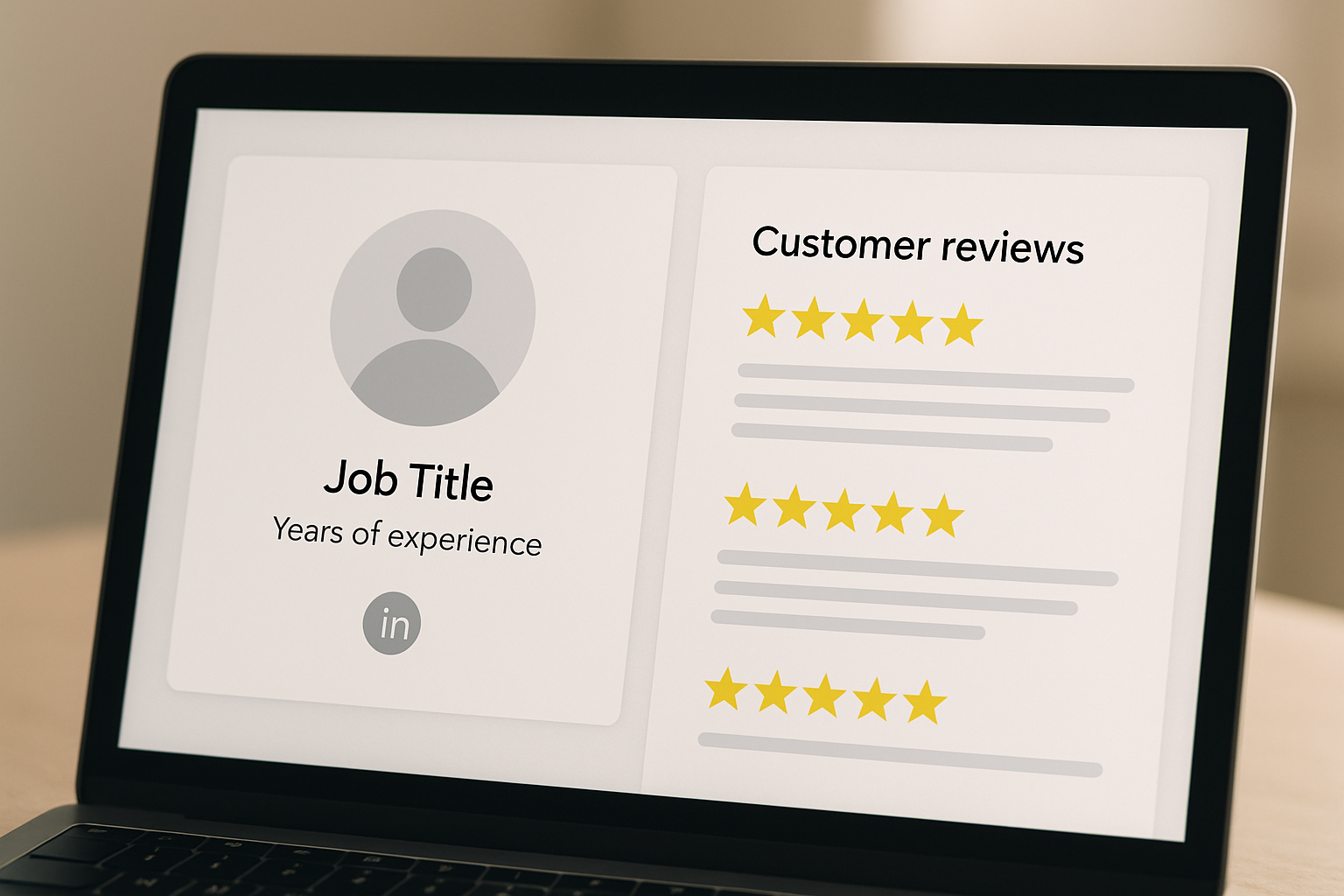
An author bio is not a formality. It should state who wrote the piece, their role, their relevant experience and a first-hand claim (“has managed Google Ads for 30+ Irish trades”). Link it to a real LinkedIn profile. A named, experienced author beats anonymous content every time.
About Pages, Team Pages, and Founder Stories
Your About and Team pages are E-E-A-T pages whether you treat them that way or not. Real photos, real names, the founder’s story, how long you have been trading, where you are based. Faceless companies score poorly on trust. Show the humans.
First-Hand Content: Case Studies, Before/After, Testimonials
Case studies are the single most powerful experience signal a service business has. A genuine before-and-after with specifics, the problem, what you did, the measurable outcome, demonstrates experience, expertise and trust in one page. Generic blog posts cannot compete with “here is exactly how we did this for a real client.”
Technical Trust Signals (HTTPS, Contact Info, Privacy Policy)
The boring basics still matter. HTTPS across the whole site, a visible phone number and address, a real email, a privacy policy and terms, and consistent business details. These are table stakes for trust, and missing them is a quiet way to fail.
| On-page signals (you control) | Off-page signals (others confer) |
|---|---|
| Author bios with real credentials | Backlinks from local authority sites |
| About / Team / founder pages | Brand mentions and unlinked citations |
| Case studies and first-hand content | Google reviews and ratings |
| HTTPS, contact info, privacy policy | Local press and directory listings |
| Schema markup and editorial standards | Recommendations from recognised voices |
Off-Page E-E-A-T Signals
Off-page is where authoritativeness is built. You cannot self-declare authority; other people confer it on you.
Earning Backlinks Through Local Authority
Forget buying links. Earn them by being genuinely useful locally: a sponsorship that gets a link from a club site, a guest piece in a regional publication, a supplier or partner who links to you. Quality and relevance beat quantity every time.
Brand Mentions, Directories, and Unlinked Citations
Google notices when your business name appears across the web, even without a link. Consistent listings in reputable Irish directories, mentions in local news, and discussion of your brand on community platforms all build authority. Keep your name, address and phone number identical everywhere.
Schema Markup to Surface Trust Signals to Google
Schema markup is structured data that tells Google explicitly what your content is: who the author is, what your organisation is, what your reviews say. It does not create trust, but it surfaces the trust signals you already have so search engines can read them reliably. It is one of the cleaner technical wins on this list.
AI-Generated Content and E-E-A-T: The Human-First Editorial Workflow
Google’s position is that it rewards high-quality content regardless of how it is produced, and that appropriate use of AI is not against its guidelines. The catch is the word “quality.” Mass-produced, unedited AI content with no first-hand experience is exactly what E-E-A-T is designed to filter out.
This connects directly to the future of keyword research. As AI Overviews and generative search (GEO) reshape how people find answers, E-E-A-T increasingly governs which sources get cited, not just which pages rank. Keyword strategy and trust are now the same conversation: you target the questions your audience asks, then earn the right to be the trusted answer.
The defence is a human-first editorial workflow. In our own content production, every article goes through a human brief, a human-led draft, a fact-check against primary sources, and a client review before it is published. AI can assist with research and structure; the experience, judgement and accountability stay human. That is the workflow we recommend to any client managing a blog at scale.
AI as a tool is fine. AI as the author, with no human experience, fact-checking or accountability behind it, is precisely the kind of content E-E-A-T exists to demote. Keep a human in the loop and on the byline.
How to Audit Your Site’s E-E-A-T With Free Tools (The Sink or Swim Framework)
Here is the practical part. Four steps, one per pillar, using free tools. When we run these audits for Irish SMEs, the most common failure point we see is missing or anonymous authorship on service and blog pages, so do not be surprised if that is your first fix too.
Run the Experience Audit
Open your key pages. Do they show first-hand proof, real job photos, named projects, specific local detail? Or could they have been written by anyone, anywhere? Free tool: just your own browser and an honest eye. Flag every page with no evidence the author has done the thing.
Run the Expertise Audit
Check author attribution and depth. Is every important page signed by a named, qualified person with a bio? Is the content accurate and detailed enough to satisfy an expert? Free tool: Google Search Console to see which pages get impressions, then prioritise adding author bios to those first.
Run the Authority Audit
Search your brand name. Who mentions you, and where? Count your backlinks, directory listings and press mentions. Free tool: a Google search for your brand plus Google Search Console’s Links report to see who already references you.
Run the Trust Audit
Confirm HTTPS, a visible privacy policy, real contact details, GDPR-compliant consent, and a healthy, recently-answered review profile. Free tool: your own Google Business Profile dashboard plus a manual check of your footer and policy pages.
The Sink or Swim E-E-A-T Self-Audit Scorecard
Tick every signal you have genuinely in place. Then hit the button for a score out of 20 and a next step per pillar. Nothing is stored or sent anywhere.
E-E-A-T as an Ongoing Governance Process, Not a One-Time Fix
The biggest mistake is treating E-E-A-T as a checklist you complete once. It is a durable best practice, not a passing algorithm trick, and that means it is a governance process. Reviews go stale, authors leave, case studies date, links rot, policies need updating.
Build a simple cadence: a quarterly review of author bios, a monthly look at new reviews and responses, a twice-yearly content audit for accuracy. Treat it the way you treat your accounts, something maintained, not something done. The businesses that win are the ones that keep showing up as trustworthy, month after month.
Your ongoing E-E-A-T governance routine
- Monthly: request, monitor and respond to Google reviews, keep your Google Business Profile current.
- Quarterly: review author bios and add named authorship to any new pages.
- Quarterly: publish at least one genuine case study or first-hand piece.
- Twice a year: audit key content for accuracy and refresh dated material.
- Twice a year: check links, directory listings and NAP consistency.
- Annually: review privacy policy, consent and GDPR trust signals.
Reviews compound
Real authorship wins
Trust is the anchor
For more on adapting to AI-driven search, our guides on answer engine optimisation techniques and the best SEO tools to track your progress pair well with the E-E-A-T work above.
Frequently Asked Questions About E-E-A-T
How do I improve E-E-A-T?
Start by auditing each of the four pillars: add named author bios with real experience, publish genuine case studies, earn local mentions and links, and tighten your trust signals like reviews, HTTPS and a clear privacy policy. Use the four-step audit framework and scorecard above to find your weakest pillar first. Then treat the fixes as an ongoing routine rather than a one-off project.
What does E-E-A-T mean?
E-E-A-T stands for Experience, Expertise, Authoritativeness and Trustworthiness, the quality standard set out in Google’s Search Quality Rater Guidelines. It describes what genuinely helpful, trustworthy content looks like, with Trust sitting at the centre of the other three pillars.
Is E-E-A-T important for SEO?
Yes, but with a nuance. E-E-A-T is not a single direct ranking factor you can optimise like a meta tag, it is a quality concept that Google’s human raters assess and its core updates are built to reward. So while there is no “E-E-A-T score” in the algorithm, the signals it describes strongly influence how you perform.
What is the difference between E-A-T and E-E-A-T?
E-A-T was the original framework: Expertise, Authoritativeness and Trust. In December 2022 Google added a second “E” for Experience, creating E-E-A-T, to reward content from people with genuine first-hand experience rather than only credentialed experts. That change works in favour of practical, real-world businesses.
Does E-E-A-T matter for small businesses in Ireland?
Absolutely, and it often favours them. The Experience pillar rewards demonstrated real-world work, which a local Irish business with genuine reviews, case studies and community presence has in abundance and a faceless competitor does not. Documenting that local proof, including GDPR-compliant trust signals, is one of the most cost-effective SEO investments an Irish SME can make.