
Most Irish business owners already know Reels matter. The problem is what happens after that: you post when you remember, you copy a global trend that never lands with a local audience, and you judge the whole thing on likes that bring in no enquiries. Three problems, no system. This guide fixes all three with one repeatable weekly cycle you can run in a few hours.
We build and manage Reels programmes as part of our work as a social media marketing agency in Ireland, so everything below comes from running these accounts, not from a template. If you want the short version of a solid Instagram business Reels marketing strategy for 2026, start here.
A Reels growth strategy that works is a system, not inspiration: pick clear goals, know your local audience, run a fixed content mix, batch-film once, and track watch time, shares and saves rather than likes. Done weekly, that beats random posting every time.
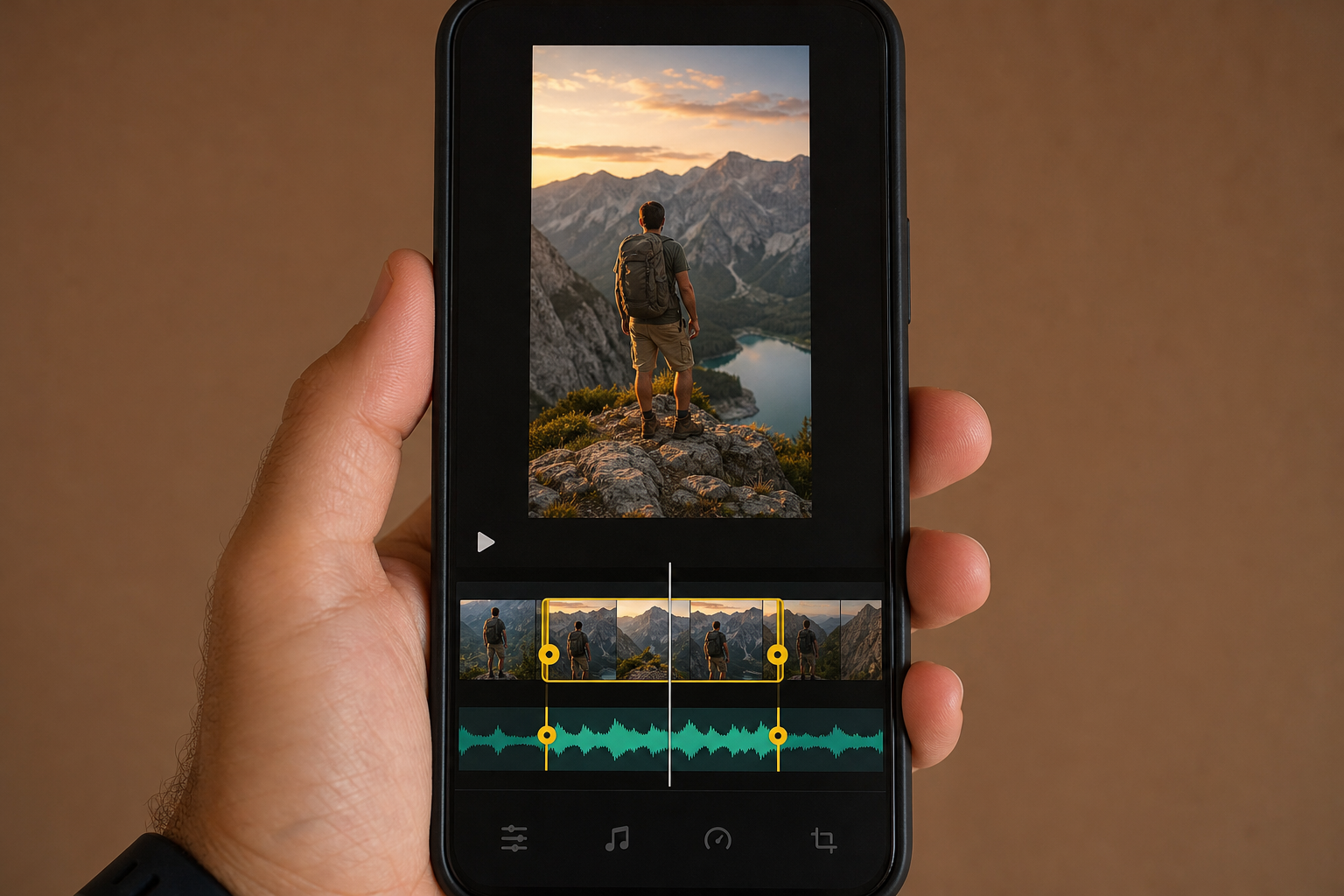
Why Instagram Reels Still Drive Real Business Growth in 2026
Reels remain the fastest way to reach people who do not already follow you. That is the whole point of the format, and it is why a small business can outperform a much larger competitor on reach alone. Short-form video is where the distribution sits, and the Explore page keeps feeding your content to new viewers as long as it holds attention.
I would say the biggest issue with Irish business accounts who are in Reels right now is that they have no value offer or no way to engage with people who are watching their content further. For example, every person that watches your video or likes your video or engages with your video is potentially someone who is interested in your services.
Really, you need to engage with those people, send them a quick DM, follow their page, even check out their website, and start building up a list of people who are actively interested in your content, as it’s a good, positive user signal towards your content. Additionally, you can do so much with that data then. You can run retargeting campaigns.
You can create ideal customer profiles based on that. I think likes and follower counts are, especially in 2026, over-exaggerated. There’s a lot of bots, a lot of fake social media firms that just rack up likes and follower counts instead of real user signals, which is watch time, shares, and even to the point of Meta and Google are able to track who you send that content to and what that person does with it.
It’s really advanced, this type of data that can be profiled based on social media posts and what happens with those posts after they are uploaded. In general, I would just say keeping things local first? Start very small within your county or in your town, creating content for them, and then slowly, over the course of a year or two or three, building out more global content.
The benefit of that is you start off with an account that starts getting local user engagement first, and then it expands and grows naturally, and that’s a really good signal.
The scale behind this is substantial. Meta’s Q4 2024 earnings data put daily reshares of Reels across its apps in the billions, and according to Meta, Reels distribution continues to lean heavily on sends and engagement rather than follower count. For a time-poor Irish SME, that distribution is free reach you simply cannot buy at the same efficiency.
The part that matters for your bottom line is this: reach only counts if it moves enquiries. We treat a Reel the same way we treat a Google Ads click, as the top of a path that has to end in a phone call or a form. In the home-services accounts we manage, phone calls consistently match or outrank web forms as the lead channel, so the goal of a Reel is never the view itself. It is the viewer who later picks up the phone.
How the Instagram Reels Algorithm Actually Works
The Instagram Reels algorithm is not a mystery. It is a prediction engine trying to guess whether a given viewer will watch, react to, and share a given Reel. The signals it reads are behavioural, and they are ranked. Get the top signals right and reach follows.
The Four Signals That Determine Your Reach (Watch Time, Replays, Shares, Saves)
Four behaviours do most of the heavy lifting. Watch time tells the algorithm your video held attention. Replays say it was worth a second look. Shares, sends to a friend especially, are the strongest vote of confidence a viewer can give. Saves signal lasting value, the kind of content people want to come back to.
Notice what is missing from the top of that list: likes and followers. They are weak signals. A viewer tapping a heart while doom-scrolling tells the algorithm very little, which is why chasing likes is a poor strategy for a business.
I think in general, the thing that surprises me with clients the most is that people think they get 1,000 likes or 2,000 likes, and it’s automatically gonna mean them getting loads of business. But really, from a reel point of view, the whole strategy of reels is getting people who are not necessarily your followers to like your video, and a lot of that is like 90% of that is people just doom scrolling, and if they see something they like, they like it, and they’ll never engage with your business again.
This is why you need a system in the background working so that you’re able to capture that person at the point of interest and then take action on that information. That in and of itself would lead to sales and would lead to actual generation real business for your company. Another big user signal is watch time drop-off after three seconds.
Again, it goes back to people doom scrolling. It goes back to people just sitting on their couches or their sofas at home and watching Instagram videos. Unfortunately, in this day and age, people are fickle, so if your video doesn’t look good or if you don’t look good on camera, then a lot of the time you’re gonna get swiped within five seconds.
If that happens, then that’s a negative user signal on your video, and likely your reach will be reduced. The reason why that is, is these platforms are incentivized to keep people on the platform. How do they keep people on the platform? They keep people on the platform by having content that keeps people watching those videos. Unfortunately, we’re in the day and age where people’s attention spans are super low, and everybody is looking for an adrenaline and dopamine fix off their videos.
In general, I think starting with a small engaged audience first, like your friends and family, is a really good, smart strategy, and then just being consistent with content and trying out different videos, trying out different strategies, and see which ones get the most reach, the most views, the most clicks, the most likes. Those are all useful metrics to use in your strategy.
Why Engagement Ratio Beats Raw Follower Count
This is the single most useful idea for a small Irish business, and almost nobody explains it. The algorithm cares about the rate at which your audience engages, not the size of your audience. A small, engaged account often out-reaches a large, passive one.
Benchmark patterns bear this out: accounts in the 1,000 to 5,000 follower range frequently see view rates around 20%, while accounts past 100,000 followers can drop to roughly 4%. Smaller is often an advantage here, because the algorithm rewards a tight, responsive audience.
Account A, large and passive
50,000 followers. 1% engagement rate. Posts reach a tiny slice of followers and rarely travel beyond them. Impressive on paper, weak in practice.
Account B, small and engaged
2,000 followers. 8% engagement rate. High watch time and shares push each Reel onto Explore, so reach regularly exceeds Account A’s.
Account B wins. Engagement ratio, not follower count, is the input the algorithm trusts. For a time-poor SME that is liberating: you do not need a huge audience, you need an engaged one. Optimise for the rate, not the number.
We see the same principle in our paid accounts, where a smaller, tightly-targeted campaign routinely beats a broad one. On one managed campaign, a bid adjustment took an in-market audience from 2 conversions at around $190 each to 6.5 conversions at roughly $76 each in the next period. Tighter and more relevant beats bigger and vaguer, on Reels and on ads alike.
Before You Film Anything: Set Goals and Know Your Audience
Filming before you have set your Instagram Reels goals is the most common way to waste a batch day. Decide what each Reel is for, then decide who it is for. Everything downstream, the hook, the audio, the call-to-action, flows from those two answers.
Mapping Your Reels Goals to Business Outcomes
Reels goals should map to a business outcome, not a vanity metric. Three outcomes cover most Irish SMEs, and each demands a different kind of Reel.
Awareness: reach new local viewers
Conversion: drive enquiries and sales
Retention: keep existing customers warm
If the goal is brand awareness, you want shareable, broadly appealing content with a strong hook. If the goal is conversion, you want a clear call-to-action and a path off the platform, a link in bio, a DM prompt, a phone number. If the goal is retention, behind-the-scenes and FAQ content keeps your existing audience engaged. Name the goal before you pick up the camera.
Defining Your Instagram Reels Target Audience
Your Instagram Reels target audience is narrower than you think, and that is good. Begin local and picture the specific customer in your county who books your service, then make content for them first. The broad, global account can come later once the local signal is strong.
The Content-Mix Rules Every Irish Business Should Know
People search for these rules constantly and almost no competitor explains them. A content-mix rule stops you posting five sales pitches in a row and keeps your feed varied enough that the algorithm, and your audience, stay interested. Here are the three worth knowing.
What Is the 5-3-2 Rule on Instagram?
The 5-3-2 rule splits every ten posts into five pieces of shared or curated content from others, three pieces of your own content, and two personal, human posts. It leans heavily on sharing, which makes it good for awareness and community building, less so for direct selling.
What Is the 5-3-1 Rule on Instagram?
The 5-3-1 rule flips the emphasis: five pieces of your own original content, three curated or shared, and one promotional. It is the most balanced default for a business that wants to build authority while still selling occasionally.
What Is the 4-1-1 Rule on Instagram?
The 4-1-1 rule gives you four educational or value posts, one soft promotion, and one hard promotion for every six. It keeps the value-to-sales ratio high, which suits conversion-focused accounts where trust has to be earned before the pitch.
Mapping the Rules to a Real Weekly Reels Calendar
Rules only help if they fit your week. Here is how each one breaks down across a realistic five-Reel week for an Irish SME.
| Rule | Content split | Example Reel types | A 5-Reel week looks like |
|---|---|---|---|
| 5-3-2 | 5 shared / 3 own / 2 personal | Reaction to a trend, curated tips, team day out | 2 trend reactions, 2 own tips, 1 behind-the-scenes |
| 5-3-1 | 5 own / 3 curated / 1 promo | How-to, before/after, client question, local roundup | 3 own how-tos, 1 curated, 1 offer |
| 4-1-1 | 4 value / 1 soft / 1 hard promo | Explainer, FAQ, tip, testimonial, booking prompt | 3 value, 1 testimonial, 1 booking call-to-action |
Pick one rule and run it for a month. If enquiries are the goal, start with 4-1-1. If you are brand new and need reach, start with 5-3-2. Do not switch every week, the point is consistency the algorithm can read.
Reels Specs and Technical Setup (Get This Right First)
Sort the technical basics once and never think about them again. Getting specs wrong, a cropped frame, a muddy export, or a hook buried behind on-screen clutter caps your reach before the content has a chance.
Video Length, Aspect Ratio, and Resolution
| Spec | Recommendation |
|---|---|
| Aspect ratio | 9:16 (full vertical) |
| Resolution | 1080 x 1920px minimum |
| Length | 15 to 90 seconds (shorter for awareness, longer for explainers) |
| Frame rate | 30fps or higher |
| Safe zones | Keep key text clear of the bottom 15% and right edge (UI buttons sit there) |
| Caption length | Front-load the first 125 characters before the “more” cut-off |
| Hashtags | 3 to 5 relevant tags, not a stacked block of 30 |

Hooks: Winning Attention in the First 3 Seconds
The hook is everything, because the viewer decides in the first three seconds whether to keep watching. Open on movement, a question, a bold claim or the finished result. Yes, you do need to film yourself. No, it does not have to be perfect, but it does have to earn the next three seconds.
Audio Strategy: Trending, Original, and Voiceover
Trending audio can give a reach boost when it truly fits your clip, so check the trending tab before you film. Original audio and a clear voiceover build recognition over time and suit explainer content, where your own voice is the point. Use trending audio for awareness Reels and your own voiceover for teaching ones.
Captions, On-Screen Text, and Hashtag Strategy
Most Reels are watched on mute, so on-screen captions are not optional. Add burned-in text for the key points, use Instagram’s auto-captions as a baseline, and keep your written caption front-loaded with the hook and a clear call-to-action. For hashtags, a handful of specific, relevant tags beats a wall of generic ones every time. Treat the caption as an SEO field too, because Instagram now reads the words in it to understand and surface your Reel.
A Repeatable Weekly Workflow for Time-Poor Business Owners
This is the centrepiece. The whole guide builds to a single cycle you can run every week: Plan, Batch, Publish, Analyse. Run it on repeat and Reels stop being a nagging chore and start being a system.
In my experience, batch filming is the best thing you can do. One day a month, you spend a couple of hours just creating videos. You have a spreadsheet, it has maybe 10 different rows in it, and each row is a video topic or something you want to talk about. You could have three or four different types of videos.
For example, one is a lighthearted video, another one is an explainer, another one is, maybe putting yourself out and talking over someone else’s viral video. Really, you want to try out a whole bunch of different things and see which one connects with people the best and gets people watching. I would definitely advise doing it over one whole day because trying to fit that in during the week when you’re already busy is just really chaotic, and ultimately, if you start missing recording content, then you’re gonna be disincentivized, and you’re gonna feel demotivated to actually record the videos, and it’s gonna be just a task that sits in your back of your mind frustrating you.
In a lot of ways, I would also recommend outsourcing the video editing process. I would hire a VA, someone who can do maybe 10 to 12 hours of work a month for you and can edit all of your videos in batches, so they can create out of the 10 videos that you created, they can create 10 videos, five shorts, five static images, and each one of those is put into a content plan or a scheduler.
There’s some really cool schedulers out there like Hootsuite and Publer. I’ve used both of those. Publer is one we use in our agency ourself, as we signed up for a lifetime deal many years ago. It’s just really great because we can schedule things in advance based on our content calendar, based on events that are going on within our agency, and it’ll just post automatically.
You can do that with both posts, stories, reels, feeds, videos, anything really is available for scheduling. Generally, I would recommend doing it early in the week. Recording all your videos, let’s say, on a Monday or Tuesday when you’re fresh, when you’re feeling motivated, when you have energy. Recording videos and being on camera is an energy-intensive exercise.
You definitely do not want to be doing it at the end of the day because you’re not gonna be charismatic or as charismatic as you should be. Additionally, you’re gonna feel tired. You’re gonna miss things. You’re not gonna be able to explain things well. You want to be fresh, engaging, and ready to talk to your customers.
Plan (Monday): Idea Bank and Content-Mix Check
Open your idea spreadsheet and fill in the week against your chosen content-mix rule. Ten rows, each a topic, keeps you from staring at a blank camera. Check the mix: are you weighting value over promotion in the right ratio?
Batch and Film (Tuesday to Wednesday)
Film the whole week, ideally the whole month, in one sitting while you are fresh and on camera energy is high. Batch filming is the difference between a sustainable habit and a dropped one. A Dublin professional-services client we work with cut weekly content creation from a scattered few hours across the week down to one focused filming block a month, which is the change that made the programme stick.
Edit, Caption, and Schedule (Thursday)
Edit in batches or hand it to a VA, add captions and on-screen text, then load everything into a scheduler so it posts without you. A content calendar removes the daily decision, which is where most business owners fall off.
Publish, Engage, and Cross-Promote (Friday)
Publishing is the start, not the end. Reply to every comment and DM quickly in the first hour, that early engagement window matters. Cross-promote to Stories and your Feed, and send the Reel to your warm list to seed those crucial early signals.
Analyse (Sunday): The Five Metrics That Matter
The five metrics worth your attention
- Reach: how many new, non-follower accounts you hit.
- Watch time / retention: where viewers drop off, especially after 3 seconds.
- Shares and sends: the strongest reach signal of all.
- Saves: proof the content had lasting value.
- Follower growth and enquiries: did any of it move the business?
Double down on whatever format won. Judge on a run of weeks, not one Reel, the same way we never judge an ad account on a single month: one painting account we run swung from a 3.4% conversion month to a 13.9% month inside the same campaign. Patterns beat snapshots.
Repurposing Existing Business Content Into Reels (No Production Budget Needed)
You do not need a studio or a budget. You already own the raw material, you just have not filmed it yet. The best-performing business Reels tend to be the least polished and the most authentic.
Behind-the-Scenes, Testimonials, and FAQs as Ready-Made Reels
Three content types write themselves. Behind-the-scenes clips show the work and build trust. A happy customer’s words, filmed or captioned, make a testimonial Reel. And every question a customer asks you is an FAQ Reel waiting to happen. If you want to go deeper on turning short videos into enquiries, our guide to business growth Reels for Irish SMEs walks through the sales path in detail.
A really great strategy for trades businesses, and this is someone who we worked with, was taking more videos using Meta glasses of on-the-job results. They basically recorded on a customer’s job one minute of content when they first arrived, one minute when they were doing the thing, and one minute when they were finished up showing the results. Then they turned it into a 60-second super cut and put their commentary over the top of it.
That really done a great job because it showed what the output of the job was in a super fast way, and it kept people engaged with the business owner talking over. So that’s a really good format to work for trades businesses explaining how their jobs and their quality of their jobs.
Ireland-Specific Examples: Hospitality, Retail, and Professional Services
Hospitality
A café or restaurant films the dish being plated, the morning prep, or a quick table turnaround. Fast, appetising, local. See our café and restaurant marketing playbook for the full approach.
Retail
A shop films a new stock unboxing, a styling tip, or a 15-second product demo. Each one answers a buyer’s question before they ask it.
Professional services
An accountant, solicitor or consultant answers one common client question per Reel. Authority content that quietly builds trust and books calls.
Trades businesses have one of the best formats going, as the on-site super-cut shows: record the job at arrival, mid-way and finished, then narrate a 60-second version over the top. For more sector-specific detail, our breakdown of TikTok and Reels for Irish service businesses in 2026 covers what works and what to skip.
Dead Tactics to Drop Right Now
Some habits do nothing, or actively harm you, in 2026. Cutting them is as valuable as adding anything new.
Reposting watermarked TikToks
Instagram suppresses Reels carrying another platform’s watermark. Export clean, then upload.
Hashtag stacking
Thirty generic hashtags look like spam and add nothing. A few specific ones do the job.
Follow / unfollow games
Hollow follower churn that damages your engagement ratio, the one number that matters.
Buying followers or likes
Bots and fake engagement firms inflate vanity numbers while poisoning the user signals the algorithm actually reads. A waste of money.
How Reels Fits Inside Your Wider Social Media Strategy
Reels are a reach engine, not a complete strategy. Their job is to pull new people in at the top of the funnel; your Stories, Feed, DMs and website have to carry them the rest of the way to an enquiry. Without that back end, a viral Reel just entertains strangers who never contact you.
Think of it as one layer in a connected system. A Reel earns the view, a Story nurtures the follower, a saved DM list becomes a retargeting audience, and your landing page closes the loop. If you want that whole system built and run for you, that is precisely what a managed social service does. The same principle applies across short-form platforms, which is why our YouTube Shorts SEO guide pairs neatly with this one.
That figure matters here because it shows what happens when the top-of-funnel reach, whether from Reels or ads, is connected to a real path. Attention that is captured and followed up becomes conversations, and conversations become business.
FAQs: Instagram Reels Growth Questions Answered
What is the 5-3-2 rule on Instagram?
The 5-3-2 rule splits every ten posts into five pieces of shared or curated content, three pieces of your own content, and two personal, human posts. Its heavy sharing weighting makes it best for awareness and community building rather than direct selling.
What is the 5-3-1 rule on Instagram?
The 5-3-1 rule is five pieces of your own original content, three curated or shared, and one promotional. It is the most balanced default for a business that wants to build authority while still selling occasionally.
What is the 4-1-1 rule on Instagram?
The 4-1-1 rule gives four educational or value posts, one soft promotion and one hard promotion per six. It keeps the value-to-sales ratio high, which suits conversion-focused accounts where trust has to be earned first.
What is the best strategy to boost Reels on Instagram?
Run a system, not random posts: a strong 3-second hook, on-screen captions for silent viewing, a fixed content mix, and consistent weekly batch filming. Then optimise for watch time, shares and saves rather than likes, because those are the signals that drive reach.
How often should an Irish business post Reels?
Three to five Reels a week is a realistic, sustainable target for most SMEs. Consistency beats volume, so a steady three a week you can keep up long term outperforms a burst of daily posting that burns out in a fortnight.
What Reels metrics actually matter for business growth?
Reach, watch time and retention, shares and sends, saves, and finally follower growth and enquiries. Likes are the weakest signal. Judge performance on a run of weeks rather than a single Reel, and always tie it back to whether enquiries moved.
Do hashtags still work on Instagram Reels in 2026?
Yes, but modestly. A handful of specific, relevant hashtags still aids discovery, while stacking 30 generic tags looks spammy and helps nothing. Keyword-rich captions now carry as much discovery weight as hashtags, so write the caption for search too.
Can I repurpose TikTok videos as Instagram Reels?
You can, but never upload a clip with the TikTok watermark on it, as Instagram suppresses watermarked content. Export a clean version without the watermark or on-screen branding, then re-upload it natively to Reels.
Ready to Hand This Off?
The workflow above is run-it-yourself by design. But if you are a time-poor owner who would rather the filming prompts, editing, scheduling and reporting happened without you, that is the job we do. As a social media marketing agency in Ireland, we build the system and keep it running so your Reels feed into enquiries rather than only views.
We bring the same discipline to social that we bring to our managed search accounts, where connecting top-of-funnel reach to a real follow-up path turns attention into conversations. The point of managed social media is not a pretty grid; it is a measurable path from a stranger’s scroll to your inbox.
Let’s turn your Reels into enquiries
Hand the weekly cycle to a social media marketing agency that measures the same thing you do: new business, not vanity likes.