Introduction: The Allure of a Bargain and the Peril of a Scam
In the competitive Irish market, the promise of a cheap, quick fix for your digital marketing can seem like a lifeline. An email lands in your inbox guaranteeing a top spot on Google for a fraction of the typical cost. A cold caller offers to triple your website traffic overnight. It's the allure of a bargain, a shortcut to success that every business owner dreams of. But beneath this tempting surface often lies a perilous scam, designed to exploit hope and prey on a lack of technical expertise.
The reality is that these offers are rarely what they seem. Falling for a cheap search engine optimisation (SEO) or marketing scam can do more than just waste your money; it can inflict long-lasting damage on your website's reputation, undo years of hard work, and leave you worse off than when you started. This guide is designed for Irish business owners, providing the essential knowledge to spot the red flags, understand the real risks, and make informed decisions to avoid these costly traps.
Why Irish Businesses Are Prime Targets
Ireland's dynamic and growing economy, particularly its thriving SME sector, creates a fertile ground for digital marketing scammers. As more businesses move online, the pressure to gain a competitive edge is immense.
Scammers see this enthusiasm and investment as a prime opportunity. They target busy entrepreneurs who understand the need for digital marketing but may lack the time or technical knowledge to vet providers properly.
The Real Cost of "Cheap": Beyond the Price Tag
The most immediate cost of a marketing scam is the money you lose. However, the true damage runs much deeper. A cheap, low-quality service can cripple your online presence for years. Employing forbidden techniques can get your website penalised by Google, causing it to disappear from search results entirely. Reversing such a penalty is a slow, difficult, and expensive process.
Understanding the Digital Landscape: Where Scammers Find Their Mark
Scammers thrive in environments that are complex and poorly understood by their targets. Digital marketing, with its blend of technical processes, creative strategy, and ever-changing platforms, is a perfect example.
The Complexity of Digital Marketing: SEO, PPC, and Beyond
Effective digital marketing is a multi-faceted discipline. Search engine optimisation (SEO) is the long-term process of earning visibility on a search engine like Google. Pay-per-click (PPC) advertising, such as Google Ads or Facebook Ads, involves paying for placement. Then there's social media marketing, content creation, email marketing, and Local SEO. Each requires a distinct skill set, specific tools, and a deep understanding of its unique ecosystem. This complexity creates the knowledge gap that scammers are so adept at exploiting.
How Scammers Exploit Knowledge Gaps and Urgency
A business owner may know they need to "be on Google" but not understand the difference between organic ranking (SEO) and paid ads (PPC). A scammer can exploit this by charging for "SEO" while simply running a few low-budget ads, or vice versa. They use technical-sounding jargon to confuse and intimidate, making their victims feel that the process is a mysterious art only they have mastered.
The Lure of Quick Fixes in a Long-Term Game
One of the hardest truths of digital marketing is that sustainable results take time. Building authority with Google and earning high rankings on Search Engine Results Pages (SERPs) is a marathon, not a sprint. It requires consistent effort, high-quality content, and strategic technical work over months, not days. Scammers prey on the universal desire for instant gratification, promising immediate boosts in website traffic or top rankings within weeks.
Red Flag #1: Unrealistic Promises and "Guaranteed" Results
If an offer sounds too good to be true, it invariably is. Scammers build their entire business model on making promises that no legitimate marketing professional would ever dare to make.
Debunking the "GUARANTEED 1ST PAGE GOOGLE RANKING" Myth
This is the oldest and most common scam in the SEO playbook. The claim of a "guaranteed" number one or first-page ranking on Google is an outright lie. No one can guarantee organic search engine rankings.
A legitimate agency can guarantee they will apply best practices and work diligently to improve your visibility, but they will never guarantee a specific position.
The Truth About Search Engine Algorithms
Google's search engine algorithms are incredibly complex, constantly updated, and use hundreds of different factors to rank a website. These factors include content quality, site speed, mobile-friendliness, user experience, and the authority of backlinks. A genuine SEO strategy involves methodically improving your website across these areas. It is a continuous process of adaptation and refinement, not a one-time trick to fool the system.
"Secret formulas" or "exclusive partnerships with Google" are pure fiction. Google's guidelines for SEO are public knowledge. Anyone claiming to have a secret formula is selling snake oil.
Red Flag #2: Lack of Transparency and Opaque Processes
A trustworthy partner will be an open book. They will want you to understand their process and see the value they are providing. Scammers, on the other hand, operate in the shadows.
Vague Reporting and Unintelligible Metrics
A classic sign of a scam is a report that is full of fluff but devoid of meaningful data. They might show you vanity metrics like "impressions" or "clicks" without any context. A legitimate report will connect activities to your business goals, showing data from tools like Google Analytics, tracking key performance indicators (KPIs) like conversion rates, goal completions, and actual return on investment.
Refusal to Grant Access to Your Own Accounts
You should always have administrative access to your own digital assets. This includes your Google Analytics, Google Search Console, Google Business Profile, and any advertising accounts. A scammer may refuse to grant you access, claiming it's "proprietary" or "too complicated." In reality, they are holding your accounts hostage.
Red Flag #3: Pricing That's Too Good to Be True
While everyone loves a good deal, in the world of digital marketing, bargain-basement pricing is almost always a sign of a low-quality service or an outright scam.
The Illusion of "Cheap SEO" Versus Genuine Investment
Effective search engine optimisation is not cheap because it requires significant resources. It involves skilled human expertise for strategy and execution, expensive software for analytics and research, and considerable time to create high-quality content and build authoritative links. "Cheap SEO" cuts all of these essential corners.
✅ Legitimate Agency
- Detailed proposal with scope of work
- Clear pricing structure
- Realistic timelines (months, not days)
- Regular, understandable reporting
- Full access to your accounts
❌ Scam Warning Signs
- Vague promises, no written plan
- Hidden fees and constant upselling
- "Results in 2 weeks" claims
- Reports full of vanity metrics
- "We'll handle everything" secrecy
Why Bargain-Basement Pricing Signals Danger
To offer services at an impossibly low price, a provider has to automate processes that require human skill, outsource work to low-quality content mills, or resort to dangerous "black-hat" tactics. These forbidden techniques can provide a short-term, artificial boost but will almost certainly lead to a severe penalty from Google down the line.
Red Flag #4: Engaging in Risky, Black-Hat Tactics
Black-hat SEO refers to a set of unethical and forbidden practices that violate search engine guidelines. Scammers use these tactics to try to manipulate search engine algorithms for quick gains, but they put your website at enormous risk.
What Are Black-Hat SEO Tactics and Why Are They Dangerous?
These are techniques designed to trick search engines rather than provide value to users. Google's primary goal is to deliver the most relevant, high-quality results to its users. Black-hat tactics subvert this goal, and as a result, Google actively seeks out and penalises websites that use them. The danger is immense: a penalty can make your website virtually invisible on search engines.
🚫 Keyword Stuffing
Cramming a webpage with irrelevant keywords in an attempt to manipulate rankings.
🚫 Cloaking
Showing different content to search engines than to human visitors.
🚫 Link Schemes
Buying thousands of low-quality, spammy links from irrelevant websites.
🚫 Automated Content
Using software to generate large volumes of low-quality, often unreadable content.
The Threat of Google Penalties
If Google detects these tactics, it can issue a manual penalty against your website. This is a direct action taken by a human reviewer at Google, and it can result in your site being completely removed from search results. Recovering from a penalty involves identifying and removing all the black-hat work and submitting a reconsideration request to Google, a process that can take months and has no guarantee of success.
Common SEO & Marketing Scams Targeting Irish Businesses
While the red flags are universal, certain scams are particularly prevalent in the Irish market, often targeting small, local businesses.
The "Local SEO Specialist" Scam
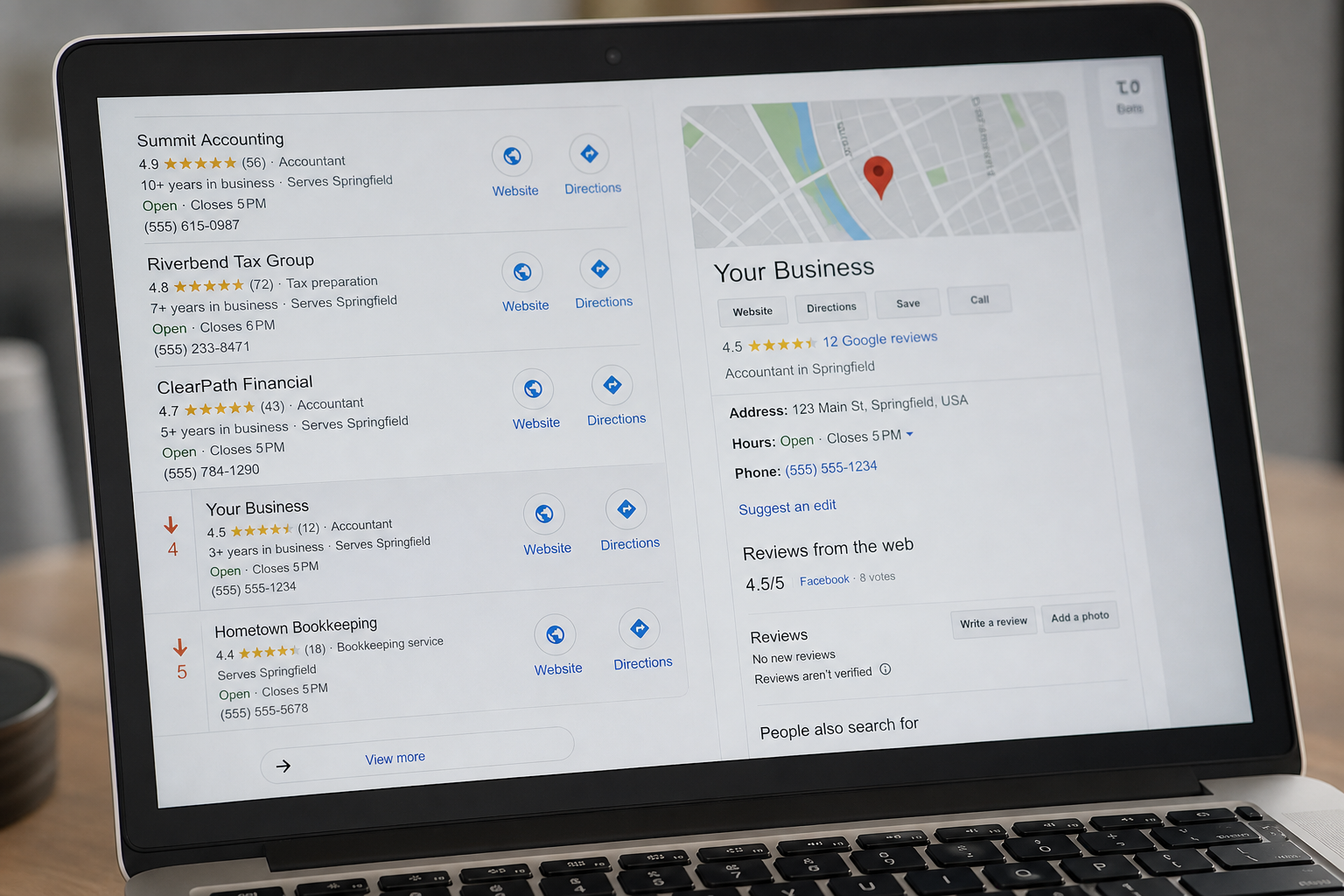
One of the most common scams involves a cold caller or emailer claiming they can "get you on the map" or optimise your Local SEO. They then charge an exorbitant fee for tasks that are either free and simple to do yourself or are completely fabricated.
Scammers may charge hundreds of euros to set up or "claim" your Google Business Profile, a process that is free and straightforward. In worse cases, they will take control of your GBP listing and hold it hostage, demanding payment to return ownership to you.
A legitimate agency will help you optimise your profile as part of a broader local marketing strategy, not charge a fortune for a basic, one-time setup.
Conclusion
The digital world offers incredible opportunities for Irish businesses, but it's also fraught with pitfalls for the unwary. The allure of a cheap, fast, and easy solution to digital marketing is strong, but as we've seen, these offers are almost always a façade for ineffective, and often damaging, services. The true cost is measured not in the small initial fee, but in lost time, missed opportunities, a damaged reputation, and the expensive, arduous task of cleaning up the mess.
"Shift your mindset from seeking a bargain to making a strategic investment. Quality digital marketing is an investment in your business's growth, not just an expense line on a spreadsheet."
📋 Your Scam Protection Checklist
- 🚩 Reject guarantees: No one can guarantee Google rankings. Walk away from this claim immediately.
- 🔍 Demand transparency: Clear communication, understandable reporting, full access to your accounts.
- 💰 Understand fair pricing: Quality work requires fair investment. Be wary of "full SEO for €99/month."
- ⚠️ Watch for risky tactics: Be wary of anyone promising secret formulas or who is vague about methods.
- 📞 Ask tough questions: Request case studies and speak to their current clients.
- 🎯 Focus on business goals: Ensure they're focused on your objectives, not just vanity metrics.
- 📝 Get everything in writing: Detailed proposal with scope, timeline, and deliverables.
- 🔐 Maintain account ownership: Always have admin access to your own digital assets.
Frequently Asked Questions
What are common signs of cheap SEO and marketing scams in Ireland?
The four major red flags are: Unrealistic promises: Guarantees of #1 rankings, instant traffic, or "secret formulas." No one can guarantee organic Google rankings. Lack of transparency: Vague reporting, refusal to grant access to your accounts, inability to explain their strategy clearly. Pricing too good to be true: "Full SEO for €99/month" or similar impossibly low prices. Quality SEO requires skilled expertise, tools, and time.
Black-hat tactics: Keyword stuffing, buying low-quality links, automated content. These can result in Google penalties that make your website virtually invisible. Additional warning signs: Unsolicited cold calls or emails, high-pressure sales tactics, claims of "special relationships with Google," and unwillingness to provide references or case studies.
How can businesses in Ireland avoid falling victim to SEO and marketing scams?
Educate yourself on the basics. Understand the difference between SEO (organic, long-term) and PPC (paid, immediate). Know that sustainable results take months, not days. Familiarise yourself with Google's public guidelines. Vet providers thoroughly. Ask for case studies and references. Speak to their current clients. Request a detailed proposal with clear scope, timeline, and deliverables.
Maintain control of your assets. Always have admin access to your Google Analytics, Search Console, Google Business Profile, and ad accounts. Never let an agency "own" your digital properties. Get everything in writing. Ensure contracts clearly state what work will be done, what results are expected (not guaranteed), and what reporting you'll receive. Trust your instincts. If something sounds too good to be true, it is. Quality marketing is an investment, not a bargain.
What criteria should I use to evaluate an SEO company in Ireland?
Transparency: They should clearly explain their process, provide access to your accounts, and deliver understandable reports that connect to business goals. Realistic expectations: They should discuss timelines in months (not days), never guarantee specific rankings, and focus on sustainable growth rather than quick wins. Proven track record: They should provide case studies, client references, and examples of their work.
Clear pricing: Detailed proposals with scope of work, no hidden fees, fair pricing that reflects the expertise and time required. Communication: Regular updates, responsiveness to questions, willingness to explain strategies in plain language. Business focus: They should focus on your business goals (leads, sales, growth), not vanity metrics (likes, impressions). Ethical practices: They should follow Google's guidelines and be willing to explain their methods openly.
What steps can I take to verify the legitimacy of a marketing agency?
Check their online presence. Do they have a professional website? Is their own SEO any good? Check their Google Business Profile for reviews. Search for reviews on independent platforms. Request references. Ask to speak with current clients. A legitimate agency will happily connect you with satisfied customers. Review their case studies. Look for specific results, not vague claims. Ask about the timeline and methods used.
Verify credentials. While there's no official "SEO certification," look for Google Partner status for PPC, industry memberships, or recognised certifications. Ask detailed questions. How do they conduct keyword research? What's their approach to content? How do they build links? A professional will explain clearly; a scammer will be evasive. Check company registration. Verify they're a registered Irish business through the CRO (Companies Registration Office).
How do cheap SEO services in Ireland differ from legitimate, quality SEO providers?
Cheap SEO services typically: Make unrealistic promises (guaranteed rankings, instant results). Use automated tools instead of skilled human expertise. Produce low-quality, often "spun" content. Buy cheap, spammy backlinks that can harm your site. Provide vague reports with vanity metrics. Refuse to grant access to your accounts. Use black-hat tactics that risk Google penalties.
Quality SEO providers: Set realistic expectations (results take 3-6 months). Employ skilled strategists, content creators, and technical experts. Create high-quality, original content tailored to your audience. Build authoritative links through legitimate outreach. Provide detailed reports connecting activities to business goals. Give you full access to your accounts. Follow Google's guidelines and explain their methods openly. Charge fair prices that reflect the expertise and time required.
What are the risks associated with using low-cost SEO services in Ireland?
Google penalties. Black-hat tactics like link buying or keyword stuffing can result in manual penalties from Google. Your site could be completely removed from search results. Recovery takes months and has no guarantee of success. Wasted money. You pay for "services" that deliver no real value. The money spent on scams could have been invested in legitimate marketing.
Lost opportunity. Every month with a fraudulent provider is a month you could have been building sustainable growth. Your competitors move forward while you're stuck. Damaged reputation. Spammy links and low-quality content remain associated with your brand. This damages trust with both search engines and potential customers. Long-term cleanup costs. Fixing the damage from black-hat SEO is expensive and time-consuming. You may need to disavow thousands of bad links, remove poor content, and rebuild your site's authority from scratch.
How do marketing scams typically target small businesses in Ireland?
Unsolicited contact. Cold calls claiming they've "noticed problems with your website" or emails offering "free SEO audits." Often these "audits" highlight fabricated issues to scare you into signing up. High-pressure tactics. "This special offer expires today" or "Your competitors are already using our services." Legitimate agencies don't need to pressure you into decisions.
Local SEO scams. Claiming to "get you on the map" and charging exorbitant fees for free tasks like setting up a Google Business Profile. Some even take control of your listing and hold it hostage. Exploiting knowledge gaps. Using technical jargon to confuse and intimidate. Charging for "SEO" while actually running cheap PPC ads (or vice versa). Targeting busy owners. They know small business owners are time-poor and may not have the expertise to vet providers properly. The promise of a "done-for-you" solution is designed to exploit this.
Why is it important to avoid cheap SEO and marketing scams?
Protect your business asset. Your website and online presence are valuable business assets. Black-hat tactics can destroy years of work in months. A Google penalty can make your website invisible to potential customers. Financial protection. Beyond the immediate money lost to scammers, there's the cost of cleanup, lost revenue during recovery, and the investment needed to rebuild properly.
Competitive advantage. While you're cleaning up a scammer's mess, your competitors are moving forward with legitimate strategies. Every month lost is ground given to the competition. Brand reputation. Spammy tactics leave a digital footprint that can damage your brand's trustworthiness for years. Customers and partners may question your judgment if they find low-quality content or suspicious link profiles. Long-term growth. Sustainable marketing success comes from consistent, ethical practices. Taking shortcuts now creates problems that will surface later. Investing in quality from the start builds a foundation for lasting growth.
Looking for a Legitimate Marketing Partner?
Sink or Swim Marketing provides transparent, ethical digital marketing services for Irish businesses. We'll explain our process, give you full access to your accounts, and focus on your real business goals. No guarantees, no gimmicks, just honest work.
Get Your Free Marketing Consultation →About Sink or Swim Marketing
We're an Irish digital marketing agency based in Greystones, Co. Wicklow, helping local service businesses grow with transparent, ethical marketing strategies. We believe in honest communication, realistic expectations, and delivering real results, not empty promises.
sink-or-swim-marketing.com | 📞 (01) 960 9250 | 📧 info@sink-or-swim-marketing.com