
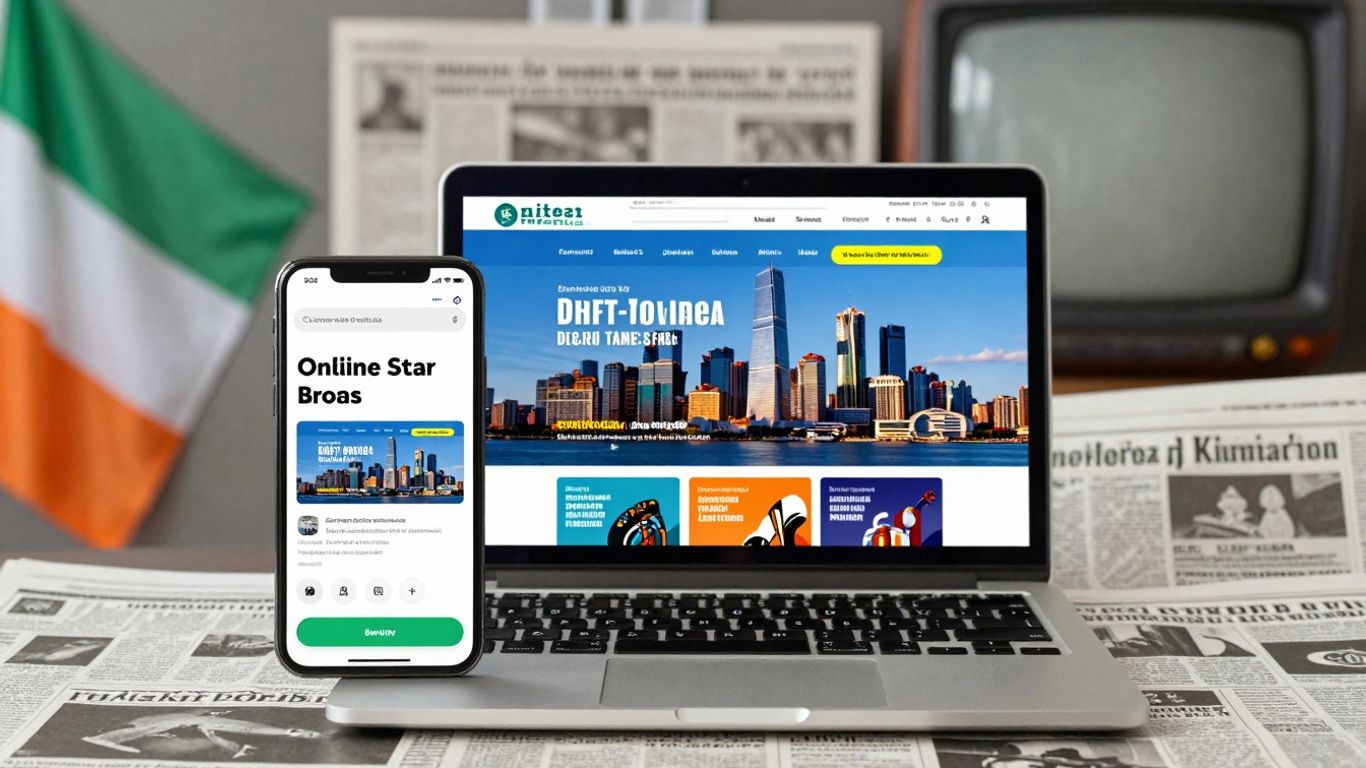
In today’s busy world, Irish small and medium-sized businesses (SMEs) have a big question: where should they put their advertising money? It’s a tough choice between the old ways, like newspaper ads and radio spots, and the newer, digital methods. This article looks at online advertising versus traditional advertising in Ireland, trying to figure out which one actually gives you more bang for your buck. We’ll break down what works, what doesn’t, and how to make the smartest choice for your business.
Key Takeaways
- Online advertising offers precise targeting, allowing Irish SMEs to reach specific customer groups, unlike the broad reach of traditional methods.
- Tracking performance is a major advantage of online advertising; you can see exactly where your money is going and what results you’re getting.
- Traditional advertising, while familiar, often comes with higher costs and makes it difficult to measure direct returns.
- The digital landscape is constantly changing, requiring ongoing adaptation and learning for businesses using online advertising.
- For many Irish SMEs, a mix of both online and traditional advertising might be the most effective strategy, depending on their goals and audience.
- SEO and content marketing are powerful online tools that can provide long-term, cost-effective results for businesses in Ireland.
- Understanding your target audience is key to deciding whether online or traditional advertising, or a combination, will yield the best ROI.
- Ultimately, the goal is to find a marketing approach that aligns with your business objectives and budget, delivering measurable growth.
Understanding the Landscape: Online vs. Traditional Advertising in Ireland
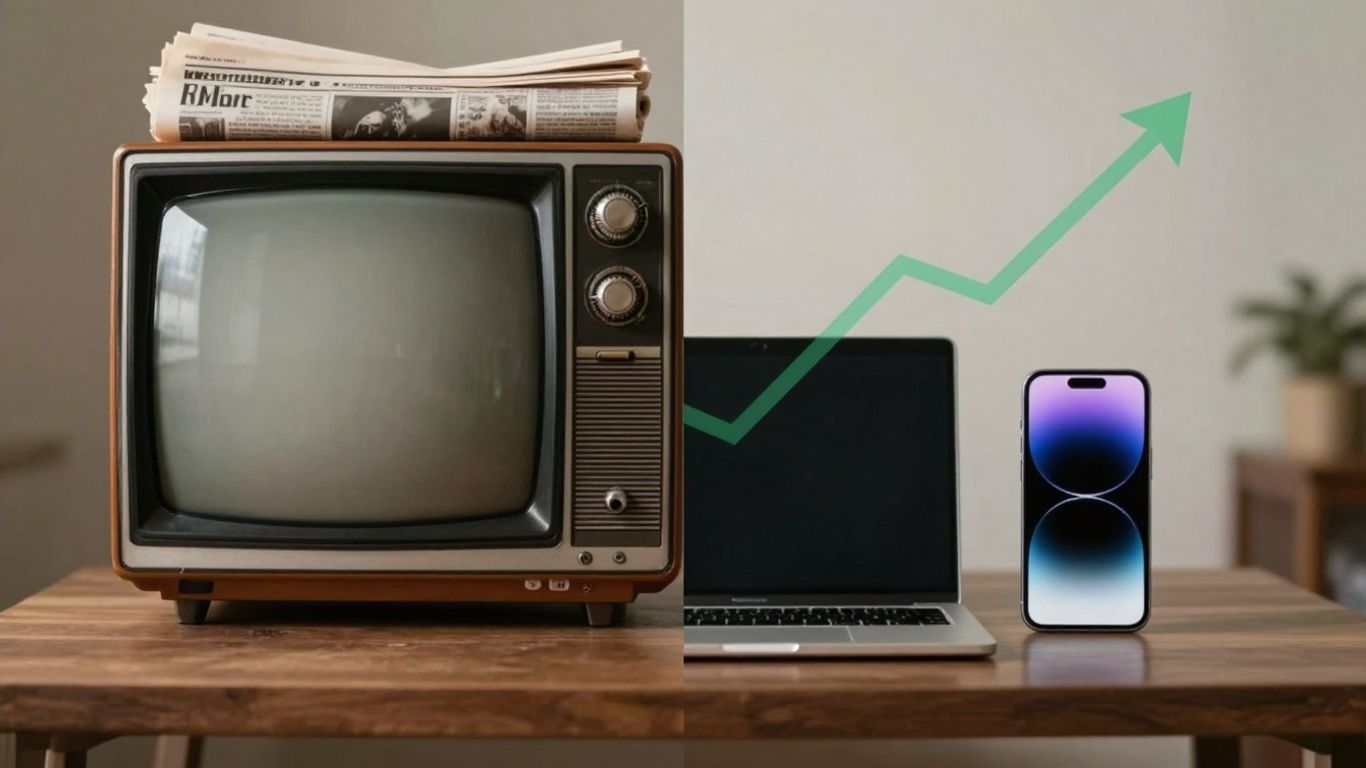
Right then, let’s get stuck into the nitty-gritty of advertising for Irish small and medium-sized enterprises (SMEs). We’ve got two main arenas to consider: the shiny new world of online advertising and the tried-and-tested methods of traditional advertising. It’s not really a case of digital marketing vs print ads Ireland anymore, but more about understanding where each fits best. Think about comparing broadcast media and social media ads Ireland - they reach different people in different ways, don’t they?
Traditionally, businesses might have relied on things like newspaper ads, radio spots, or even handing out leaflets marketing in local areas. These methods have been around for ages and have their place. They can be good for reaching a broad audience, especially if you’re a local shop trying to let people in your immediate neighbourhood know you exist. However, the big question with these is always about how many people actually saw your ad and then did something about it. It’s a bit like shouting into the wind sometimes.
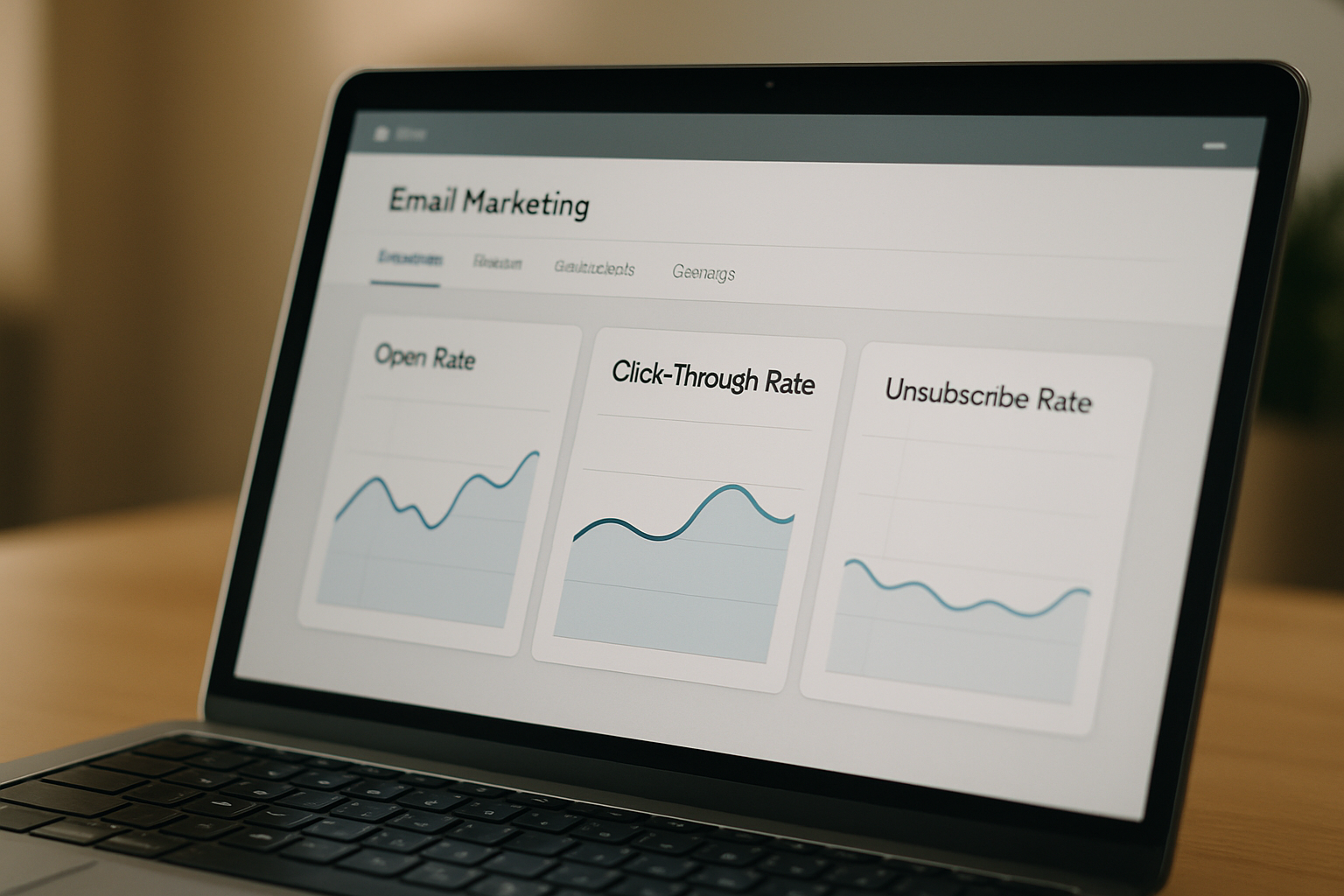
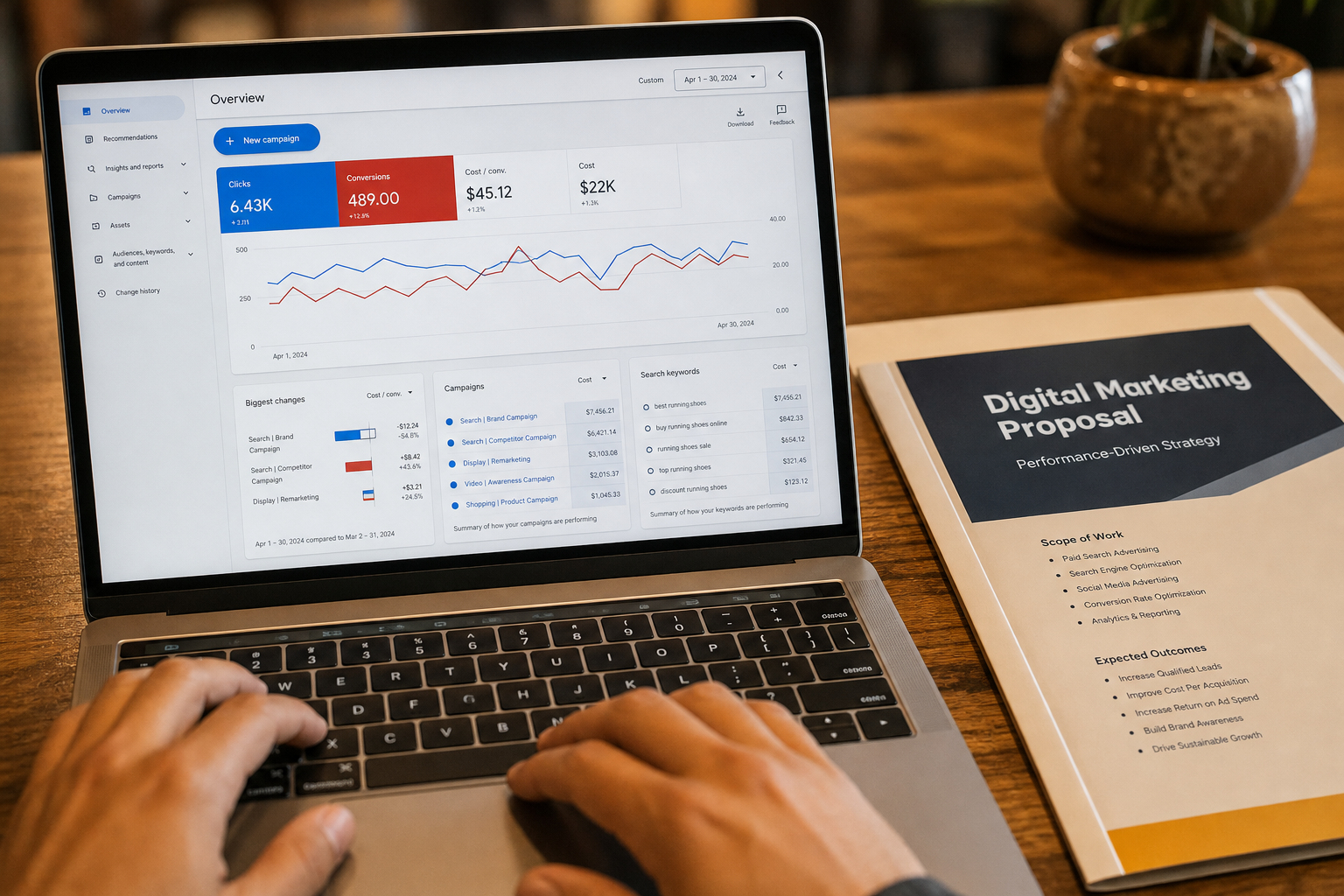
On the other hand, we have the online world. This covers everything from search engine ads (like Google) and social media platforms (Facebook, Instagram, etc.) to email marketing and website banners. The massive advantage here is measurability. You can see exactly how many people clicked your ad, visited your website, and even made a purchase. This makes it much easier to figure out if you’re actually getting your money’s worth.
Here’s a quick look at some common methods:
- Online: Search Engine Marketing (SEM), Social Media Ads, Email Campaigns, Display Ads
- Traditional: Newspaper/Magazine Ads, Radio Commercials, Television Ads, Direct Mail (leaflets, flyers)
The shift towards online advertising isn’t just a trend; it’s a fundamental change in how consumers discover and interact with businesses. For Irish SMEs, understanding this shift is key to making informed decisions about where to invest their marketing budget. It’s about being where your customers are, and increasingly, they’re online.
So, when we’re talking about online vs offline advertising, it’s not about one being definitively ‘better’ across the board. It’s about understanding the strengths and weaknesses of each and how they can work for your specific business goals in the Irish market. We’ll be digging into the specifics of ROI for each in the following sections, but for now, just know that both have their roles to play. If you’re looking to get a handle on the digital side, exploring options with an online marketing agency in Ireland can be a good starting point.
The Rise of Online Advertising for Irish SMEs
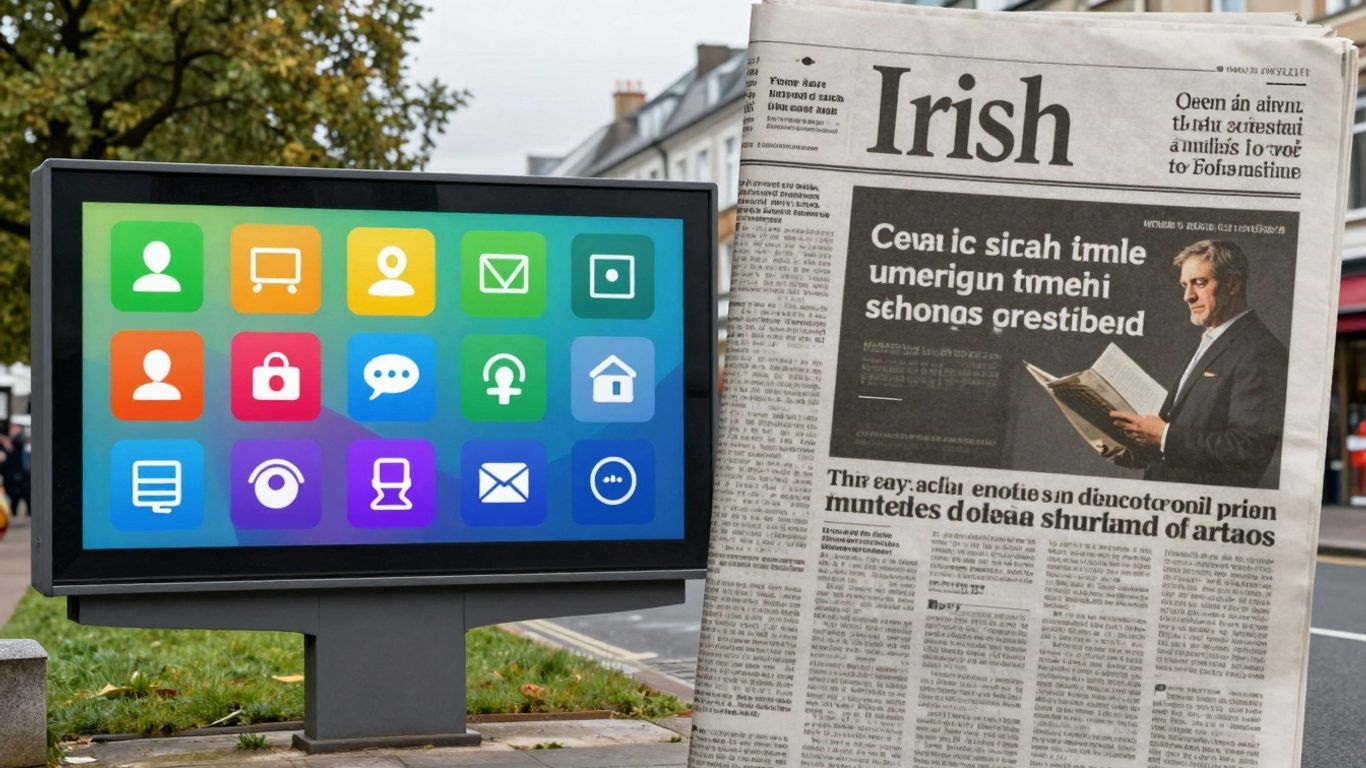
Right then, let’s talk about how online advertising has really taken off for small and medium-sized businesses here in Ireland. Gone are the days when you could just stick an ad in the local paper and expect the phone to ring off the hook. The internet changed everything, didn’t it? People are online constantly, searching for things, buying things, and generally living a good chunk of their lives through their screens. For Irish SMEs, this shift isn’t just something to notice; it’s something to actively get involved in if you want to keep up.
Key Online Advertising Channels in Ireland
So, what are the main ways Irish businesses are getting their message out online? It’s a bit of a mixed bag, but some channels are definitely more popular than others. Think about it - when you need something, where do you look first? Probably Google, right?
- Search Engine Marketing (SEM): This includes things like Google Ads. You pay to have your business show up when people search for specific keywords related to what you do. It’s super direct. If someone searches for ‘plumber Dublin’, and you’re a plumber in Dublin running Google Ads, you can appear right there at the top. This is often a big win compared to, say, radio vs Google ads where the radio listener might not be actively looking for your service at that exact moment.
- Social Media Advertising: Platforms like Facebook, Instagram, and LinkedIn are massive. You can target specific demographics, interests, and even behaviours. So, if you sell handmade jewellery, you can show your ads to people in Ireland who have shown interest in fashion or crafts.
- Content Marketing: This is a bit more of a slow burn. It involves creating useful blog posts, guides, or videos that attract people to your website. It’s not strictly an ‘ad’ in the traditional sense, but it’s a way to get noticed and build trust.
- Email Marketing: Building an email list and sending out newsletters or special offers is still a really effective way to keep in touch with existing customers and attract new ones.
Benefits of Online Advertising for SMEs
Why is everyone jumping on the online bandwagon? Well, there are some pretty solid reasons, especially for smaller businesses with tighter budgets.
- Targeting: This is the big one. You can be incredibly specific about who sees your ads. No more wasting money showing ads to people who will never buy from you. You can target by location, age, interests, and more. This means your marketing spend goes a lot further.
- Measurability: Unlike a billboard or a radio ad, you can track almost everything online. You can see how many people clicked your ad, how many visited your website, and how many actually made a purchase. This gives you a clear picture of the ROI of online ads for SMEs Ireland. You know what’s working and what’s not.
- Cost-Effectiveness: Generally speaking, online advertising can be much cheaper than traditional methods. You can set daily budgets, so you’re always in control of your spending. Even with a small budget, you can start seeing results.
- Flexibility: Need to change your ad campaign? No problem. You can tweak your ads, change your targeting, or adjust your budget on the fly. Traditional ads are usually set in stone once they’re printed or broadcast.
Challenges of Online Advertising for SMEs
It’s not all sunshine and rainbows, though. There are definitely hurdles to overcome.
- Complexity: The online world can be a bit overwhelming. There are so many platforms, settings, and strategies to learn. It takes time and effort to get it right.
- Competition: Because it’s so effective, everyone is doing it. Standing out from the crowd can be tough, especially in popular sectors. You need to be smart about your approach.
- Constant Change: The algorithms for search engines and social media platforms change all the time. What worked last month might not work today. You have to stay updated.
The key for Irish SMEs isn’t just to be online, but to be smart online. It’s about understanding where your potential customers are spending their time and how to reach them effectively without breaking the bank. Choosing the best advertising channels for Irish businesses often means a mix of strategies, tailored to your specific goals and audience.
It can feel like a lot, but when you get it right, the results can be pretty impressive. It’s about making your marketing budget work harder for you.
The Enduring Power of Traditional Advertising in Ireland
While the digital world is certainly buzzing, it’s a bit premature to write off traditional advertising entirely, especially for Irish SMEs. Think about your grandparents, or even your parents - they might not be scrolling through Instagram all day, but they’re still reading the local paper or listening to the radio on their commute. Traditional methods still have a solid place in reaching certain demographics.
Prominent Traditional Advertising Methods in Ireland
These are the methods that have been around for ages and still get a look-in:
- Print Media: Local newspapers and magazines across Ireland can still be effective for reaching a specific, often older, local audience. Think about the community papers in Cork or Galway - they have a loyal readership.
- Radio: National and local radio stations are a constant companion for many during their daily routines, whether driving or at home. It’s a way to get your message out there repeatedly.
- Out-of-Home (OOH): This includes billboards, bus stop ads, and posters. They offer broad visibility in physical locations, catching people’s attention as they go about their day.
- Direct Mail: While it might seem old-fashioned, a well-targeted flyer or brochure sent directly to households can still make an impact, especially for local services.
Advantages of Traditional Advertising for SMEs
So, why might an Irish SME still consider these older methods?
- Broad Reach: For certain demographics, traditional channels offer a wider reach than highly niche online campaigns. It’s about casting a net.
- Tangibility: A physical advert, like a flyer or a magazine ad, can feel more real and trustworthy to some consumers. It’s something they can hold onto.
- Local Impact: Local newspapers and radio stations are deeply embedded in their communities. Advertising here can build a strong local presence and credibility.
- Less Clutter (Sometimes): While the internet is incredibly crowded, a well-placed billboard or a radio slot might cut through the noise for some audiences more effectively than a banner ad.
Drawbacks of Traditional Advertising for SMEs
Of course, it’s not all sunshine and roses. There are definite downsides:
- Cost: Traditional advertising can be expensive, especially for prime-time radio slots or large billboard placements. This can be a big hurdle for small businesses.
- Difficulty in Measuring ROI: This is a big one. It’s notoriously hard to track exactly how many people saw your TV ad and then went on to buy your product. Unlike online ads, where every click can be measured, measuring ad campaign effectiveness Ireland through traditional means is often guesswork.
- Limited Targeting: You can target by region or demographic to some extent, but you can’t pinpoint individuals based on their online behaviour or specific interests like you can online.
- Lack of Interactivity: Traditional ads are one-way communication. You can’t get immediate feedback or engage in a conversation with potential customers.
While digital marketing offers precise targeting and measurable results, traditional advertising still holds sway for building broad brand awareness and reaching audiences who may not be as digitally active. It’s about understanding where your specific customer base spends their time and attention. For many Irish businesses, a blend of both approaches often makes the most sense.
For businesses looking to understand the effectiveness of their marketing spend, exploring options with an Irish digital marketing agency can provide clarity on what works best in today’s market.
Measuring ROI: A Crucial Differentiator
When we talk about advertising for your Irish SME, the big question always comes down to what actually works, right? It’s not just about getting your name out there; it’s about seeing a real return on that investment. This is where measuring your Return on Investment (ROI) becomes absolutely key.
Digital advertising has a massive advantage here because it’s built for tracking. You can see exactly how much you spent and precisely what came back from it. Think about metrics like Cost Per Lead (CPL) or Cost Per Acquisition (CPA). For instance, email marketing can bring in a significant return for every pound spent, which is pretty impressive when you look at the numbers. The formulas are straightforward too: Total Campaign Spend divided by the Number of Leads Generated gives you your CPL.
The challenge with traditional advertising, like radio ads or local newspaper spots, is that the measurement isn’t as direct. You can’t always pinpoint a sale directly back to a specific TV advert. It often requires more estimation, looking at things like regional sales spikes after a campaign or brand awareness surveys.
Here’s a quick look at how the measurement differs:
| Measurement Aspect | Digital Marketing | Traditional Marketing |
|---|---|---|
| Data Collection | Real-time, automated | Manual, periodic |
| Attribution | Multi-touch tracking | General attribution |
| Adjustment Speed | Immediate optimization | Delayed modifications |
| Cost Tracking | Precise per-action | Estimated reach-based |
Ultimately, understanding your ROI means looking beyond just the immediate sales figures. You need to consider the whole customer journey. For digital, this might involve tracking how many people clicked an ad, visited your website, and then made a purchase. For traditional, it’s more about correlating broader campaign efforts with overall business growth. Getting a handle on metrics like Revenue per Visitor (RPV) helps paint a clearer picture, and while digital makes this easier, integrating data from both sides gives you the most complete view. For Irish retailers looking to boost their sales, understanding these ROI metrics is vital for making smart advertising choices.
Which is Better for Irish SMEs? A Strategic Approach
So, we’ve looked at the good and the not-so-good of both online and traditional advertising. Now, the big question: what’s the right path for your Irish SME? Honestly, there’s no single magic answer that fits everyone. It really depends on what you’re trying to achieve, who you’re trying to reach, and, of course, your budget.
The most effective strategy often involves a smart blend of both. Think of it like this: traditional advertising can still be brilliant for building broad brand awareness across Ireland, getting your name out there to a wider audience. It’s like shouting from the rooftops - people might hear you even if they weren’t actively looking for you.
However, when it comes to driving actual sales and getting measurable results, online advertising usually takes the lead. It allows you to target people who are actively searching for what you offer. For instance, if someone in Cork is looking for ‘accountancy services’, an online ad can pop up right then and there. This kind of intent-based marketing is incredibly powerful.
Here’s a quick breakdown to help you decide:
- For Broad Reach & Brand Building: Traditional methods like local radio, print ads in community papers, or even well-placed billboards can still work. They help build recognition over time.
- For Targeted Leads & Measurable ROI: Online channels like Google Ads (search and display), social media advertising (Facebook, Instagram, LinkedIn), and email marketing are your best bet. They let you pinpoint your audience and track exactly what’s working.
- For Long-Term Growth & Authority: Search Engine Optimisation (SEO) is key. While it takes time, it builds a sustainable online presence that brings in customers consistently. Partnering with a digital agency in Ireland can really help here.
The reality for most Irish SMEs is that a hybrid approach yields the best results. You need to be visible where your customers are looking, and increasingly, they are looking online. But don’t discount the power of traditional methods entirely; they can complement your digital efforts effectively.
Consider your customer journey. Do they discover you through a flyer and then search for you online? Or do they find you on Google and then see your ad on a local radio station? Understanding this helps you allocate your budget wisely. It’s about making sure your message reaches the right people, at the right time, through the right channels. Don’t be afraid to experiment, track your results closely, and adjust your strategy as you go. What works today might need tweaking tomorrow.
Conclusion: Finding the Right Mix for Your Irish SME
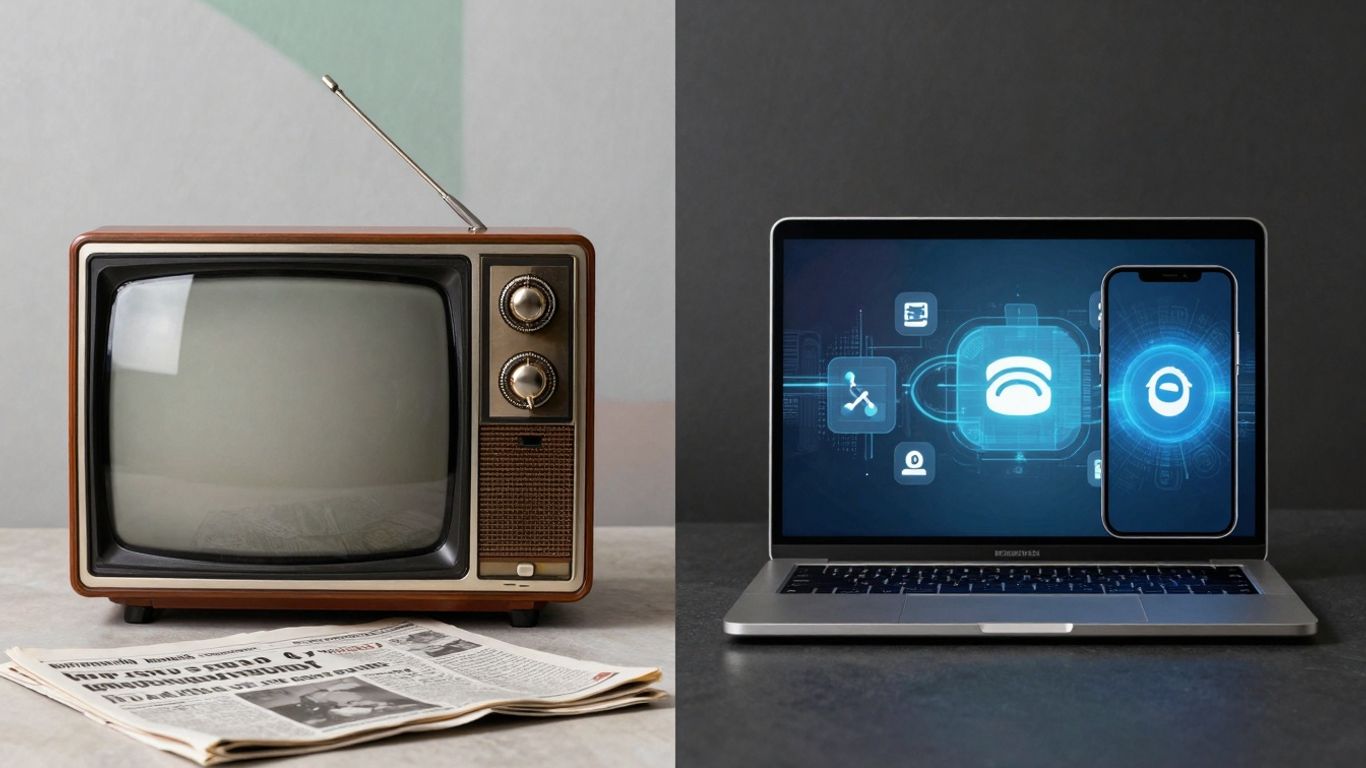
So, we’ve looked at the good and the not-so-good of both online and traditional advertising for businesses here in Ireland. It’s pretty clear that the digital world isn’t just a passing trend; it’s where most of your potential customers are spending their time these days. For Irish SMEs, trying to reach people through a flyer or a radio ad feels a bit like shouting into the wind sometimes - you’re not really sure who’s listening or if they’re even interested.
Online advertising, on the other hand, lets you get really specific. You can target people who are actively looking for what you offer, which makes your marketing spend go a lot further. Think about it: why try to sell ice cream to someone in the middle of winter when you could be reaching people who are already searching for "ice cream delivery Dublin"? It just makes sense.
Here’s a quick rundown of why a digital-first approach often wins:
- Targeted Reach: Pinpoint your ideal customer based on location, interests, and behaviour.
- Measurable Results: See exactly what’s working and what’s not, so you can adjust your spending.
- Cost-Effectiveness: Often, you can get more bang for your buck compared to traditional methods.
- Adaptability: Quickly change your campaigns based on performance or market shifts.
However, that doesn’t mean traditional advertising is completely useless. For some businesses, especially those with a very local focus or a need to build broad brand awareness quickly, a well-placed newspaper ad or local radio spot might still have a role. It’s about finding that sweet spot.
The key takeaway is that a blended approach, heavily weighted towards digital, is usually the most effective strategy for Irish SMEs. It’s about meeting your customers where they are, and increasingly, that’s online. Building a strong website and using tools like Google Ads can make a huge difference.
Ultimately, the best strategy for your business will depend on your specific goals, your budget, and who you’re trying to reach. Don’t be afraid to experiment, track your results closely, and adjust your plan as you go. The businesses that thrive in Ireland’s competitive market are the ones that are smart about their marketing and willing to adapt.
So, how do you find the perfect balance for your business in Ireland? It’s all about understanding what works best for you. Don’t be afraid to try different things and see what sticks. For expert advice tailored to your Irish SME, visit our website today and let us help you make the right choices.
Wrapping It Up: What's The Verdict?
So, when we look at the whole picture, it’s pretty clear that for Irish SMEs, going digital just makes more sense for your money. While old-school ads might grab a bit of attention, they’re often a shot in the dark and cost a fortune. Digital marketing, especially things like SEO, lets you talk directly to people who are actually looking for what you offer. It’s way more precise, you can actually see what’s working, and it keeps on giving long after you’ve paid. For any Irish business wanting to grow without breaking the bank, shifting focus to online strategies isn’t just a good idea, it’s pretty much the only way forward. Picking the right digital partner can really make all the difference in seeing those results.
Frequently Asked Questions
Is online advertising really better than traditional ads for Irish small businesses?
For many Irish small businesses, online advertising often gives a better bang for your buck. It’s easier to reach exactly the people you want to sell to, and you can see exactly how much money you’re making from it. Traditional ads, like flyers or radio spots, can be pricey and it’s harder to know if they’re actually bringing in customers.
What are the main online advertising methods Irish SMEs should consider?
Irish SMEs should look at things like Search Engine Optimisation (SEO) to get found on Google, social media ads on platforms like Facebook and Instagram, and maybe some paid search ads (like Google Ads) for quick visibility. Content marketing, like writing helpful blog posts, is also a great way to attract customers.
What are the biggest advantages of using online ads for a business in Ireland?
The main plus points are that you can target your ads very precisely - for example, showing them only to people in Dublin interested in your product. It’s also much cheaper than many traditional methods, and you can track everything to see what’s working and what’s not, meaning less wasted money.
What are the downsides of online advertising for Irish SMEs?
It can be a bit tricky to get started, and you need to learn how to use the tools properly. The online world changes fast, so you have to keep up. Sometimes, it takes a little while to see big results, especially with SEO, and there’s a lot of competition out there.
Are traditional advertising methods like TV or radio still useful in Ireland?
Traditional ads can still help get your name out there, especially for building general brand awareness. However, they’re usually more expensive and it’s much harder to know if they’re actually leading to sales compared to online methods.
What are the main drawbacks of traditional advertising for Irish businesses?
The biggest problems are the high costs, the difficulty in knowing who actually saw your ad, and the fact that you can’t easily measure if it led to a sale. Once the ad runs, its effect often stops, unlike online efforts that can keep working.
How can an Irish business actually measure the 'return on investment' (ROI) of its advertising?
Measuring ROI means figuring out how much money you made from your advertising compared to how much you spent. With online ads, you can track clicks, website visits, and sales directly. For traditional ads, it’s more about guessing based on surveys or overall sales increases.
Why is it important for Irish SMEs to focus on measuring ROI?
Knowing your ROI helps you understand which advertising efforts are actually making you money. This way, you can spend your budget wisely, putting more money into what works best and stopping what doesn’t, which is key for growing your business.
Should Irish SMEs pick online or traditional advertising, or both?
Most of the time, a mix is best. Online advertising is usually more effective for direct sales and measurable results. Traditional advertising might still play a small role in building broad brand recognition. The smart move is to focus most resources on online methods that deliver better ROI.
How can a digital marketing agency in Ireland help my SME?
An agency like Jo Consultancy has experts who know all about SEO, social media, and paid ads. They can create a plan specifically for your business, manage your campaigns, and track the results, saving you time and often getting you better results than if you tried to do it all yourself.
Is SEO a good investment for a small business in Dublin?
Absolutely! SEO is fantastic for local businesses in Dublin. It helps people searching for services in your area find you easily. It’s a cost-effective way to get found by customers who are already looking for what you offer, leading to more sales.
How long does it typically take to see results from online advertising, especially SEO?
Paid ads, like Google Ads, can bring results very quickly, sometimes within days. SEO, however, is more of a long-term strategy. It usually takes about 3 to 6 months to start seeing significant improvements in your search rankings and website traffic.