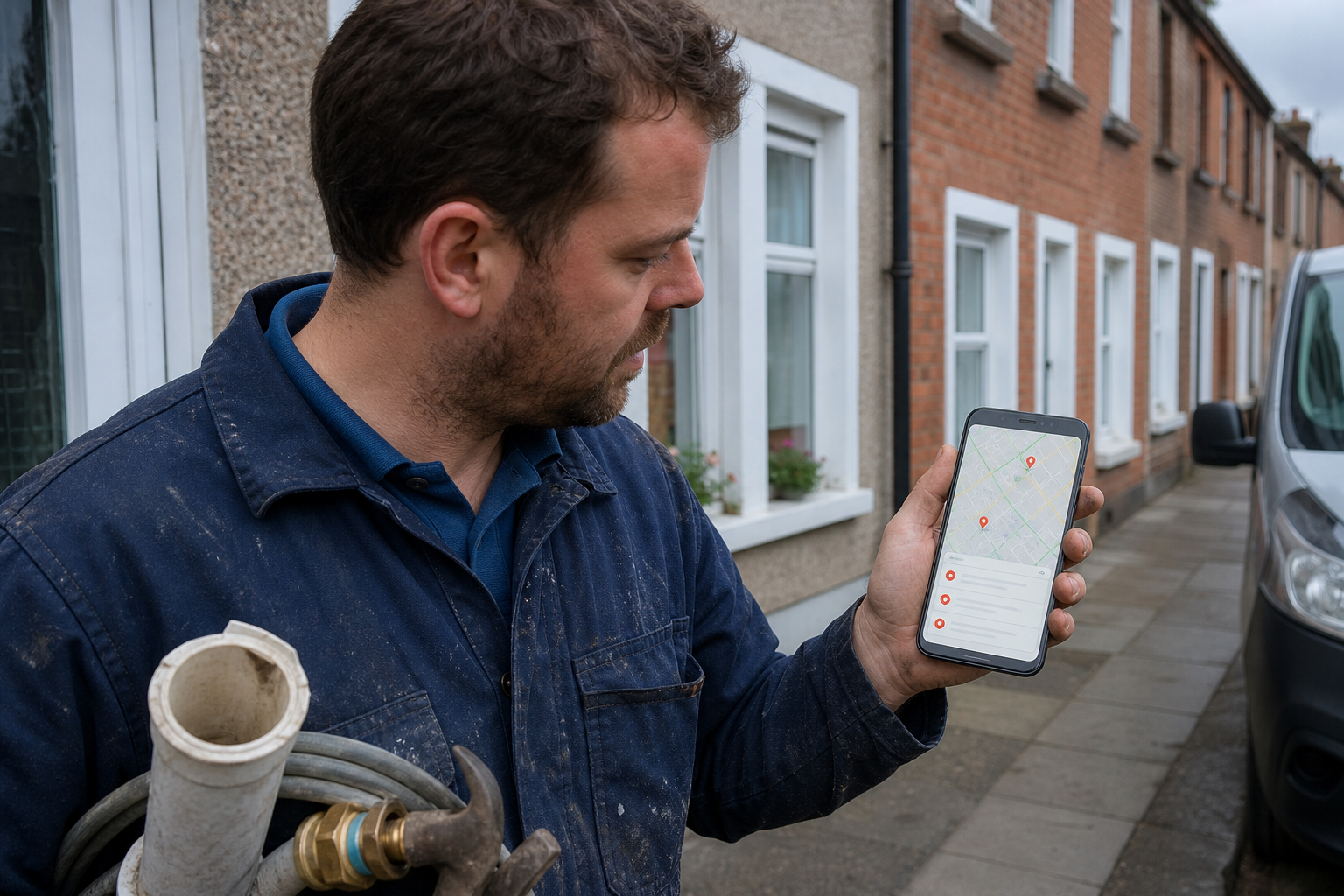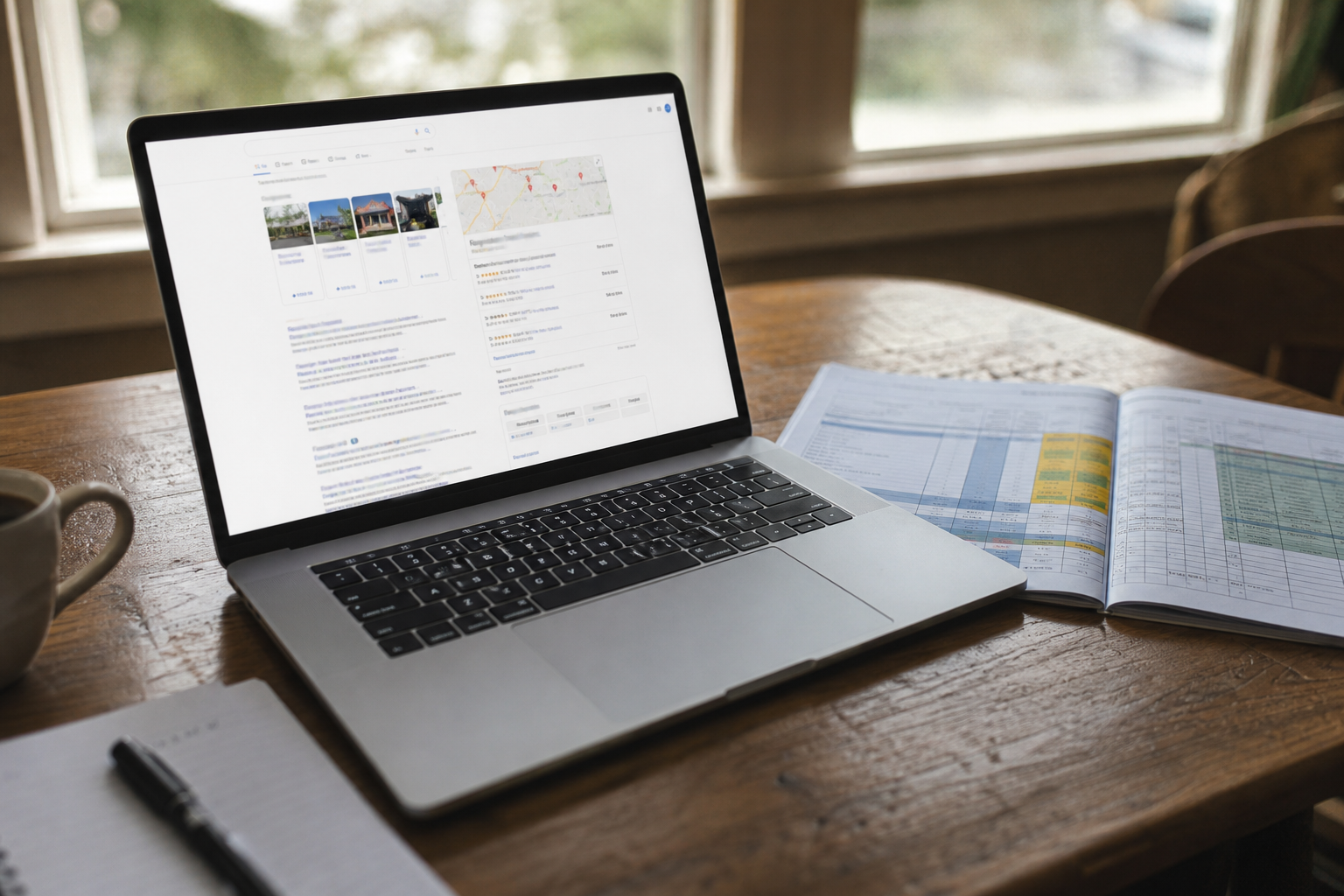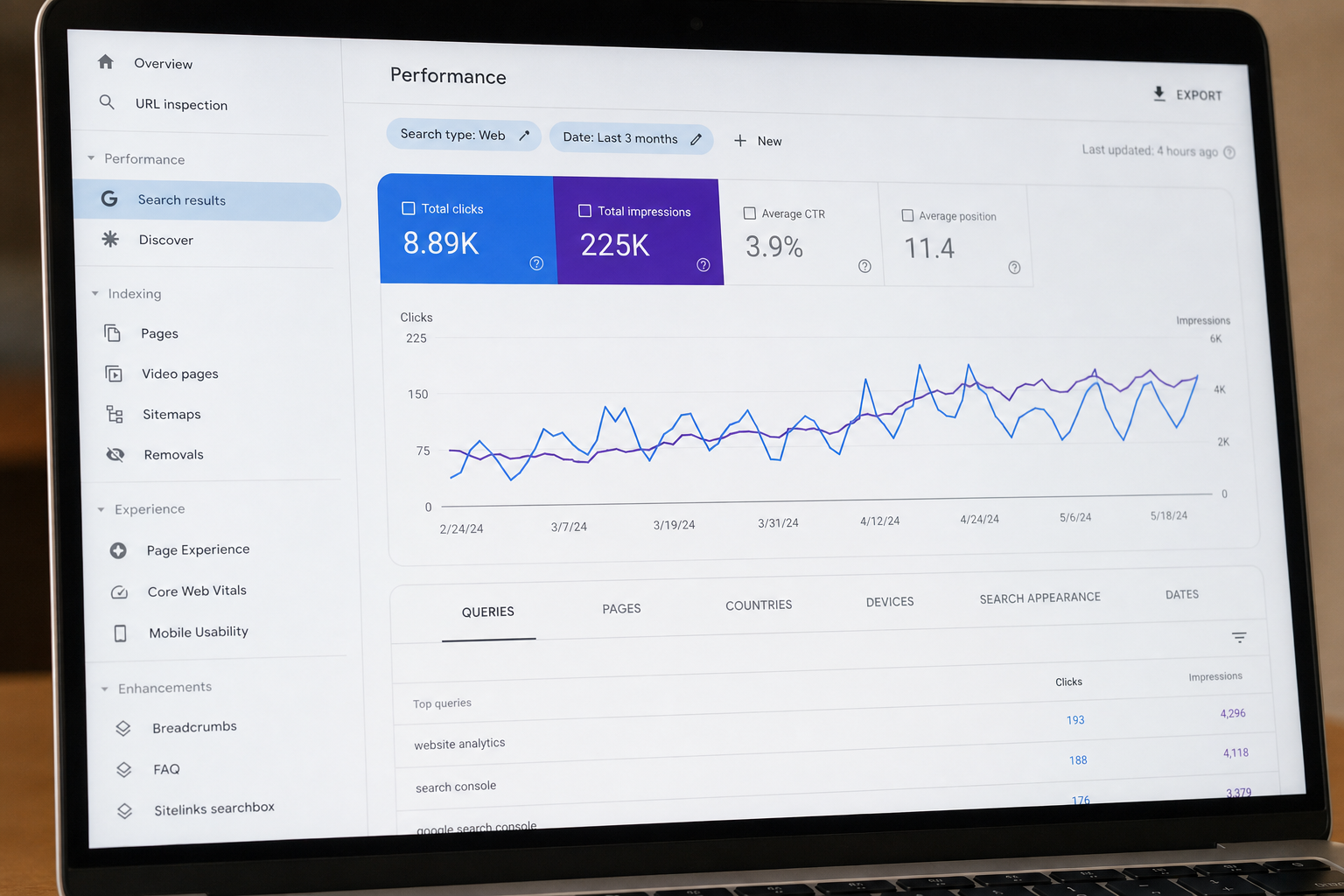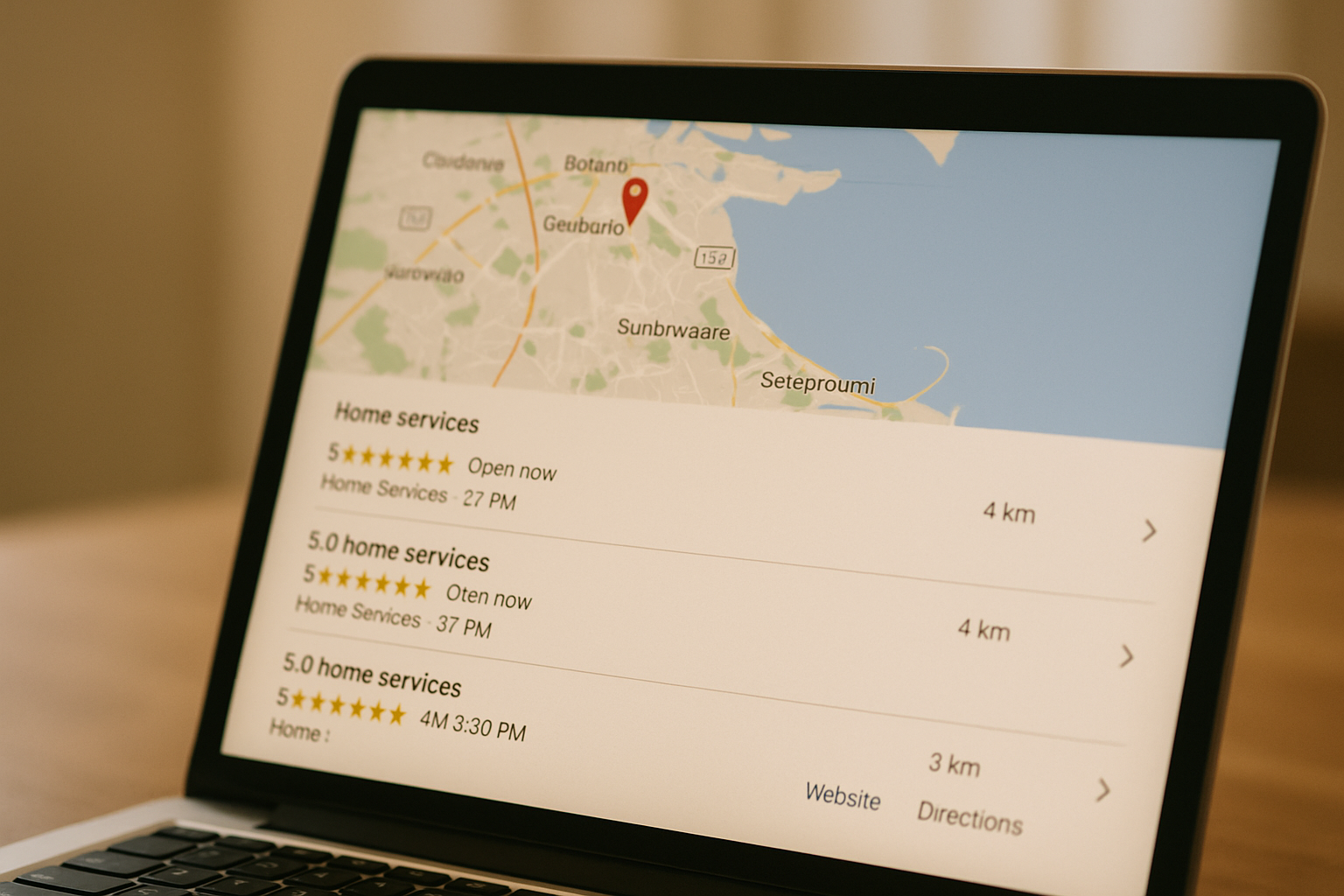

Picture a Dublin accountancy firm that wants to own the local pack when someone searches “accountant near me” in Rathmines, while also winning advisory clients in Manchester now that Britain sits outside the EU. Or a Wicklow food brand that needs to show up for shoppers in Greystones and for buyers in Amsterdam. That tension sits at the heart of the local SEO vs global SEO question, and most generic guides written for a US or UK audience never address it.
The Irish market has its own rules. Your .ie domain sends a signal, your Eircode shapes how Google reads your address, post-Brexit Britain is now a separate international target, and AI Overviews are reshaping both local and global search as you read this. This guide walks through when to prioritise local, when to go global, and why the hybrid path is often the smartest play for Irish SMEs that are starting to scale.
What Is Local SEO? (And What It Actually Means in Dublin)
Local SEO is the practice of making your business visible to people searching for products or services in a specific geographic area. For a Dublin plumber, a Galway hotel or a Cork clinic, it means appearing when someone nearby searches with local intent, whether they type “emergency electrician Dublin 4” or simply “near me” on their phone.
The work is a mix of on-page signals, your Google Business Profile, citations and reviews. Done well, local digital marketing in SEO brings the fastest return of any channel for a single-location Irish business, because the competition is smaller and the search intent is strong. If you want the groundwork handled properly, our local SEO services in Dublin are built around exactly these signals.
It depends what their strategy or how much resources they have already. Typically, a good first practice is to start with local SEO and dominate the current area, i. E. Town or county or general location first, and then scale globally by building out service pages, location pages, and articles targeting geographical areas outside of their locality. It also depends on budget.
A multi-franchise company with tons of locations, Google Business profiles, services, and different teams in different areas. That is potentially a candidate for a national SEO campaign within geographical clusters. A lot of the time we, with SEO, because it’s the long-term game, we want to go for the quick wins first that are gonna gen-generate revenue, and then once there is that history and performance built up, then the campaign can be scaled.
That also looks good from a global SEO perspective in Google’s eyes, because really, a company should start trying to rank locally first and then scaling up from there. In our opinion, it would make sense to do both with probably a focus on 80% of local SEO and then 20% of global strategy in the background, so that when you’re able to allocate more resources, more money, and more concentrated effort to a global SEO campaign, i.
E. Targeting another country or expanding, then you already have a foundation there that you can build on. You don’t have to wait for, Google Search Console terms to show up, or you don’t have to wait for weeks or even months for your new location pages to be indexed. Building the very basics first ahead of time is a great idea and is a good trust signal for Google and other search engines.
The Dublin Local Pack: How It Works and Why It Matters
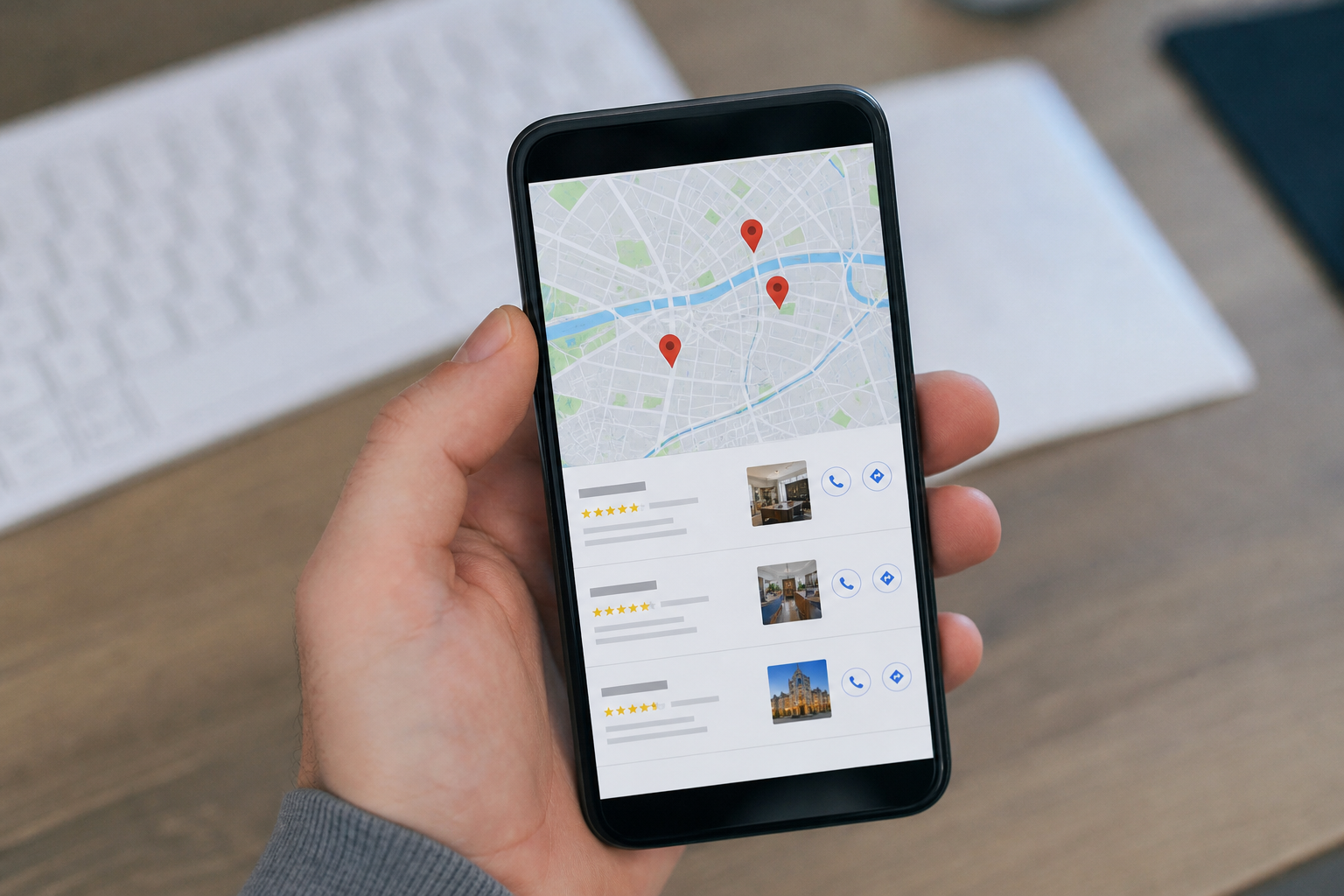
The local pack is the box of three map listings that sits near the top of the results for local city SEO queries. When someone searches “solicitor Dublin 2” or “physio Dún Laoghaire”, Google shows a map and three business profiles above the regular organic listings. Landing in that pack is the single highest-value position in local search, because it captures clicks and calls before anyone scrolls to the blue links.
Ranking factors for the pack lean heavily on proximity, your Google Business Profile strength, review signals and relevance. For trades specifically, we cover the mechanics in detail in our guide to local SEO for Dublin trades.
Core Local SEO Signals: Google Business Profile, NAP, Eircode, and .ie Domains
Four foundations carry most of the weight for an Irish local campaign. Your Google Business Profile is the hub, your NAP consistency keeps your name, address and phone identical everywhere, your Eircode helps Google pin your exact location, and a .ie domain reinforces that you are an Irish business serving Irish customers.
We asked Sean to describe what getting this right looks like on the ground for a trades business:
Local SEO in Dublin in 2026 is all about trust and authority. There are a lot of different methods out there, but really having the foundations in first, having your Google Business Profile services set up correctly, being active on your Google Business Profile, posting updates, posting photos, answering questions, replying to reviews, generally being an active business. Also getting reviews is something that can be actively done and costs you nothing, but really helps with giving trust to customers who are looking for companies, and having everything interconnected.
Having your website connect to your Google’s profile, having your social profiles connected to the gizzes, Google Business Profile. Map citations are a really underutilized tool, which are listings of your business name, address and phone number across directories and Google Maps. Typically, they can also be waypoints for how to get to your business based on its central location from different parts within your service area.
That is a trust signal because customers will naturally do that when they search a business on Maps, either how to get to it or how far it is away, and that can help with ranking over time. In 2026, we’re starting to see a lot more of what search engines are able to read on a site and even on social media profiles.
It’s important, and unfortunate for a small business, it can be quite overwhelming, but you kind of need to be doing a little bit of everything.
Reviews deserve their own attention, because they feed both trust and ranking. Our review management guide for Irish businesses and our Google Business Profile optimisation walkthrough go deeper on both.
What Is Global SEO? (International Reach for Irish Exporters)
Global SEO, often called international SEO, is about ranking in search results outside Ireland. For an Irish exporter, that could mean appearing for buyers in Britain, Germany, France or the Netherlands. The targeting is harder, the competition is wider and the technical setup matters far more than it does for a single-location local campaign.
Where local SEO rewards proximity and your Google Business Profile, global SEO rewards clear international targeting, correct language signals and content that speaks directly to each market. You are telling search engines which country and which language a given page serves, then backing that up with localised content and authority.
Hreflang, ccTLDs, and International Targeting Explained
Three technical decisions shape any international build. Hreflang tags tell Google which language and region each page targets, a ccTLD such as .de or .co.uk signals a country-specific site, and your URL structure (subdirectory, subdomain or separate ccTLD) determines how authority flows. Google’s own documentation on hreflang is the reference worth bookmarking before you implement anything.
Sean explained what moving from an Irish local setup to a true cross-border presence involves, and where he sees Irish businesses trip up:
For an Irish business looking to sell into the UK, in my opinion, I would have a top pillar page all about your products/your brand. Then beneath that, you would have a UK page, which would then branch out into UK service pages or UK product pages, and all of them are interconnected, passing authority up in the stack. HF href lang is an attribute, which is just a little HTML code snippet that you can insert typically in the header of your web page, which defines the language and also the geographical target of a specific web page.
It can be really useful. For example, if you have multiple country pages and dealing with multiple languages to define it at a top level, who the page is targeting, what the language is targeting, and having clear differentiation between href lang attributes between service pages and location pages. For example, a location page may have two or three different languages, which are the main languages in a country.
In an ideal world, you would have a separate location page that targets a separate language in order to rank for that term. A lot of websites will typically use a text swap, which happens at the point of loading the page, and unfortunately, that does not do a lot of good for SEO because it’s not the static or cached constant version of a web page.
Whereas a lot of the times it would be better to build out a specific page in that language targeting your service or product. Moving from local SEO to global SEO requires quite a concentrated effort as you are slowly shifting the narrative of what search engines understand about your website. Really, you should have a full content strategy built and clear segregation of keyword themes applied to different pages.
In our opinion, it should also be done systematically. For example, we don’t recommend one week having zero location, new location pages, and then the next week you have 100 location pages built out in a new country, all with different languages. You want to slowly build them out over time, which looks natural and looks like a real company expanding their services.
Localised Content Strategy for European and UK Markets
Local SEO strategies for international markets start with content that fits the destination, not a copy-paste of your Irish pages. A product page aimed at German buyers should be written in German, priced in euro for that market and reflect how Germans really search, rather than a machine text swap layered over your English page. That depth of localisation is what separates a page that ranks abroad from one that only exists abroad.
For local SEO for European markets, treat each country as its own project with its own keyword research, its own content and its own link profile. Britain, in particular, now needs its own consideration as a separate international market rather than an extension of your Irish site.
Local and Global SEO: Key Differences at a Glance
Here is the practical comparison, with the Irish-specific rows that generic guides leave out.
| Factor | Local SEO | Global / International SEO |
|---|---|---|
| Target audience | Customers in a town, county or city | Buyers in other countries |
| Keyword research | City and “near me” terms | Market and language-specific terms |
| Google Business Profile | Central ranking factor | Minor or not applicable |
| Local pack | Primary visibility goal | Not relevant |
| Technical setup | NAP, schema markup, citations | Hreflang tags, ccTLDs, subdirectories |
| Content | Local service and location pages | Multilingual, localised content |
| Backlinks | Local citations, Irish directories | In-market international backlinks |
| Search intent | Immediate, high local intent | Research and purchase across markets |
| .ie domain | Strong trust signal for Irish buyers | Can limit ranking in foreign markets |
| Eircode / Irish address | Confirms exact location to Google | Not used by foreign search |
| Post-Brexit relevance | No direct impact | GB is now a separate target market |
| Typical speed to results | Weeks to a few months | Many months, longer runway |
When Should an Irish Business Choose Local SEO?
For most Irish SMEs, local is the right place to start. If your customers come from your county, if you rely on phone calls and callouts, and if your budget is modest, local SEO gives you the fastest route to enquiries. It is also the foundation Google wants to see before you expand, which makes it the natural first phase even for businesses that eventually want to go global.
Signs You Need to Prioritise Local SEO First
Fixed service area
You serve one county or a cluster of nearby towns rather than selling nationally or abroad.
Phone-led sales
Most of your enquiries come by call or booking, not online checkout.
Tight budget
You want enquiries this quarter, not a multi-month international build.
If several of those describe you, your money is best spent on your Google Business Profile, local citations and reviews before anything else. That pattern holds across trades, clinics, real estate and professional services, and we see it play out account after account.
ROI Timeline: Why Local SEO Often Wins Faster for Irish SMEs
Local campaigns tend to show movement within weeks, not quarters. In the paid-search accounts we run alongside SEO for local service businesses, the pattern is clear: enquiries build steadily as targeting tightens. On one managed account the monthly call count climbed from a handful to 29 calls in its peak month, with phone calls scaling into the clear primary lead channel over time.
That matters because local intent converts. BrightLocal’s consumer research has long found that a large majority of people who run a local search visit a business soon after, and the same urgency shows up in Irish accounts when the local signals are in order.
When Should an Irish Business Choose Global SEO?
Global SEO earns its place once you have a true export ambition, a product that travels and the resources to back a longer campaign. It is rarely the right first move for a brand-new business, but it becomes essential for Irish exporters selling into Britain and the EU, where the addressable market dwarfs the home one.
Post-Brexit UK and EU Export Opportunities
Brexit changed the calculus for Irish exporters. Britain is now outside the single market, which makes it a distinct international SEO target with its own domain considerations, its own content and its own link profile. Meanwhile the EU remains open, and local SEO for European markets means treating Germany, France and the Netherlands as separate projects rather than one “Europe” bucket.
Moving from local to global is less a switch you flip and more a narrative you slowly rewrite for search engines, one well-structured market at a time.
Budget Reality Check: What Global SEO Actually Costs
Global SEO costs more because it is more work: separate keyword research, localised content, technical hreflang implementation and in-market link building for each country. A realistic international build runs over many months before it pays back, which is why we rarely recommend it as a first and only investment for a smaller Irish business.
Local vs international SEO is not really an either/or for most scaling Irish firms. Local funds the business now and builds the trust history; the international layer is where you grow once that foundation is earning. Sequencing beats splitting your budget thinly across both from day one.
The Hybrid Strategy: Ranking Locally in Dublin While Targeting London or Frankfurt
The hybrid path is the most underused and, for scaling businesses, often the smartest. You keep dominating your local pack while laying the groundwork for international reach in the background, so that when the budget and ambition align, the foundation is already indexed and trusted. Our stance is a roughly 80% local, 20% global split early on, shifting as you grow.
How to Run Local and International SEO in Parallel
Running local and international SEO together
- Lock the local foundation: Get your Google Business Profile, NAP, Eircode and reviews working first so local enquiries fund the rest.
- Build the pillar structure: Create a top-level brand pillar page, then branch into country pages that pass authority up the stack.
- Implement hreflang early: Define language and country targeting cleanly before you scale pages, so new markets index correctly.
- Localise the content properly: Build dedicated pages per language and market rather than relying on a text swap at page load.
- Roll out gradually: Add location and language pages steadily over time so the growth looks like a real company expanding, not a sudden page dump.
For businesses with several branches already, our guide to multi-location local SEO strategy in Ireland covers how to cluster locations without cannibalising your own rankings.
Real Example: Dublin Professional Services Firm Going Cross-Border
The compounding effect of this approach shows up in the data. On one painting-and-services account we manage, a steady first quarter saw tracked leads roughly triple while cost per lead more than halved, as the campaign moved out of its broad learning phase into tightly targeted, high-intent work. The same discipline applies when a Dublin firm layers international pages on top of a strong local base: the local engine keeps producing enquiries while the cross-border pages mature.
Ireland-First Decision Framework: Which Strategy Is Right for You?
Use this quick framework to place yourself. Answer each prompt and follow where it points. It mirrors the first conversation we have with a new client.
If you are a startup or single-location business with a modest budget, start local and go all in on your Google Business Profile and reviews. If you are scaling and already export, run the hybrid: keep the local engine humming and build the international foundation in the background so it is ready when you are.
How AI Overviews and Zero-Click Search Are Changing Local vs Global SEO in 2026
AI Overviews and zero-click search have changed how people find businesses. When Google answers the question directly at the top of the page, fewer users click through, which means both local and global strategies now have to earn attention in a smaller clickable space. The businesses that keep winning are the ones positioned as the clear solution to the searcher’s problem.
What Irish Businesses Need to Know About AI Search Right Now
We asked Sean what he is seeing in client accounts and what an Irish trades or service firm should do about it:
Since AI overviews have come out, we have seen a lot of traffic drop off. Really, the purpose of a company in the search engine results is to help be the solution to the problem. Typically, AI overviews and search overviews will answer the question of what they need, and then your website or company needs to be the solution that’s offered in the search engine to fix that problem.
That’s what gets rewarded within the search engine results in 2026 and beyond, as Google wants to reward companies who are fixing problems for the people that use search engine results. We don’t really think SEO is dying. It’s just changing, and there’s new tools and methods that are constantly coming out, and you need to be able to adapt to it and work in AI into your business.
Typically, we see that that involves building systems that can help you create better content or systems that will allow you to be more active on social media. All of those things that indirectly help SEO, if you can automate them or incorporate them into your business, that ultimately is going to compound in parallel across many different streams and overall help your SEO as everything becomes more interconnected.
For local businesses specifically, the practical response is to strengthen the signals AI systems and search engines already read: an active Google Business Profile, strong reviews, clear service and location pages, and content that directly solves a customer’s problem. Those same signals also support ranking for near me searches, which remain stubbornly resistant to zero-click erosion because they carry such strong purchase intent.
Is SEO Dead or Evolving in 2026? The Irish Reality
SEO is not dead, it is shifting. The fundamentals that mattered five years ago, relevance, authority and a truly useful website, still decide who ranks. What has changed is the toolkit around them: AI Overviews, new content workflows and the growing overlap between SEO, social and automation. For Irish businesses, the winning move is to adapt rather than retreat, building systems that help you publish better content and stay active across the channels that indirectly feed search.
That is why we increasingly run SEO and paid search together rather than in isolation. Our guide to a unified SEO and Google Ads strategy shows how the two channels compound when they share the same local intelligence, and the broader picture sits within our search engine optimisation Ireland service.
Frequently Asked Questions
What are the 4 types of SEO?
The four commonly recognised types are local, national, global (international) and technical or on-page SEO. Local suits a Dublin café or trades business targeting one area; national suits an Irish ecommerce brand selling across the country; global suits an IDA-backed tech exporter reaching overseas markets; and technical SEO is the under-the-bonnet work that supports all three. Most Irish SMEs begin with local and technical, then add national or global as they scale.
What is the difference between local SEO and regular SEO?
The difference between local SEO vs SEO comes down to geography and tactics. Regular organic SEO aims to rank a page nationally or globally for a topic, relying on content, backlinks and technical health. Local SEO adds location signals: your Google Business Profile, NAP consistency, Eircode, local citations and reviews, all aimed at the local pack. For a Dublin business chasing nearby customers, local SEO is usually the faster, higher-return starting point.
Is doing local SEO worth it?
For most Irish SMEs, yes. Local search carries high purchase intent, and the competition in a single county is far smaller than in national or global results. In the local-services accounts we manage, a well-built local presence drives steady phone-led enquiries, and on one account 82% of tracked inbound calls were genuine conversations over 25 seconds. When your Google Business Profile, reviews and citations are in order, local SEO typically pays back faster than any other channel.
Can I do both local and global SEO at the same time?
Yes, and for a scaling business it is often the smartest play. The hybrid approach keeps your local pack rankings strong while you build international pages in the background. We usually recommend roughly 80% local, 20% global early on, then shift the balance as resources grow. Building the basics of your international structure ahead of time also acts as a trust signal, so new country pages index and rank faster when you are ready to push them.
Is SEO dead or evolving in 2026?
SEO is evolving, not dying. AI Overviews and zero-click search have reduced some clicks, but the core goal is unchanged: be the clear solution to the searcher’s problem. Google still rewards businesses that genuinely help people, which means strong local signals, useful content and an active Google Business Profile matter more than ever. Irish businesses that adapt, by working AI into their content and social workflows, will keep compounding their search visibility.
Next Step: Get an SEO Strategy Built for Your Irish Business
Whether you need to own the Dublin local pack, break into the UK after Brexit, or run both in parallel, the right sequence makes all the difference. We build the local foundation first, prove the return, then scale into national or international reach when the numbers support it.
Not sure whether to go local, global or hybrid?
We will map your market, your budget and your goals to a clear plan, starting with the quick wins that fund the rest.